

i NEWS PAK-CHINA
US 19% tariffs to impair Pakistani economy: Reportتازترین
December 17, 2025
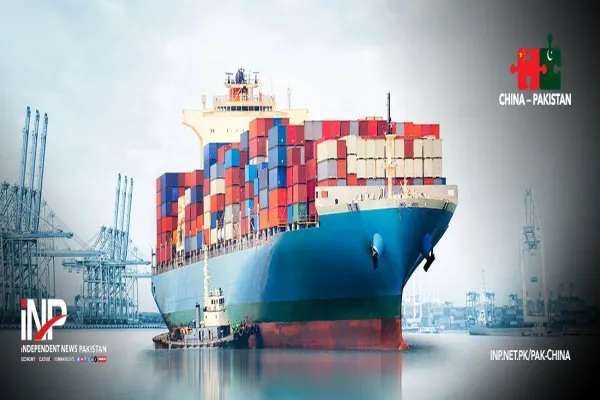
Fallouts of US's 19 percent tariffs on Pakistan exports are looming large amid Pakistan internal economic downturns on account of higher electricity charges and burgeoning taxes on trade and commerce industries. The US tariff has caused a financial dent on Pakistan's already saggy business landscape as total exports has dropped 6.39 percent in July-November period during current fiscal year, says a report carried by Gwadar Pro on Wednesday. Total exports are $12844 millions during July-November 2025-26.
While it was $13721 millions against same corresponding period in 2024-25. All Pakistan Textile Mills Association (APTMA) chairman Kamran Arshad told Gwadar Pro that Pakistan economy will take a beating having been hit by US tariff negative consequences in coming days. "The US is the Pakistan's largest single-country export destination as country exported $5.3 billion to the US in FY2024, dominated by textiles.
The US claims tariffs address trade deficits and "currency manipulation," but they risk destabilizing the partnership between the two countries," he added. Senior Economist Temour Khan said that 19% US import tariffs will reduce Pakistan's exports to the US by 10–15%, disproportionately harming the products with the largest share in the export basket. The affected products are textiles, rice, and surgical instruments, he revealed.
The tariffs reflect a zero-sum approach by the US that ignores mutual gains from comparative advantage and market liberalization. In order to minimize losses and take advantage of long-term potential, it is suggested that Pakistan must plan export diversification and cost-cutting measures. Despite being labeled as "fair and reciprocal," these tariffs are criticized for their simplistic formula based solely on a country's trade deficit with the US, ignoring tariff levels and economic size.
Former Federal Minister for Finance and Economic Affairs Dr Hafiz Pasha dubbed 19 percent US tariff on Pakistan export an economic turmoil for Pakistan economy, saying if Pakistan did not take remedial measures, repercussion on trade balance between Pakistan and the US will be lop-sided and detrimental. Pakistan trade council official Khawar Saeed said that Pakistan's exports to the U.S. are heavily concentrated in a few key categories – mainly textiles and apparel that will be most affected by the 19 US tariff.
"Such a large tariff will render into higher prices for American consumers., making Pakistani goods less attractive, either Pakistani exporters or American buyers absorb some of the cost. In the short-term, Pakistan's exports to the United States will likely decline in both value and volume," he added.
Dr Salman Shah, former advisor to the Chief Minister of Punjab on Economic Affairs and Planning & Development and who served as the caretaker Finance Minister of Pakistan told Gwadar Pro that potential adverse economic consequences of US tariff on Pakistan exports are getting visible gradually.
"US protectionist trade policies have gained momentum globally, reversing decades of increasing globalization. This shift is driven by growing skepticism about the benefits of free trade, national security concerns, geopolitical considerations, Additionally, tariffs are increasingly considered as a tool for revenue generation," he added.
However, he said that such policies will isolate America in the world sooner or later. The Institute of Cost and Management Accountants of Pakistan (ICMA) has also released a comprehensive report analyzing the implications of the imposed 19 % tariff by the United States on Pakistan's exports, with a particular focus on the textile industry.
According to ICMA, the U.S. tariff affects a broad spectrum of goods, but it poses a particularly serious threat to Pakistan's textile sector, which accounts for over 70% of the country's exports to the U.S. market. The report warns that the tariff may lead to significant short-term disruptions, including declining export volumes, relocation of orders to lower-tariff countries, and rising unemployment in textile hubs across Pakistan.
The increased cost burden could weaken Pakistan's competitiveness, especially among small and medium-sized exporters. ICMA also urges diversification of Pakistan's export markets by exploring new regions such as the Gulf, Africa, and Central Asia, the report added.
Credit: Independent News Pakistan (INP) — Pak-China
متعلقہ خبریں