


INP-WealthPk

Chinese green-tech investment opens new opportunities for Pakistan’s SEZs
June 02, 2026
By Qudsia Bano
The rapid expansion of Chinese clean-tech financing and overseas green industrial investment is creating fresh opportunities for Pakistan’s Special Economic Zones (SEZs), as the country seeks to attract export-oriented manufacturing, renewable energy equipment production and electric vehicle-related industries.
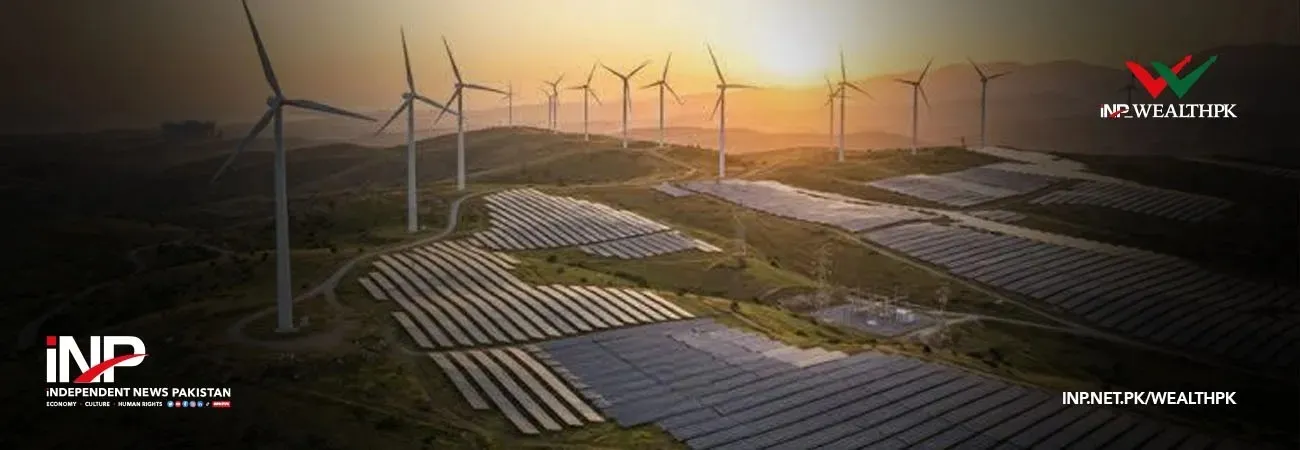
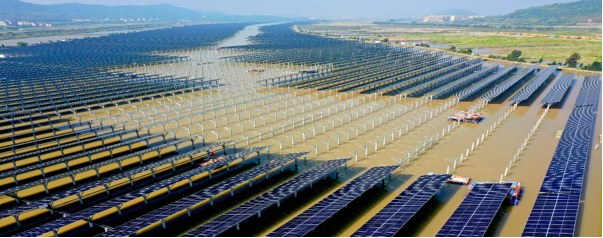
China remained the world’s largest investor in clean energy in 2024, with spending exceeding $625 billion, according to the International Energy Agency’s (IEA) World Energy Investment 2025 report. The IEA noted that China achieved its 2030 wind and solar capacity target six years ahead of schedule, underscoring the scale of investment flowing into clean-energy manufacturing and infrastructure.
The momentum has continued in 2025. China’s Ministry of Finance recently introduced new guidelines for managing special funds dedicated to clean-energy development during 2025-2029, aiming to support renewable energy projects and cleaner industrial technologies.
Further strengthening this trend, Chinese energy giant Sinopec established a five-billion-yuan ($690 million) hydrogen-focused venture capital fund in May 2025, the largest such fund in China dedicated to the hydrogen value chain.
Pakistani policymakers believe this growing pool of Chinese green capital could help accelerate industrial relocation into South Asia, particularly in sectors such as solar panels, batteries, electric vehicles, energy-efficient equipment and advanced green manufacturing technologies.
According to the Board of Investment, Pakistan’s SEZ framework offers a one-time exemption from customs duties and taxes on imported capital goods, along with a 10-year income tax exemption for enterprises operating within the zones. These incentives are designed to attract foreign manufacturers seeking cost-effective regional production hubs.
The government is also repositioning SEZs under the second phase of the China-Pakistan Economic Corridor (CPEC). Federal Minister for Investment Qaiser Ahmed Sheikh recently said Pakistan has proposed government-to-government industrial parks in Karachi and Islamabad aimed at attracting Chinese industrial relocation in sectors including electronics, pharmaceuticals, textiles and electric vehicles.
A study by the Sustainable Development Policy Institute (SDPI) noted that Pakistan’s nine priority SEZs under CPEC provide an important platform for accelerating industrial development, boosting exports and promoting technological upgrading. The report also highlighted the potential for integrating green industrial practices into future zone development.
Speaking with Wealth Pakistan, Muhammad Usman, Manager of Business Development at Premier Energy Lahore, said Chinese firms are increasingly looking beyond their domestic market due to intense competition and excess production capacity in clean-energy industries.
“Pakistan can position its industrial zones as a manufacturing and assembly destination for solar equipment, battery components and energy-efficient machinery. The combination of SEZ incentives and proximity to Middle Eastern, African and Central Asian markets can become attractive for Chinese investors seeking regional diversification,” he said.
Usman acknowledged that many industrial estates in Pakistan still face infrastructure and utility constraints, but noted that dedicated green industrial parks supported by reliable power supplies and efficient logistics networks could substantially improve investor confidence.
“Chinese financing institutions are increasingly supporting projects linked to carbon reduction and green supply chains. If Pakistan develops dedicated clean-tech clusters within its SEZs, it can become part of broader regional value chains instead of remaining primarily an import market for finished products,” he added.
Nimra Khalid, Assistant General Manager of Strategy at Hutaib Industrial Solutions, said global clean-tech investment patterns are evolving rapidly and Pakistan must move quickly to secure a share of future manufacturing relocation.
“China’s clean-energy sector has become one of the strongest drivers of global investment growth. As Chinese manufacturers expand overseas, countries offering stable policy frameworks, export access and modern industrial infrastructure will enjoy a competitive advantage in attracting new projects,” she said.
According to her, Pakistan’s industrial zones are well-positioned to benefit from investment in electric vehicle components, energy storage systems and solar manufacturing if regulatory approvals and land development processes are accelerated.
“The opportunity extends beyond foreign direct investment. It also involves technology transfer, workforce development and integration into emerging green supply chains. Pakistan has the labour force and market size required for such expansion, but implementation speed will determine whether the country captures these opportunities,” she added.
With global clean-energy investment projected by the IEA to reach $2.2 trillion in 2025—nearly double the level of fossil-fuel investment—Pakistan is increasingly viewing Chinese clean-tech financing as a catalyst for industrial modernization, export diversification and long-term sustainable economic growth.
Credit: INP-WealthPk
Related Articles