INP-WealthPk
Food inflation surges as perishable items drive sharp monthly spike
May 07, 2026
By Moaaz Manzoor
Pakistan’s food inflation recorded a notable increase in April 2026, with perishable items driving a sharp rise in prices on a month-on-month basis.
According to the “Monthly Review on Price Indices April 2026” released by the Pakistan Bureau of Statistics and available with Wealth Pakistan, the food and non-alcoholic beverages group increased by 7.63% on a year-on-year basis, reflecting continued upward pressure on essential food items.
The report shows that the increase was more pronounced in perishable food items, which recorded a significant month-on-month rise of 15.25% at the national level. On a year-on-year basis, perishable items increased by 10.26%, highlighting their strong contribution to short-term price volatility.
Non-perishable food items, which make up the bulk of the food basket, showed relatively moderate movement. They increased by 7.26% on a year-on-year basis, while recording a marginal month-on-month rise of 0.14%, indicating stability compared to perishable commodities.
Urban data reflects similar trends. Food prices in urban areas increased by 7.47% year-on-year and 2.60% month-on-month. Within this category, perishable items rose sharply by 16.04% on a monthly basis and 12.89% year-on-year, showing higher volatility in city markets.
In rural areas, food inflation was recorded at 7.80% year-on-year, while monthly growth stood at 0.93%. Perishable items in rural regions increased by 14.30% month-on-month and 7.23% year-on-year, indicating widespread price fluctuations across regions.
The report highlights several commodities that contributed to the monthly increase in food prices. Tomatoes recorded a sharp rise of 57.10% in urban areas and 44.48% in rural areas. Fresh vegetables increased by 40.67% in urban areas and 25.75% in rural regions.
Other key items also showed increases. Eggs rose by 14.38% in urban areas and 9.52% in rural areas, while onions increased by 9.23% and 9.80%, respectively. Potatoes recorded a rise of 4.43% in urban areas and 6.70% in rural areas during the month.
Despite the overall increase, some food items recorded declines on a month-on-month basis. Wheat prices fell by 9.05% in urban areas and 10.77% in rural areas, while wheat flour declined by 4.75% and 4.98%, respectively. Sugar also decreased by 0.99% in urban areas and 1.54% in rural regions.
On a year-on-year basis, several food items recorded substantial increases. Tomatoes surged by 75.37% in urban areas and 43.03% in rural areas. Onions increased by 41.74% in urban areas and 42.63% in rural areas, while wheat prices rose by over 39% in urban areas and 42% in rural regions.
Wheat flour also showed significant yearly increases of over 30% in urban areas and 36% in rural areas. Fresh vegetables, butter, meat, and dairy products also recorded notable increases, contributing to the overall rise in food inflation.
The data indicates that perishable food items played a key role in driving short-term price increases in April 2026, while non-perishable items showed relatively stable trends, as reflected in the official statistics.
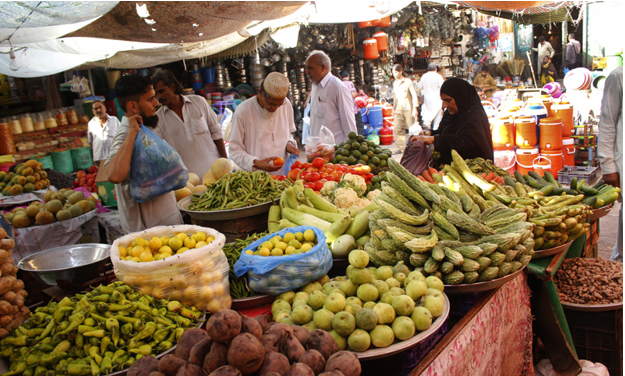
Credit: INP-WealthPk
Related Articles