INP-WealthPk

Shrinking farm sizes deepen Pakistan’s productivity challenge even as total farm numbers rise 34%
July 13, 2026
By Farooq Awan
Pakistan’s number of farms increased by 34% between the Agricultural Census 2010 and Agricultural Census 2024, but the average farm size fell by 17%, highlighting a growing fragmentation challenge for agricultural productivity, mechanisation and rural incomes.
According to the Agricultural Census 2024 National Report of the Pakistan Bureau of Statistics, available with Wealth Pakistan, the number of farms rose from 8.264 million in 2010 to 11.104 million in 2024. However, the average size of farm area declined from 6.4 acres to 5.3 acres during the same period.
The data shows that total farm area increased by 12% from 52.910 million acres in 2010 to 59.301 million acres in 2024. Cultivated area also expanded by 24%, rising from 42.622 million acres to 52.788 million acres. But the decline in average farm size suggests that land is being divided among a larger number of farm operators, creating smaller holdings across the rural economy.
The issue matters because smaller farms can make it harder for farmers to adopt machinery, invest in irrigation, access formal credit or benefit from economies of scale. It also affects policy planning because input support, technology adoption and farm advisory services become more difficult when holdings are small and scattered.
The census shows that Punjab had the highest number of farms at 5.05 million, accounting for 45% of the national total. Khyber Pakhtunkhwa followed with 3.58 million farms, or 32%, while Sindh had 1.83 million farms and Balochistan 0.63 million farms.
In terms of farm area, Punjab remained the largest contributor with 31.04 million acres, or 52% of the national farm area. Balochistan, despite having only 6% of farms, accounted for 17% of farm area, reflecting larger average holdings in the province. The highest average farm area size was recorded in Balochistan at 16.1 acres, compared with the national average of 5.3 acres.
The report further shows that the number of fragmented farms increased sharply by 76% from 2.829 million in 2010 to 4.984 million in 2024. More importantly, the average number of fragments per fragmented farm rose from 3 to 7, showing that land division is not only increasing in number but also becoming more complex.
This trend has direct implications for farm management. A farmer operating several scattered fragments may face higher costs in moving labour, machinery, water and inputs across locations. It can also reduce the efficiency of irrigation and crop supervision.
The findings suggest that Pakistan’s agricultural challenge is not only to increase cultivated area or output, but also to deal with the structure of farming itself. Without policies that address land fragmentation, smallholder productivity and access to technology, growth in the number of farms may not automatically translate into higher farm incomes.
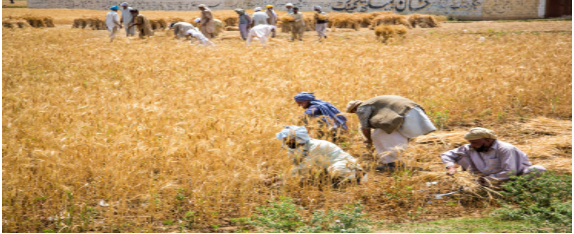
Credit: INP-WealthPk
Related Articles