



INP-WealthPk

Tunnel farming reaches 58,626 farms, but adoption remains limited
July 13, 2026
By Moaaz Manzoor
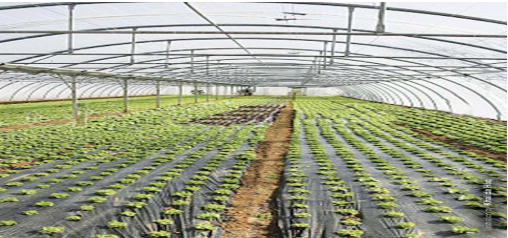
Tunnel farming has reached 58,626 farms across Pakistan, but its adoption remains limited compared with the country’s total farm base of 11.104 million, according to the Agricultural Census 2024.
The Agricultural Census 2024 National Report of the Pakistan Bureau of Statistics, available with Wealth Pakistan, shows that farms reporting the use of greenhouse technology, or tunnel farming, covered 277,283 acres at the national level.
The finding matters because tunnel farming can help farmers produce vegetables and other high-value crops outside normal seasons, improve protection from weather shocks and support better market timing. But the low number of reporting farms shows that modern protected agriculture is still at an early stage in Pakistan.
Sindh reported the highest number of farms using tunnel farming at 23,309, followed by Punjab with 19,651 farms. Khyber Pakhtunkhwa recorded 11,967 farms, Balochistan 3,649 and Islamabad Capital Territory 51.
In terms of protected area, Punjab had the largest tunnel farming area at 96,999 acres. Sindh followed with 73,540 acres, Khyber Pakhtunkhwa with 65,757 acres and Balochistan with 40,763 acres. Islamabad Capital Territory recorded 223 acres.
The census also gives a tenure-wise breakdown of tunnel farming area. Out of the national protected area of 277,283 acres, owner farms accounted for 234,381 acres, owner-cum-tenant farms for 25,215 acres and tenant farms for 17,687 acres.
This pattern suggests that farmers with more secure control over land are more likely to invest in tunnel farming. Protected agriculture usually requires upfront spending on structures, plastic sheets, irrigation systems and crop management. Tenant farmers may find it harder to make such investments if land arrangements are insecure or short-term.
The size-wise data also shows that tunnel farming is not limited only to very large farms. Farms between 2.5 and under 5 acres reported the highest number using tunnel farming, at 16,559, followed by farms between 1 and under 2.5 acres at 13,947. Farms between 5 and under 7.5 acres reported 9,722 cases.
However, larger farms accounted for sizeable protected areas in some categories. Farms of 100 acres and above reported 18,258 acres under tunnel farming, even though only 298 such farms reported using the technology.
For farmers, the promise of tunnel farming lies in higher-value production and better seasonal control. For consumers, wider adoption can improve availability of vegetables and reduce seasonal price swings. But the census numbers show that the technology is far from widespread.
The next policy challenge is to make protected farming more accessible through credit, technical advice, water-efficient irrigation and market linkages. Without such support, tunnel farming may remain concentrated among farmers who can already afford the investment.
Credit: INP-WealthPk
Related Articles