i NEWS PAK-CHINA
Pakistan's Vanishing Forests: Why Development Must Not Come at the Cost of NatureBreaking
June 10, 2026
By. Fatima Javed
Islamabad : Pakistan is witnessing a concerning rise in deforestation, particularly in urban centers and northern regions, where trees are increasingly being removed in the name of development. Environmental experts warn that unchecked tree cutting is contributing to rising temperatures, biodiversity loss, environmental degradation, and a greater risk of natural disasters.
Many citizens and environmental advocates believe that strict laws, heavy fines, and severe penalties should be imposed on those involved in illegal deforestation. Accountability should extend beyond private individuals and businesses to include government departments and public institutions responsible for tree removal during infrastructure and development projects.
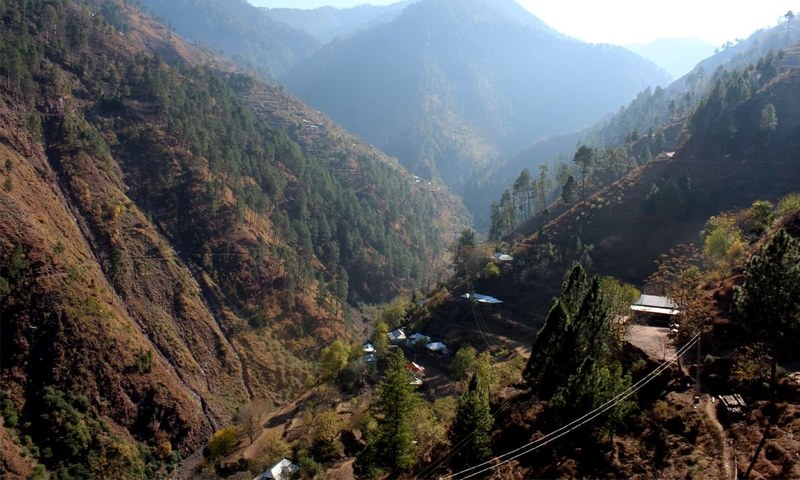
The Murree hills, where continued deforestation has sparked concerns over rising temperatures and environmental sustainability.
In recent years, significant deforestation has been observed in Pakistan's northern regions, including the Galiyat belt, Murree, Nathiagali, and surrounding areas located only a few hours from the federal capital. Once renowned for their dense forests, cool temperatures, and natural beauty, these regions have experienced increasing tree loss due to construction, commercial expansion, tourism-related development, and illegal logging.
Climate scientists and conservationists warn that Pakistan's shrinking forests are already affecting local climates and increasing environmental risks. According to recent estimates, forests cover only around 4.7 to 5.7 percent of Pakistan's land area far below internationally recommended levels for ecological sustainability.
Researchers estimate that Pakistan has lost nearly 8 percent of its forest cover since 2001, while the Murree forest region alone has witnessed a notable decline due to urban expansion and commercial activity. Environmentalist Sardar Muhammad Sabir, Chairman of the Galiyat Tahaffuz Movement, has described trees as "our natural air conditioners," warning that replacing forests with concrete structures is turning once-cool hill stations into heat traps.
Islamabad, once celebrated as one of the greenest capitals in the region, has undergone rapid urbanization over the past two decades. Many residents recall a city rich in greenery during the 1990s and early 2000s. Today, large sections of its green belts have been replaced by concrete structures, roads, commercial developments, and expanding housing projects.
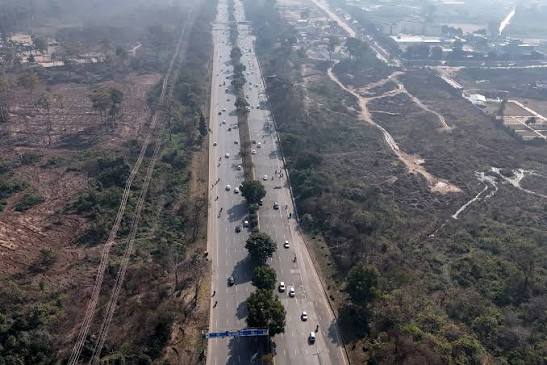
A view of a section of the Islamabad Expressway where extensive tree cutting has taken place in the name of modern development. The area requires urgent attention from authorities to undertake large-scale tree plantation and restore lost greenery.
Deforestation has also become a serious concern in the Swat region of Khyber Pakhtunkhwa. Forests play a crucial role in stabilizing mountain slopes, absorbing rainwater, and regulating water flow from melting snow. The loss of tree cover increases the risk of soil erosion, landslides, and flash floods. Many observers believe that continued forest destruction has amplified the impact of flooding events witnessed in recent years, placing both communities and infrastructure at greater risk.
Protecting Pakistan's natural environment requires more than awareness campaigns and symbolic plantation drives. Strong enforcement of environmental laws is essential. Strict penalties should be imposed not only on individuals but also on large corporations, housing developers, and government-backed projects that contribute to unnecessary deforestation.
At the same time, Pakistan needs a nationwide tree plantation campaign involving both the public and private sectors. Citizens, organizations, schools, universities, and businesses should be encouraged to participate in reforestation efforts. Incentives and rewards for successful tree-planting initiatives could help foster a culture of environmental responsibility and stewardship.
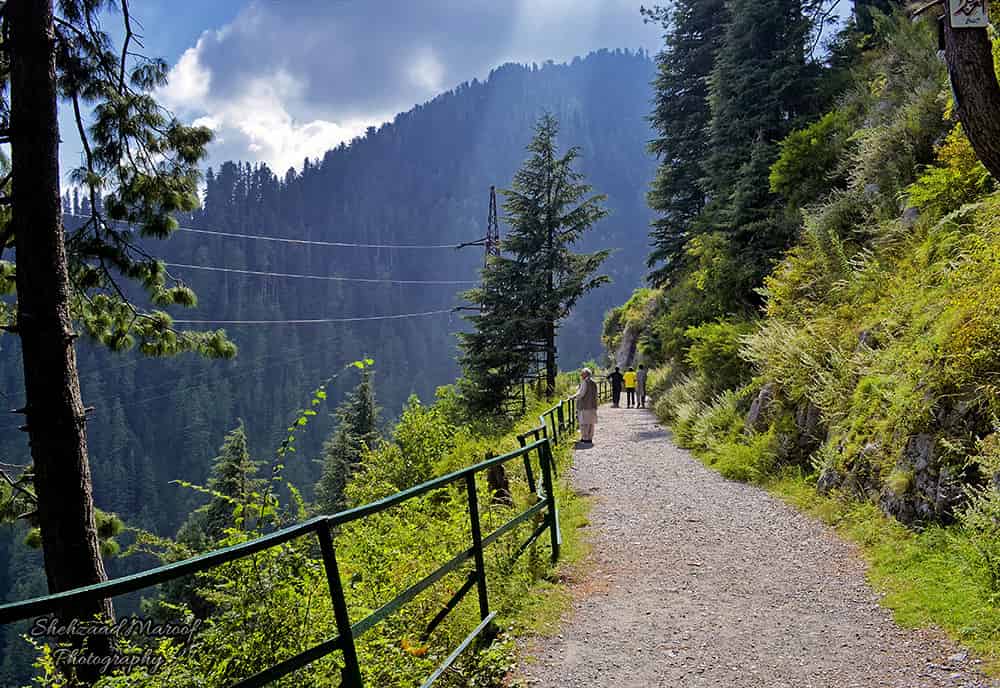
Nathiagali Pipeline Track, where numerous trees can be seen cut down and burned, raising concerns about environmental degradation in the area.
In addition to stronger laws and penalties, Pakistan urgently needs the establishment of an independent National Forest Protection and Restoration Task Force. This body should consist of environmental experts, forestry officials, climate scientists, legal professionals, and representatives from civil society. The task force should be empowered to investigate illegal tree cutting across the country, regardless of whether it is carried out by private individuals, corporations, housing societies, or government institutions.
The proposed task force should have the authority to recommend legal action, impose environmental compliance measures, and ensure that development projects meet strict ecological standards. Furthermore, it should be granted the freedom to formulate long-term policies aimed at increasing Pakistan's forest cover, restoring degraded landscapes, expanding urban forests, and overseeing nationwide reforestation initiatives.
To strengthen enforcement, the task force should establish provincial and district-level monitoring units equipped with modern technologies such as satellite imagery, drone surveillance, and Geographic Information Systems (GIS) mapping to detect illegal logging and encroachments in real time. Such a system would enable authorities to respond swiftly to environmental violations and protect forests even in the most remote regions of the country.
As climate change continues to threaten ecosystems and communities across Pakistan, preserving forests must become a national priority. Without decisive action, the country risks losing forests, facing hotter cities, dwindling water resources, and becoming more vulnerable to natural disasters.
Credit: Independent News Pakistan (INP) — Pak-China
Related News