




INP-WealthPk

China’s technical expertise to help overhaul PARC
October 15, 2026
By Azeem Ahmed Khan
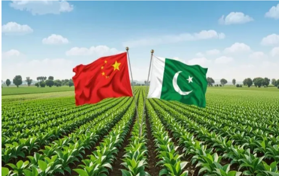
China’s technical cooperation is set to play a key role in Pakistan’s plan to overhaul the Pakistan Agricultural Research Council (PARC) through specialised centres of excellence, internationally accredited laboratories and stronger regional research centres.
According to documents of the Ministry of National Food Security and Research available with Wealth Pakistan, the restructuring is being carried out under the broader initiative “Reimagining Agricultural Research in Pakistan”. The restructuring aims to make PARC a leaner, performance-driven organisation with research infrastructure directly aligned with food security, climate resilience and export growth.
The documents show that PARC is pursuing institutional affiliation with the Chinese Academy of Agricultural Sciences (CAAS) to benefit from Chinese expertise in research management, advanced facilities and human resource development.
A major part of the plan is to establish five thematic centres of excellence at the National Agricultural Research Centre (NARC) in Islamabad. These centres will not be set up as new standalone entities. Instead, existing NARC facilities will be upgraded and modernised with technical input from CAAS.
The proposed centres will focus on genome-based research in field and horticultural crops; genetic improvement and health management of livestock; climate-smart solutions for land, water and energy; artificial intelligence and technology in agri-food systems; and food processing and value addition.
Five sub-working groups, with focal persons from NARC, have been constituted to advance technical cooperation for each Centre of Excellence, indicating that the collaboration is being organised around specific research themes rather than a broad cooperation framework.
The restructuring also seeks to strengthen Pakistan’s agricultural export compliance system. According to the documents, the country’s agricultural exports regularly face rejection because domestic test reports and certificates are not recognised in international importing markets.
To address this gap, PARC plans to launch an integrated project for state-of-the-art, internationally accredited laboratory infrastructure at NARC, Islamabad. The Export Development Fund is to finance the project.
The proposed laboratories will be developed to ISO/IEC 17025:2017 standards, with ISTA, WOAH and IPPC/EPPO recognition where applicable. The aim is to enable Pakistan to issue globally accepted test reports and phytosanitary, food safety and veterinary certificates from a single national hub.
The laboratory plan covers veterinary export testing; soil, water and fertiliser testing; seed quality testing; food quality testing; food composition and authenticity testing; pesticide residue compliance testing; plant health diagnostic testing; and DNA fingerprinting.
The reform plan also includes rationalising and merging overlapping institutes. Under the restructuring, every institute is being evaluated on two criteria: alignment with national priorities and performance. Underperforming or overlapping institutes will be merged, restructured or phased out.
The existing 10 regional research establishments will be consolidated into four stronger agroecological research centres: a tropical agricultural research centre in Karachi, a dryland agricultural research centre in Quetta, a mountain agricultural research centre in Gilgit and an arid zone research institute in D.I. Khan.
The restructuring plan followed a visit by a high-level delegation from China’s Ministry of Agriculture and Rural Affairs and CAAS in September 2025 at the invitation of the Ministry of National Food Security and Research. The delegation assessed PARC, NARC and affiliated institutes.
The assessment found that despite their strategic potential, the institutions were constrained by chronic underinvestment, fragmented incentives and duplication of effort between federal and provincial bodies. It concluded that deep structural reform was needed to meet the demands of modern agriculture.
The comprehensive plan to revamp and restructure PARC was presented to the Prime Minister on March 17, 2026, and subsequently approved.
The Coordinator to the Prime Minister on Agriculture and Food Security is monitoring implementation of the plan.
Credit: INP-WealthPk
Related Articles