


INP-WealthPk

Guyana’s resource boom offers lessons for unlocking Pakistan’s mineral wealth
June 23, 2026
By Qudsia Bano
Guyana's rapid economic transformation through the development of its natural resources is drawing attention across the developing world, offering valuable lessons for Pakistan as it seeks to unlock the potential of its vast but largely unexplored mineral reserves.
The South American nation has emerged as one of the world's fastest-growing economies following the discovery and development of offshore energy resources. According to the International Monetary Fund (IMF), Guyana's economy expanded by 43.6% in 2024 after growing 33% in 2023, while real GDP is projected to increase by a further 10.3% in 2025.
The IMF attributes the growth primarily to resource-sector expansion and related investment activity, highlighting how effective management of natural resources can transform economic prospects.
The country's resource revenues have also significantly strengthened public finances. According to Guyana's Ministry of Finance, the Natural Resource Fund closed 2024 with assets exceeding $3 billion, providing resources for infrastructure development, healthcare, education and economic diversification initiatives.
Although Guyana's growth has largely been driven by oil production, experts say its broader success stems from creating a policy environment that attracted foreign investment, ensured regulatory certainty and facilitated long-term resource development.
The experience is particularly relevant for Pakistan, which possesses substantial deposits of copper, gold, iron ore, lithium, rare earth elements and other industrial minerals.
Speaking at the Pakistan Minerals Investment Forum (PMIF) 2025, officials noted that more than 95% of Pakistan's mineral wealth remains unexplored despite the country's significant geological potential. The forum brought together international investors, mining companies and policymakers to explore opportunities in the sector.
Signs of improvement are already emerging. According to the Pakistan Economic Survey 2025-26, the mining and quarrying sector recorded growth of 0.4% in FY2025-26, marking the first positive growth following four consecutive years of contraction.
Production of several minerals posted strong increases during July-March FY2025-26. Magnesite production surged 164.8%, rock salt 109.9%, gypsum 67.0%, iron ore 41.5%, ocher 31.7%, limestone 25.1% and coal 6.5%.
One of the most significant developments has been growing international interest in Pakistan's copper and gold resources, particularly the Reko Diq project, which is expected to become one of the world's largest undeveloped copper-gold mines.
Industry experts believe the project has the potential to generate substantial export earnings, attract foreign investment and create employment opportunities over the coming decades.
Speaking to Wealth Pakistan, Muhammad Ahsan, Manager Mining Projects at Descon Engineering Limited, said Guyana's experience demonstrates that natural-resource wealth alone is not enough to guarantee economic success.
"The key lesson from Guyana is that resource development must be supported by consistent policies, investor confidence and institutional capacity. Investors need regulatory certainty and long-term visibility before committing capital to large-scale mining projects," he said.
Ahsan stressed that expanding geological exploration and improving resource mapping should be among Pakistan's immediate priorities.
"A large portion of Pakistan's mineral potential remains underexplored. Better geological data can help reduce investor risk and accelerate the development of commercially viable projects," he said.
Faisal Raza, Supply Chain Manager at Mughal Iron & Steel Industries Limited, said rising global demand for critical minerals has created new opportunities for resource-rich countries.
"The transition toward clean energy, electric vehicles and advanced manufacturing is increasing global demand for copper, lithium and other strategic minerals. Countries that can develop reliable supply chains will be better positioned to attract investment and strengthen exports," he said.
Raza emphasized the need to move beyond the export of raw materials.
"Pakistan should focus on developing processing facilities and industrial ecosystems around mining projects. Greater value addition can generate higher export earnings, create skilled jobs and support broader industrial development," he said.
Analysts believe Pakistan's mining sector could emerge as a major driver of economic growth if exploration, investment and downstream processing continue to expand.
As global demand for minerals increases and investors seek new resource opportunities, Guyana's experience demonstrates how effective resource management, investor-friendly policies and value-added development can transform natural wealth into long-term economic growth and national competitiveness.
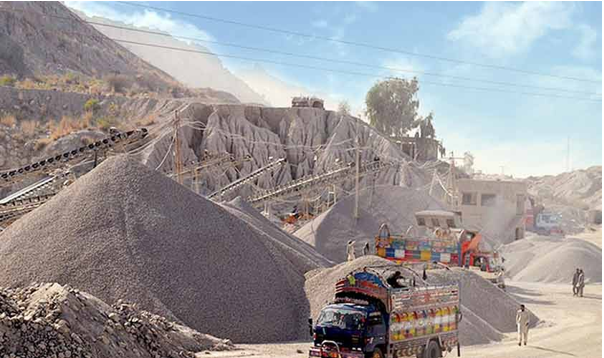
Credit: INP-WealthPk
Related Articles