




i INP-WEALTHPK
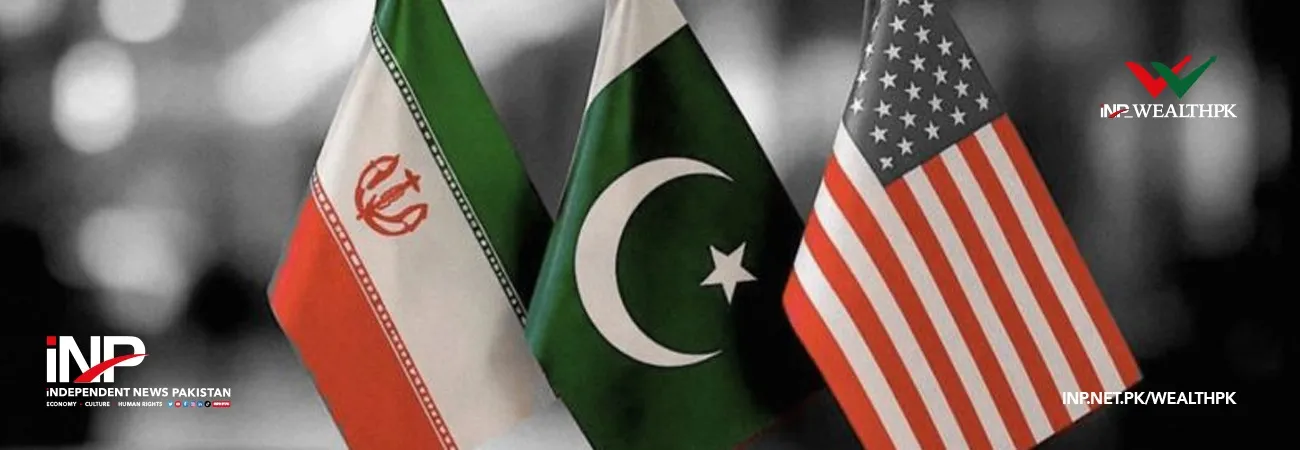
Iran-US settlement could unlock $20bn opportunity for PakistanBreaking
June 11, 2026
By Moaaz Manzoor
A resolution of the US-Iran conflict could create a potential $20 billion economic opportunity for Pakistan through trade revival, energy savings, Gwadar-linked transit activity and the Saudi defence and investment framework, according to a KTrade Research report available with Wealth Pakistan. The report said Pakistan is at a rare geopolitical and economic crossroads because of its potential role as an intermediary in Iran-US negotiations.
It argued that a settlement could transform a regional crisis that has already imposed significant costs on Pakistan into an opportunity across trade, energy, logistics and investment. According to the report, the conflict and disruption of traffic through the Strait of Hormuz imposed an estimated cost of $10 billion to $14 billion on Pakistan’s economy, equivalent to around 2-3 percent of GDP. It said the fallout drove inflation up to 11.7 percent in May 2026, pushed the current account into deficit, and forced a 100-basis-point policy rate hike in April 2026.
KTrade estimated the potential near-term upside from a US-Iran peace deal at around $20 billion. This includes $2 billion from potential trade with Iran, $2 billion linked to the Iran-Pakistan gas pipeline, $1 billion from a Gwadar Port transit-trade corridor and $15 billion associated with the Saudi defence and investment framework. The report said Pakistan-Iran trade remains well below its potential despite geographical proximity and long-standing ties. Bilateral trade peaked at $1.32 billion in 2008-09 before declining sharply because of international sanctions on Tehran.
According to the report, a sanctions-free trade corridor could revive Pakistan’s exports of rice, meat, paper and paperboard, textiles, fruits, sesame seeds, chickpeas, beans and surgical goods to Iran. Energy was identified as another major channel of opportunity. The report noted that the Iran-Pakistan gas pipeline could supply around 750 million cubic feet of natural gas per day from Iran’s South Pars field. It estimated that pipeline gas priced at $6-8 per MMBtu would be significantly cheaper than current LNG imports, which cost around $13 per MMBtu.
On that basis, KTrade estimated that Pakistan could save approximately $1.5 billion to $2 billion annually if pipeline gas replaced comparable LNG imports. It said such savings would be significant for an economy grappling with energy shortages, circular debt and industrial disruptions caused by gas supply constraints. The report also identified Gwadar as a potential beneficiary of any regional realignment following a settlement. It said the Strait of Hormuz would remain a structural risk even after a peace agreement because existing bypass pipelines have a combined capacity of around 8.5 million barrels per day, compared with nearly 20 million barrels that pass through the strait daily.
In that context, Gwadar’s location outside the Hormuz chokepoint could enhance its strategic value. The report estimated that maintaining container volumes at April 2026 level could generate $50 million to $80 million annually in port-handling fees, in addition to transit dues, transshipment charges and potential Special Economic Zone revenues. KTrade also linked the opportunity to broader regional infrastructure development.
It said Gwadar and CPEC infrastructure could connect Pakistan with Iran, Central Asia, Russia and Europe through expanded trade corridors, including a possible linkage with the International North-South Transport Corridor. According to the report, planned investment under CPEC has increased from $46 billion at its launch in 2015 to $62 billion through FY2030. It added that projects worth $24.7 billion have already been completed, including $9.8 billion in transport infrastructure. Another opportunity highlighted in the report is the Pakistan-Saudi Arabia Strategic Mutual Defence Agreement.
KTrade said the arrangement is linked to a $10 billion Saudi investment package and a target to increase bilateral trade from $5 billion to $15 billion annually. The report also pointed to potential gains for Pakistan’s external sector and financial markets. It said a settlement could support a country-risk re-rating, strengthen foreign exchange reserves, boost exports to GCC markets, lower inflation through softer oil prices and improve the current account balance. However, the gains remain contingent on several factors.
The report’s projections depend on a phased US-Iran settlement, the uninterrupted reopening of commercial traffic through Hormuz, easing of sanctions-related barriers, revival of regional investment flows and Pakistan’s ability to improve logistics, port efficiency and security conditions. The report, authored by M. Faran Khan of KTrade Research, concluded that Pakistan could emerge as one of the major beneficiaries among emerging markets if a durable Iran-US settlement materialises. It noted that the key challenge for policymakers would be to convert diplomatic positioning into tangible trade, energy and transit gains before the geopolitical window of opportunity narrows.

Credit: INP-WealthPk
Related News


