


i NEWS PAK-CHINA

Experts recommend Trichoderma application for climate-resilient farmingBreaking
July 18, 2026
Chinese and Pakistani agricultural experts highlighted the potential of introducing China's Trichoderma biofertilizer technology to Pakistan, saying scientific knowledge transfer and localized adaptation could help farmers improve crop yields, restore soil health and reduce dependence on chemical fertilizers.
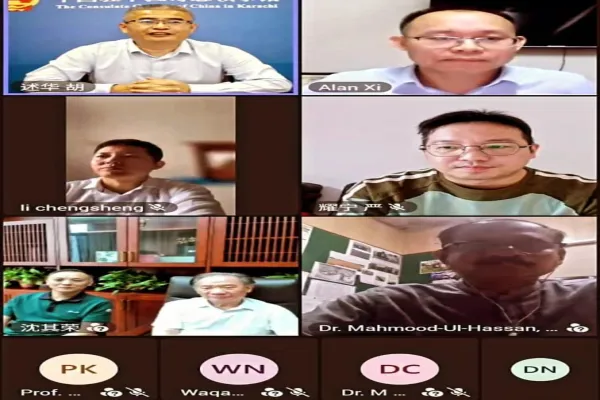
The recommendations emerged during an online technical webinar on the commercialization and localization of Trichoderma biofertilizer in Pakistan under CPEC Phase II.
The event was jointly organized by the China Machinery Engineering Corporation (CMEC) and the Pakistan-China Agriculture Cooperation Exchange Center, according to a report carried by Gwadar Pro.
Representative of the Chinese Consulate General in Karachi highlighted the importance of environmentally friendly agricultural practices and Pakistan-China cooperation in advancing sustainable agriculture and food security.
Experts said Pakistan has already demonstrated the potential of Trichoderma through field trials in crops such as cotton, vegetables and orchards.
They noted that drawing on China's experience in commercialization and large-scale application could accelerate its adoption and support climate-resilient agriculture in the country.
The webinar featured an extensive question-and-answer session, during which participants sought practical guidance on adapting China's experience with Trichoderma to Pakistan's diverse climatic conditions and cropping systems.
Responding to concerns about Pakistan's high summer temperatures, renowned Chinese microbiologist Prof. Dr. Shen Qirong of the Chinese Academy of Engineering explained that soil temperature remains significantly lower than atmospheric temperature, allowing Trichoderma to perform effectively under local conditions.
He emphasized that soil moisture, rather than air temperature, is the critical factor determining the biofertilizer's effectiveness.
Prof. Shen advised that Trichoderma should be incorporated directly into the soil instead of being applied on the surface, enabling beneficial microorganisms to colonize the root zone more efficiently.
He further recommended maintaining adequate soil moisture for at least three days after application and avoiding chemical fertilizers for five to ten days to maximize the biofertilizer's performance.
For improved results, he suggested applying Trichoderma together with organic manure and preferably during the evening, when environmental conditions are more favorable for microbial activity.
Sharing local field experience, Kashif Khan, Co-founder of Green Agri Marketing, said demonstration trials had recorded a 30 to 40 percent increase in cotton yields following the application of Trichoderma biofertilizer, highlighting its potential under Pakistani farming conditions.
Meanwhile, Dr. M. Ayaz, Chief Executive Officer of Phyto Doctor Pvt. Limited, expressed interest in establishing a joint venture or import agreement with Chinese manufacturers to introduce registered Trichoderma biopesticide products into Pakistan, reflecting growing private-sector interest in bringing the technology to the Pakistani market.
Experts agreed that localized field trials across different agroecological zones would be essential to identify the most suitable application methods and crop-specific recommendations for farmers.
Participants said wider adoption of Trichoderma could help farmers lower production costs, improve soil fertility and strengthen resilience against soil-borne diseases, while advancing sustainable and climate-smart agriculture.
They added that closer Pakistan-China cooperation in agricultural research and technology transfer under CPEC Phase II would help accelerate the adoption of biological farming solutions across Pakistan.
Credit: Independent News Pakistan (INP) — Pak-China
Related News