


i NEWS PAK-CHINA
Pakistan, China reaffirm ‘Iron-Clad’ partnership at ISSI SeminarBreaking
May 21, 2026
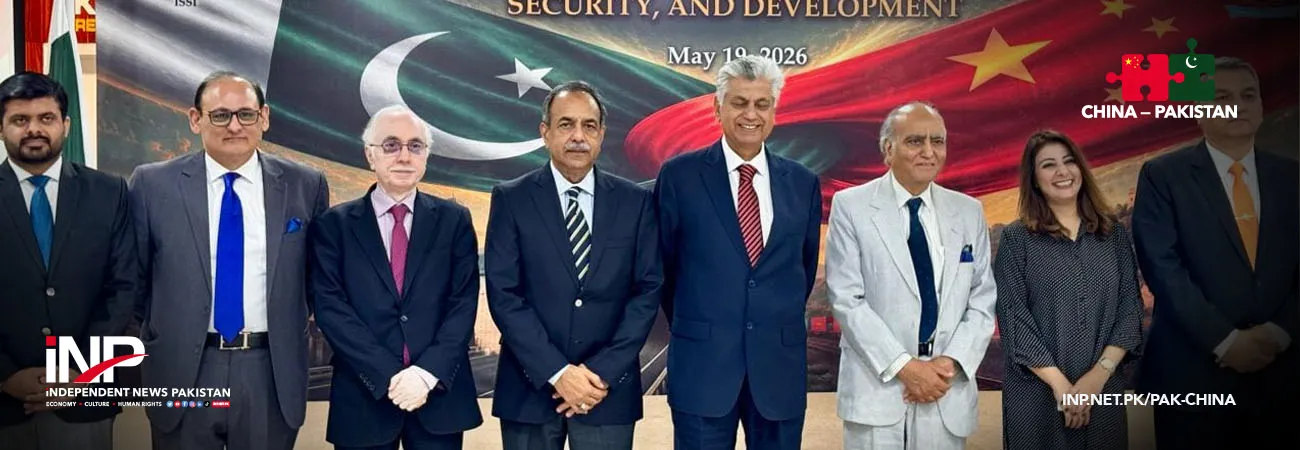
As Pakistan and China mark 75 years of diplomatic relations, the China-Pakistan Study Centre (CPSC) at the Institute of Strategic Studies Islamabad (ISSI) hosted an international seminar titled “75 Years of Iron-Clad Friendship: Pakistan–China Cooperation in Diplomacy, Security, and Development,” bringing together diplomats, scholars, and policy experts to reflect on the enduring partnership and its future trajectory.
Murtaza Solangi, spokesperson for the President of Pakistan, described Pakistan-China ties as an “all-weather” friendship rooted in the ancient Silk Road and built on China’s policy of “non-interference and respect for sovereignty, according to a Gwadar Pro's report.
He highlighted cooperation in defence, infrastructure, energy, aviation, and emerging technologies, while calling CPEC “transformative” from Gilgit to Gwadar.
Solangi said that the CPEC is now expanding into “AI, digital technologies, space cooperation, climate resilience, and green development,” expressing confidence that Phase II would deepen regional connectivity and shared prosperity.
Ambassador Khalid Mahmood, Chairman BoG ISSI, termed the relationship an “all-weather strategic cooperative partnership” founded on “mutual trust, sovereign equality, and unwavering support for core interests.”
He said CPEC Phase I strengthened energy and infrastructure development, while Phase II focuses on industrial cooperation, agriculture, Special Economic Zones (SEZs), and socio-economic uplift, with Gwadar emerging as a key economic hub.
Shi Yuanqiang, Deputy Head of Mission at the Chinese Embassy, in a pre-recorded message said Pakistan-China relations have remained “resilient and iron-clad” despite global changes.
He described CPEC as the “central pillar” of Belt and Road cooperation and said “CPEC 2.0” would prioritize industry, agriculture, mining, innovation, and green development.
Former Ambassador Masood Khalid traced the historical evolution of ties from Pakistan’s early diplomatic recognition of China to landmark projects like the Karakoram Highway, emphasizing that the partnership remains rooted in “mutual respect, trust, and non-interference.”
Dr. Fazal ur Rehman stressed that friendship “requires continuous nurturing,” urging faster progress on SEZs, investment reforms, and educational cooperation.
Dr. Hassan Daud Butt described CPEC as the “backbone of cooperation,” advocating greater focus on technology, innovation, connectivity, and youth engagement.
Prof. Dr. Yunsong Huang called the relationship an “ironclad brotherhood” and a stabilizing force in a changing global order, while Dr. Ma Zheng underscored cooperation in defence, counterterrorism, and regional stability, particularly regarding Afghanistan.
Highlighting the human dimension of bilateral ties, Dr. Gulshan Rafiq emphasized that long-term sustainability depends on stronger educational, cultural, and people-to-people exchanges.
Earlier, Director CPSC Dr. Talat Shabbir said Pakistan-China relations, established in 1951, continue to expand across multiple sectors, with CPEC serving as a flagship Belt and Road Initiative project promoting regional connectivity, stability, and shared development.
Credit: Independent News Pakistan (INP) — Pak-China
Related News