

آئی این پی ویلتھ پی کے
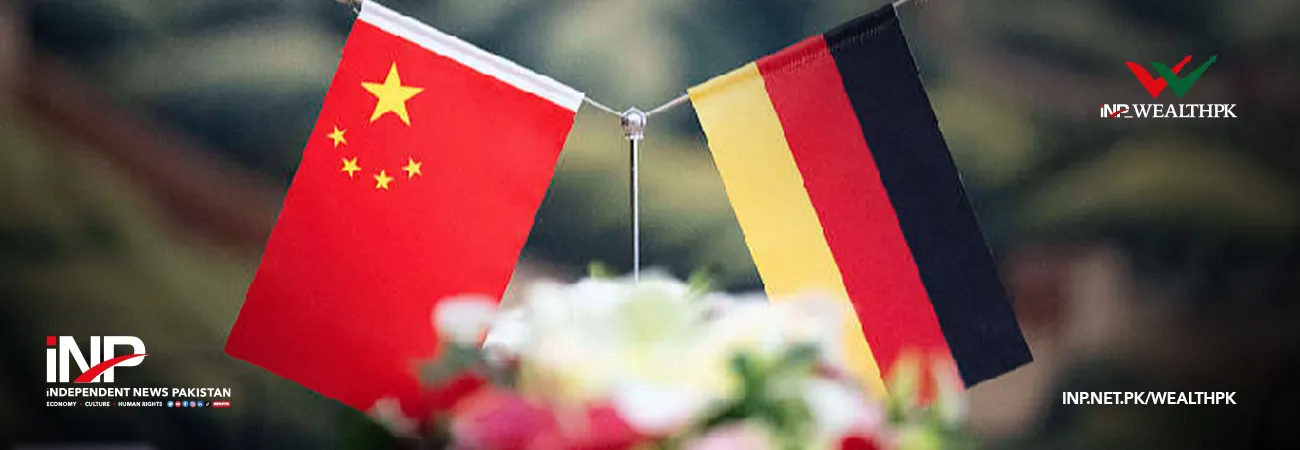
Germany’s engagement with China signals shift in Europe’s approach in evolving global order
March 09, 2026
By Azam Tariq
Germany’s recent high-level engagement with China signals a shift in Europe’s approach as it navigates a changing global order, with economic interdependence, supply-chain stability and geopolitical adjustments shaping dialogue between major economies.
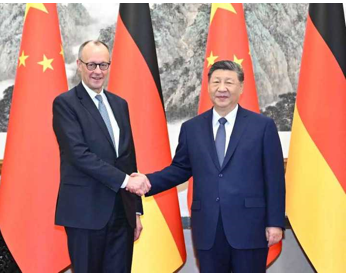
The recent visit of German Chancellor Olaf Scholz to Beijing reflects continued diplomatic engagement between two major trading partners.
During the visit, Scholz held meetings with Chinese leaders to discuss bilateral economic cooperation, trade relations and broader global issues, as both sides sought to maintain dialogue between two economies closely linked through manufacturing and industrial supply chains.
Observers say the engagement illustrates a broader pattern in the evolving global system where economic realities continue to encourage pragmatic cooperation even as strategic competition intensifies.
With China and Germany closely connected through industrial supply chains, continued dialogue between the two economies serves both as a political signal and an economic stabiliser, shaping how major actors manage tensions while maintaining cooperation in global trade.
According to the General Administration of Customs, trade between China and Germany reached 1.51 trillion yuan, about $217.83 billion, in 2025, marking a year-on-year increase of 5.2%. Machinery and electrical products accounted for more than 70% of bilateral trade, highlighting the strong industrial connections linking the two economies.
Adil Seemab, Associate Professor of International Relations at Hazara University, told Wealth Pakistan that the recent visit of German Chancellor Olaf Scholz to Beijing reflects a pragmatic recognition of the realities of the global economy.
He said Europe may speak the language of strategic competition, but its industrial base remains deeply tied to China’s productive networks. According to him, trade between Germany and China is not simply commercial exchange but a structural relationship shaped by interdependent global supply chains.
Seemab noted that such engagement carries significance beyond bilateral relations because dialogue between major economies can reduce uncertainty in production networks strained by geopolitical tensions.
He said when large economies maintain trade and communication channels, workers, producers and consumers are less exposed to sudden disruptions. In this sense, he described stability in international trade as a quiet form of “peacekeeping” in an increasingly fragmented global order.
Seemab added that sustained engagement between major trading partners could also influence multilateral trade frameworks, including institutions such as the World Trade Organization, by slowing the drift toward protectionism and economic bloc politics.
He further argued that modern production systems have already woven economies together so closely that attempts to divide the world into rigid geopolitical camps often conflict with the practical realities of global industry and labour.
Speaking with Wealth Pakistan, Nabila Jaffer, Research Analyst at the Institute of Regional Studies focusing on China, said the international system is currently undergoing transformation, with a multipolar world gradually taking shape.
She said the evolving global order is characterised not only by shifting economic centres but also by adjustments in alignments as countries respond to emerging geopolitical and economic realities.
Jaffer noted that Europe’s approach is also being shaped by strains within the transatlantic partnership. She said the relationship has faced pressure since President Donald Trump’s first term, with unpredictable policy shifts creating uncertainty for European partners.
In the current redistribution of power and economic dependence, she said Europe is increasingly being pushed to mobilise more of its own resources as the United States prioritises managing China as a peer rival in the Asia-Pacific and redirects attention toward its own hemisphere.
According to Jaffer, Europe’s outreach to Beijing reflects efforts to diversify partnerships in response to these evolving dynamics while maintaining relevance in the emerging multipolar order.
She said the engagement indicates a shift in Europe’s approach as it navigates geopolitical turbulence and broader debates surrounding the changing balance of global power.
Jaffer added that these developments could influence China’s trade engagement with Europe, including possible adjustments linked to European concerns over trade deficits.
She said such arrangements may also shape global trade frameworks and contribute to stabilising international supply chains at a time when geopolitical tensions and unilateral trade actions are placing pressure on the rules-based international order.
Credit: INP-WealthPk