

آئی این پی ویلتھ پی کے

Pakistan’s citrus exports can reach $1bn in six years with varietal shift, value addition
January 12, 2026
Azeem Ahmed Khan
Pakistan’s citrus sector has the potential to unlock a major export turnaround by adopting new varieties, improving quality standards, and investing in value addition, with exports capable of reaching up to $1 billion within the next six years, a leading horticulturist and exporter said.
Shoaib Ahmed Basra, a board member of the Pakistan Horticulture Export and Development Company (PHDEC) and chairman of its Citrus Export Sub-committee, told Wealth Pakistan that industry assessments suggest the target is achievable if growers urgently transition to seedless, early- and late-season citrus varieties, adopt modern production practices, and focus on value addition.
He called for diversification beyond Kinnow into mandarins, tangerines, clementines, oranges, lemons, and grapefruit to enable year-round exports and access to premium international markets. Basra stressed the need for quality certification, traceability systems, clean nurseries, and imported germplasm, and advocated the establishment of dedicated citrus clusters, particularly on virgin land in the Potohar region.
“Exporters and scientists should go together, and farmers should grow what suits our environment and what the world wants to buy,” he said. Basra said Pakistan’s citrus industry remains confined to a shrinking three-month export window, as climate change has reduced the late-season viability of Kinnow, underscoring the urgency of diversification. “We only produce Kinnow for three months—December, January and February,” he said, adding that rising temperatures and untimely rains have effectively eliminated the traditional March-April export window.
He contrasted Pakistan’s limited season with countries such as China, Egypt, Turkey, and Spain, which cultivate multiple citrus varieties, including Navel and Valencia oranges, allowing longer shelf life and extended export periods. In China, he noted, the citrus season runs from September to June, with shipments from cold storage continuing into July. Basra highlighted China’s performance, noting that its citrus exports stand at around $1.5 billion despite its large domestic consumption. “In the same way, we also have very good scope,” he said.
He added that Pakistan currently exports little or no citrus to high-value markets such as the United States, Europe, Australia, and Japan, but said these destinations could be accessed once new varieties are introduced and quality standards improved. “Pakistani Kinnow is not going to any good-paying country,” Basra said. “Even without that, we touched $250 million in exports in 2021. So I think we can easily go to $1 billion, but first we need new varieties that can be taken to the international market.”
Although Kinnow remains Pakistan’s largest horticultural export, Basra said the sector has failed to evolve, leaving the country nearly two decades behind global trends. “Our variety was top of the line in the 1980s and 1990s,” he said. “The world has since moved towards seedless citrus, but we are still growing the same variety for the past 50 years, while its disease resistance is also exhausted.”
He said the impact is already evident. In 2001, up to 80 percent of fruit qualified as A-grade, whereas last year only 29 percent of production was exported, with 71 percent sold domestically as lower-grade fruit. Pakistan is expecting a Kinnow crop of around 2.8 million tonnes this season—nearly double last year’s output—but Basra said surplus production offers limited benefit without varietal diversity and value addition.
“Ninety percent of our citrus is one variety of Kinnow,” he said. “Globally, when you talk about citrus juice, it is orange juice—not mandarin or Kinnow.” As a result, Pakistan’s juice and concentrate industry operates on a limited scale, often blending mandarin juice with imported orange concentrate to improve taste. “Mandarin juice on its own is not used anywhere,” he said.
Basra urged a shift towards processed products such as juices, concentrates, and packaged drinks for Tetra Pak and tin packs. “We export fresh fruit, but it has low value and a short shelf life. Globally, everything is based on value addition,” he said. Pakistan already exports Kinnow by sea to markets ranging from the Middle East to Indonesia and the Philippines, and exports are expected to rise this season.
He added that central Asian countries also offer strong potential due to their proximity to Pakistan. He said Pakistan ranks as the world’s 18th-largest citrus exporter, with citrus accounting for about 30 percent of total fruit production. Kinnow represents around 85 percent of Pakistan’s total citrus output and contributes roughly 80 percent of citrus exports, reflecting its central role in both domestic supply and foreign markets.
Production is highly concentrated geographically, with nearly 90 percent of citrus grown in Punjab. Major producing districts include Sargodha, Sahiwal, Toba Tek Singh, Multan, Khanewal, Layyah, and Fateh Jang. This concentration has also positioned Pakistan as the global hub for Kinnow, with about 90 percent of the world’s total Kinnow production originating in the country, Basra said.
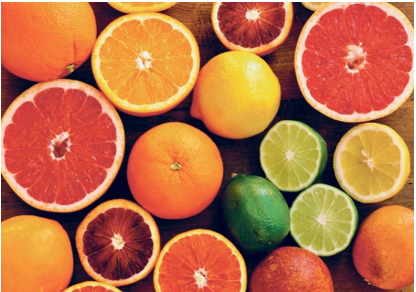
Credit: INP-WealthPk
متعلقہ مضامین