


i INP-WEALTHPK
Experts warn India’s dam storage expansion may affect Pakistan’s water shareتازترین
June 03, 2026
By Muhammad Luqman
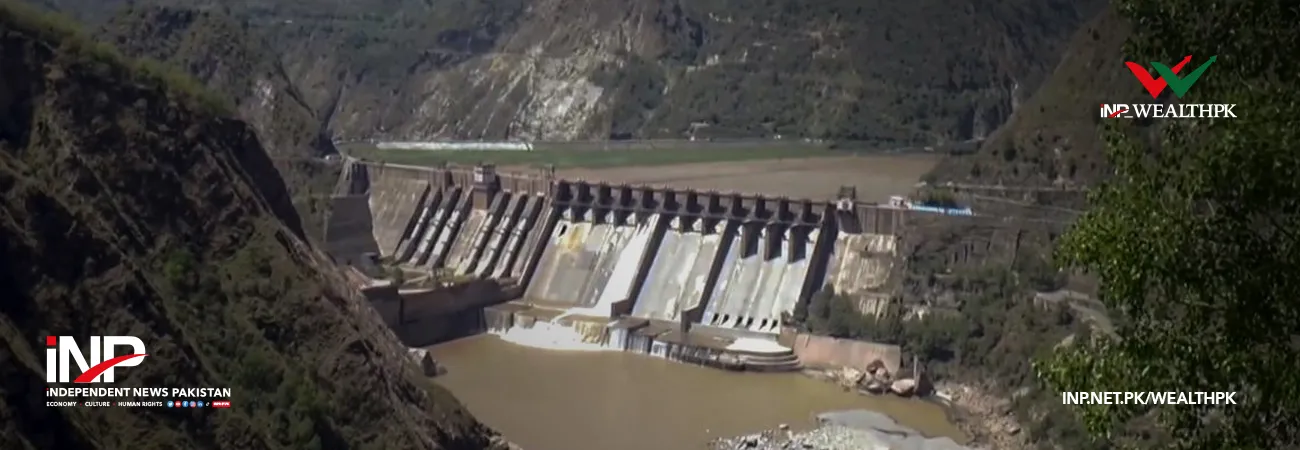
After unilaterally placing the 65-year-old Indus Waters Treaty (IWT) in abeyance, India has not only accelerated the development of major hydropower projects on the River Chenab in Indian Illegally Occupied Jammu and Kashmir — including Ratle, Pakal Dul, Kiru, Kwar and Sawalkot — but has also started increasing the storage capacity of existing hydropower projects such as the Baglihar and Salal dams under the pretext of sediment flushing, experts say.
India has recently announced that the spillway gates of the Salal Dam will remain open from May 21 to May 30 for reservoir silt flushing. According to an advisory issued by the Office of the District Magistrate, Reasi, the operation could raise the water level of the River Chenab by two to three meters in upstream and downstream areas along the river.
According to Pakistan’s Office of the Indus Water Commissioner, India has not communicated the silt flushing operation at Salal Dam to Pakistan.
The Salal Dam, officially known as the Salal Hydroelectric Power Station, is a 690MW run-of-the-river hydropower project located on the Chenab River in the Reasi district of Indian Illegally Occupied Jammu and Kashmir. It was the first hydroelectric project constructed by India on a western river, whose waters were largely allocated to Pakistan under the Indus Waters Treaty.
Water experts say India’s National Hydroelectric Power Corporation has lately initiated an unprecedented desilting and dredging operation at the Salal project.
Under the treaty, India was allowed to construct run-of-the-river hydropower projects on the western rivers — the Indus, Jhelum and Chenab — with limited storage capacity only as defined in the agreement. However, experts argue that after suspending the treaty in April 2025, India has been attempting to increase storage capacity at dams on western rivers, potentially affecting Pakistan’s share of water.
According to experts, the temporary increase in water flows on the Pakistani side may not pose an immediate threat, but it indicates that India is manipulating river flows under various pretexts.
“After emptying the Salal reservoir under the pretext of silt flushing, India may significantly reduce downstream flows towards Pakistan for several days, leading to a sharp decline in water levels at Marala Headworks,” said Syed Jamaat Ali Shah, Pakistan’s former Indus Water Commissioner.
Talking to Wealth Pakistan, he said the Indus River System Authority and other relevant authorities should reduce water releases from Mangla Dam for a few days to help meet irrigation requirements if flows decline early next month.
Mr Shah said he was well aware of the terrain and catchment area of the Salal Dam, adding that there was limited silt accumulation in the reservoir.
“In reality, India is carrying out dredging in the name of desilting to increase reservoir capacity, which was not permitted under the Indus Waters Treaty,” he explained.
Experts further noted that, following the suspension of the treaty, there is currently no effective bilateral mechanism through which Pakistan can seek operational details from India regarding activities on the eastern and western rivers.
“We can only raise the issue at international forums, as there is currently no bilateral channel available to discuss these matters,” former Indus Water Commissioner Sheraz Jameel Memon told Wealth Pakistan.
He also warned that additional silt released from the Salal Dam could enter Pakistani territory with the water flows.
“If the gates of Marala Headworks remain open, the silt will continue flowing downstream. Otherwise, it may accumulate in the Marala Pond area and in the canals off-taking from Marala,” Memon said.
Credit: INP-WealthPk
متعلقہ خبریں