

i INP-WEALTHPK
LSM rebounds 4.8pc in H1-FY26 after three years of contractionتازترین
May 18, 2026
By Abdul Ghani
Pakistan’s large-scale manufacturing (LSM) sector returned to growth in the first half of FY26 after three consecutive years of contraction, as lower inflation, easing interest rates and improving domestic demand revived industrial activity, according to the State Bank of Pakistan’s Half Year Report 2025-26.
The report said LSM expanded 4.8 percent in H1-FY26 compared with a contraction of 1.8 percent in the same period last year.
The rebound played a major role in pushing overall industrial growth to 8.1 percent during the first half of the fiscal year, up sharply from only 0.5 percent in H1-FY25.
According to the SBP, the recovery in manufacturing reflected improved macroeconomic conditions, including lower inflation, stable exchange rates, easing borrowing costs and stronger consumer demand.
The report said automobiles, textiles and petroleum products were among the largest contributors to manufacturing growth during the review period.
Automobile production increased as lower financing costs, promotional discounts and relatively stable prices improved consumer demand. The launch of new vehicle variants, particularly in the SUV segment, also boosted sales activity.
Textile and wearing apparel production also recovered, supported by relatively lower US tariffs and resilience in value-added exports despite broader weakness in overall export performance.
Meanwhile, higher construction and transport activity increased production of cement and petroleum products.
The report said construction-related industries particularly benefited from increased public development spending and the government’s concessional housing schemes.
Value addition in electricity, gas and water supply also increased during H1-FY26 as government subsidies supported energy-sector activity despite relatively subdued demand for grid electricity.
However, mining and quarrying remained under pressure and continued to contract during the review period.
The SBP said recent tariff rationalisation under the National Tariff Policy 2025-30 also influenced industrial import patterns.
Imports of machinery, metals and transport-related goods increased more strongly in categories where tariffs were reduced for a larger number of product lines.
This shift suggested growing industrial demand for imported inputs and capital equipment as production activity recovered.
Business and consumer confidence also improved during H1-FY26 alongside industrial recovery.
The report cited rising demand indicators, improved employment expectations and stronger activity in construction and manufacturing as signs of broader economic improvement.
Lower interest rates played a major role in supporting industrial recovery. The SBP reduced the policy rate by a cumulative 1,150 basis points between June 2024 and December 2025, helping reduce financing costs for businesses.
The central bank said easing monetary conditions supported both working-capital financing and fixed investment activity in manufacturing sectors.
Despite the recovery, the report warned that Pakistan’s industrial sector still faces major structural challenges.
The SBP identified weak competitiveness, low productivity, policy inconsistencies and limited technological upgrading as key barriers constraining sustainable industrial growth.
The report also warned that geopolitical tensions and rising energy prices could affect industrial activity in coming months.
The war in the Middle East has increased uncertainty regarding global supply chains, freight costs and energy imports, potentially raising production costs for manufacturers.
Supply disruptions involving machinery, raw materials and fertilizer imports could also weigh on industrial and agricultural output later in FY26.
Economists say Pakistan’s industrial recovery is an encouraging sign because manufacturing growth typically generates stronger employment, investment and export opportunities than consumption-led growth alone.
However, analysts caution that sustaining the momentum will require continued macroeconomic stability and deeper structural reforms aimed at improving industrial productivity and export competitiveness.
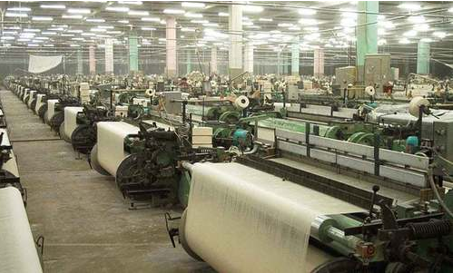
Credit: INP-WealthPk
متعلقہ خبریں