



INP-WealthPk

China's 15th Five-Year Plan opens new opportunities for people-centred CPEC cooperation
July 20, 2026
By Muhammad Zulqarnain
China's newly unveiled 15th Five-Year Plan (2026-2030), with its emphasis on high-quality development, innovation and improving people's well-being, is expected to create fresh opportunities for Pakistan as the China-Pakistan Economic Corridor (CPEC) enters a new phase focused on human capital, livelihoods and community development, experts say.
The plan's priorities closely align with the evolving direction of CPEC 2.0, under which bilateral cooperation is gradually expanding beyond large-scale infrastructure projects towards "small yet beautiful" initiatives aimed at improving education, healthcare, vocational training, employment, agriculture and rural development.
Experts believe the 15th Five-Year Plan reinforces a broader shift in Pakistan-China cooperation from building physical infrastructure to investing in people. They say that if Pakistan effectively aligns CPEC 2.0 with skills development, education, healthcare and community-based projects, the partnership could foster more inclusive economic growth while delivering tangible improvements in livelihoods across the country.
Speaking with Wealth Pakistan, Max Ma, Founder and Chief Executive Officer of UNI International (Pakistan), said the next phase of Pakistan-China cooperation should place human capital development on equal footing with infrastructure investment.
He said China has accumulated extensive experience in technical and vocational education and training (TVET), and sharing that expertise with Pakistan could equip young people with industry-relevant skills, improve employability and support sustainable economic growth.
According to Ma, stronger collaboration between Pakistani institutions and Chinese vocational education providers could modernise Pakistan's TVET system through teacher training, digital learning and closer partnerships between educational institutions and industry.
Such cooperation, he said, would help prepare Pakistani youth for emerging industries while enhancing their competitiveness in domestic and international labour markets.
He pointed to the Pakistan-China vocational training initiative under the Prime Minister's Youth Programme as an example of this growing collaboration. The programme aims to train 100,000 digitally skilled young people over the next five years, including 10,000 through classroom-based training and 90,000 through online learning, while also preparing 1,000 master trainers within two years to strengthen Pakistan's long-term training capacity.
Ma said the greatest strength of CPEC's new phase lies in its greater emphasis on projects that directly improve livelihoods.
"Skills development, digital education and entrepreneurship can raise household incomes much faster than capital-intensive infrastructure projects alone," he said.
Echoing these views, Masood Khan, Pakistan's former ambassador to China, told Wealth Pakistan that China's latest development strategy converges with the objectives of CPEC 2.0, which increasingly prioritises agriculture, healthcare, education, vocational training, poverty reduction and rural development.
He said this shift provides Pakistan with an opportunity to address longstanding socioeconomic challenges while narrowing its human capital gap and ensuring that the benefits of bilateral cooperation reach communities at the grassroots level.
According to Khan, Pakistan can derive maximum benefit by aligning its national development priorities with people-centred initiatives that improve livelihoods, create employment, strengthen human capital and build more resilient local communities.
He added that expanding Pakistan-China cooperation beyond traditional infrastructure into sectors that directly improve citizens' well-being would make bilateral collaboration more inclusive, sustainable and beneficial for ordinary people.
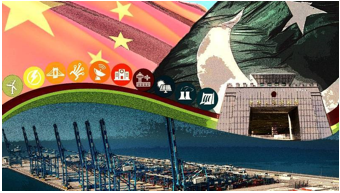
Credit: INP-WealthPk
Related Articles