



INP-WealthPk

China's silver economy model offers a roadmap for Pakistan as its elderly population surges
July 20, 2026
By Azam Tariq
Pakistan's ageing population can benefit from China's expanding elderly care sector and silver economy as the country's elder population grows and demand increases for senior-focused care, products and services, experts say.
The issue has gained renewed attention after Chinese State Councilor Shen Yiqin, during a recent visit to Shaanxi Province, called for expanding elderly care services and promoting the silver economy alongside cultural tourism.
She highlighted the need to increase the supply of products and services for senior citizens while building an inclusive and sustainable elderly care system serving both urban and rural communities.
China is also encouraging new business models linked to population ageing, including senior-oriented tourism, cultural products and community-based services designed to improve the quality of life of elder people.
For Pakistan, the relevance lies not in replicating China's model but in adapting practical measures suited to its family-based social structure, fiscal capacity and existing community service networks.
Although Pakistan remains a relatively young country, its elderly population is rising steadily. According to the Pakistan Population Projections Report 2023-2050, published by the Ministry of Planning, Development and Special Initiatives, the population aged 65 years and above stood at 8.6 million in 2023 and is projected to increase to 22.6 million by 2050. Under the report's slow fertility decline scenario, Pakistan's total population could reach 389.9 million by mid-century.
Experts believe Pakistan's demographic transition presents both a social challenge and an economic opportunity. They say strengthening family and community support, expanding caregiver training and encouraging affordable products and services for senior citizens can help the country prepare for an ageing population while enabling elder people to remain independent, productive and socially connected.
Speaking with Wealth Pakistan, Prof Asghar Zaidi, Rector of the Karachi School of Business and Leadership, said Pakistan should begin by strengthening care and daily living support within families, where the overwhelming majority of elder people continue to live.
He said that Pakistan lacks a formal system for training caregivers and that structured programmes could equip family members with the knowledge and skills needed to provide better and more dignified care for elderly relatives.
Zaidi said early policy action is becoming increasingly important as Pakistan's ageing population expands. Referring to the broader population aged 60 years and above, he said the country had around 17 million elder people in 2023, a figure expected to exceed 40 million by 2050.
He said senior citizens should not be viewed solely as recipients of care but also as contributors to society through employment, caregiving, volunteering and the transfer of knowledge and experience.
With life expectancy exceeding 67 years and continuing to rise, Zaidi said investment in elder workers would become increasingly important, particularly if employers adopted flexible working arrangements and placed greater value on experience.
He described the silver economy as a relatively untapped area in Pakistan, saying businesses that enter the sector early could benefit from growing demand for products and services tailored to senior citizens. Technology, he added, is also expected to play a greater role as future generations of elder Pakistanis become more digitally literate.
Echoing these views, Atiq-ur-Rehman, Associate Professor at the Kashmir Institute of Economics, University of Azad Jammu and Kashmir, said Pakistan should strengthen family-based and community-based support systems rather than replace them.
He said home-based care should remain the first priority because most elder people prefer to age within their own families. Existing community structures, including the Lady Health Workers programme, could also be expanded to provide basic elderly care services such as health monitoring, medication guidance and regular home visits.
Rehman said an ageing population would gradually create demand for assisted living, home-based caregiving, telemedicine, mobility aids, safety devices, ergonomic household products and senior-friendly tourism and recreational services.
Drawing lessons from China, he said Pakistan could adopt a simpler and more affordable approach through supportive policies, local service innovation and encouragement for start-ups and small businesses.
He added that Pakistan does not require expensive systems to become more age-friendly. Improvements such as better lighting, non-slip flooring, medication reminders, fall-detection devices, Urdu voice-enabled technologies, telemedicine services and accessible public transport could significantly improve the independence and well-being of senior citizens.
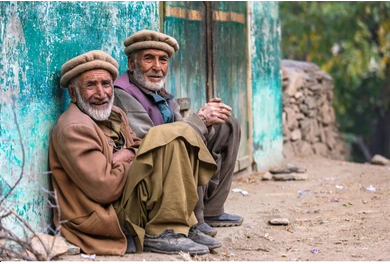
Credit: INP-WealthPk
Related Articles