


INP-WealthPk
China’s snow economy offers roadmap for Pakistan to develop winter tourism
March 09, 2026
By Azam Tariq
Pakistan’s snow-covered northern regions remain largely underused during winter, but experts say the country could turn the cold season into a strong tourism economy by developing winter sports, festivals and community-based tourism—mirroring China’s fast-growing “ice-and-snow economy.”
Speaking with Wealth Pakistan, Mirza Amir Ali, founder of Nextgen Hospitality Solutions Pakistan and faculty member at the College of Tourism and Hospitality Management (COTHM), said Pakistan’s northern regions — from Kaghan Valley to the valleys of Gilgit-Baltistan — have strong winter appeal, yet tourism activity slows sharply once snow arrives.
He said Pakistan already possesses the natural assets and growing policy momentum to transform the dormant winter months into a sustainable snow-led economy. Praising the Chinese model, Ali said countries such as China have successfully converted winter into a major tourism driver. “I’ve always believed that the most beautiful economies are the ones that grow from the land and the hearts of the people who live on it. China showed the world exactly that.
What was once a stretch of cold, quiet winters in its northern provinces has become a vibrant ice-and-snow economy worth over a trillion yuan — families laughing on ski slopes, villagers running warm homestays, and entire communities lifted by winter joy.”
He noted that Pakistan’s northern regions receive significant snowfall and could generate similar seasonal tourism activity if winter tourism is treated as a serious business. Ali said winter festivals and snow sports activities in Khyber Pakhtunkhwa and Gilgit-Baltistan, along with rising tourism revenue in GB, indicate that the sector is gradually moving forward.
He argued that the next step is to embed winter tourism more clearly into national development planning through a dedicated ice-and-snow tourism framework aligned with provincial governments. Ali suggested declaring winter tourism zones in destinations such as Kaghan, Naran, Malam Jabba, Naltar and Hunza, while encouraging eco-lodges and small-scale lift infrastructure to support winter travel.
He also said Pakistan can benefit from Chinese experience in snow management and high-altitude infrastructure through CPEC-linked cooperation, while ensuring environmental safeguards remain central to protect glaciers, forests and the long-term value of tourism destinations. Ali emphasised that the Chinese model worked best when local communities became direct stakeholders through homestays, skill development and tourism revenue that remains within villages.
Nauman Shah, CEO of Rahgeer and a tourism growth leader, told Wealth Pakistan that winter tourism must go beyond scenic sightseeing. He said Pakistan needs to develop a complete winter tourism product that includes winter sports, snow festivals, guided snow tracks and cultural programming alongside properly supported wilderness retreats.
Shah noted that most visitors currently limit their trips to sightseeing because retreats are difficult to sustain without reliable infrastructure and services. He emphasised the need to make winter tourism affordable and accessible, suggesting the introduction of winter travel packages that ordinary tourists can purchase, supported by government youth hostels in key destinations. Shah also advocated community-anchored tourism experiences that highlight local specialties and landscapes.
He highlighted the importance of coordination between government institutions and local communities to ensure security arrangements, medical response systems and proper visitor record keeping—steps he said are essential for safer and efficient tourism management.
On existing constraints, Shah cited weak infrastructure, unsafe roads on mountain routes, transport gaps and expensive hotel stays as key barriers to winter tourism growth. He said all-weather roads and winter heating mechanisms, developed through public-private partnerships, could help Pakistan convert the off-season into a distinct winter tourism product.
Shah added that proactive policy implementation, microfinance for tourism start-ups and structured training programs that utilise local winter skills can help expand the sector.
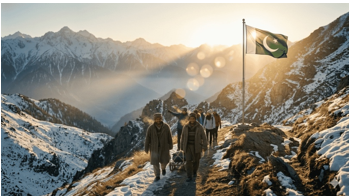
China’s push to develop a snow-led economy, even in regions with limited natural snowfall, demonstrates what focused planning can achieve. For Pakistan, which naturally possesses snow-rich northern valleys, winter has the potential to become a fully developed tourism season rather than a short sightseeing period.
Credit: INP-WealthPk
Related Articles




5G rollout doubles across Pakistan
Aug 20, 26
View more