




INP-WealthPk

Global rare-earth supply shift opens window for Pakistan's mineral sector
June 24, 2026
By Qudsia Bano
A global push to diversify rare-earth and critical mineral supply chains is creating new opportunities for emerging resource-rich economies. Industry experts believe Pakistan could position itself as a future supplier if it accelerates mineral exploration, expands processing capacity, and advances investment reforms.
Rare-earth elements have become increasingly important as countries expand electric vehicle production, renewable energy deployment and advanced manufacturing. These minerals are essential for technologies ranging from wind turbines and battery storage systems to semiconductors, robotics and defence equipment.
According to the International Energy Agency's Global Critical Minerals Outlook 2025, demand for rare-earth elements is projected to increase by 50-60% by 2040 under current policy settings. Demand grew by an estimated 6-8% in 2024 alone, driven largely by electric vehicles, battery storage and renewable energy technologies.
The growing strategic importance of critical minerals has intensified concerns about supply concentration. China continues to dominate global rare-earth processing and permanent magnet manufacturing, prompting governments and companies worldwide to seek alternative sources and strengthen supply-chain resilience.
Efforts to diversify supply chains have gained momentum following China's export-control measures on selected rare-earth and critical mineral products. According to a Reuters report citing a U.S.-China Business Council survey, many companies affected by the restrictions have begun exploring alternative suppliers, while industry groups have warned that some critical minerals have become more difficult to obtain because of licensing requirements and export controls.
As a result, countries with untapped mineral resources are attracting growing investor interest. Brazil, which holds some of the world's largest rare-earth reserves, has emerged as a key destination for new mining and processing investments as manufacturers seek to reduce dependence on a single dominant supplier.
For Pakistan, analysts see an opportunity to leverage its mineral wealth to attract investment and integrate into emerging global supply chains.
The Pakistan Minerals Investment Forum 2025 highlighted opportunities in gold, copper, lithium and rare-earth elements, while the government has stepped up efforts to attract international investors through policy reforms and investment facilitation measures.
Speaking with Wealth Pakistan, Muhammad Ahsan, Manager of Mining Projects at Descon Engineering Limited, said the ongoing restructuring of global supply chains is encouraging investors to explore new jurisdictions with untapped mineral potential.
"The global market is actively searching for diversified sources of critical minerals. Pakistan has geological potential, but exploration data, resource estimation and processing capacity must be strengthened before the country can become a meaningful participant in international supply chains," he said.
Ahsan stressed that Pakistan should focus on building downstream industries rather than limiting itself to the export of raw minerals.
"The real value lies in processing, refining and manufacturing. Countries that move up the value chain generate greater export earnings, attract technology transfer and create skilled employment," he said.
Faisal Raza, Supply Chain Manager at Mughal Iron & Steel Industries Limited, said global competition for critical minerals is creating favourable conditions for new suppliers entering the market.
"Manufacturers are increasingly concerned about supply security. This creates opportunities for countries that can provide stable regulatory frameworks, reliable infrastructure and long-term investment certainty. Pakistan can position itself within these emerging supply chains if reforms continue," he said.
Raza noted that international investors are now looking beyond extraction projects and increasingly favour integrated industrial ecosystems.
"Investors increasingly want integrated ecosystems that include mining, processing, logistics and industrial development. Pakistan's mineral sector can attract greater investment if these elements are developed simultaneously," he said.
Analysts believe the global race to secure critical minerals will intensify over the coming decade as clean-energy technologies, artificial intelligence infrastructure and advanced manufacturing continue to expand.
For Pakistan, they say, the challenge will be transforming geological potential into commercially viable projects capable of supplying international markets while supporting domestic industrial development. The government's recent focus on mineral-sector reforms and investor outreach could provide a foundation for achieving that objective if backed by sustained policy implementation, infrastructure development and investment in processing capabilities.
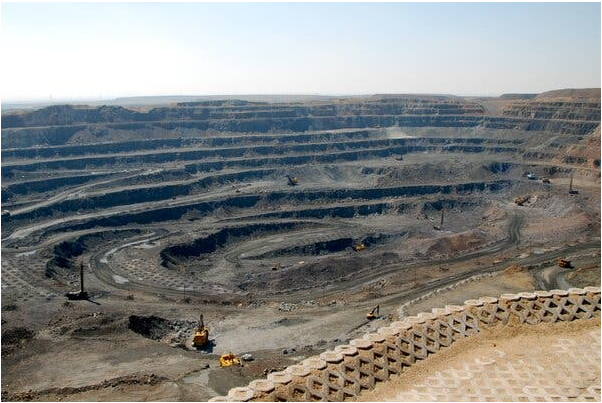
Credit: INP-WealthPk
Related Articles