




INP-WealthPk

Govt set to unveil Rs8.4bn plan to transform footwear industry
July 28, 2026
By Abdul Ghani
The government is set to invest Rs8.4 billion over five years to transform Pakistan's footwear industry by upgrading the Pakistan Institute of Fashion and Design (PIFD) and allied training institutions that currently lack the equipment, modern curricula and international linkages needed to meet global industry standards.
According to a project document available with Wealth Pakistan, the proposed project will be led by the Ministry of Industries and Production through the Small and Medium Enterprises Development Authority, while NAVTTC, TEVTAs, and allied training institutions will act as key executing partners. The initiative focuses on footwear manufacturing, design, and skills development.
Pakistan’s footwear exports stood at around $176 million in 2024, representing only 19% of the leather sector's total exports. This share is considered far below the country’s real potential, especially given Pakistan’s raw material base, established leather and footwear clusters, and available workforce.
The footwear sector strategy aims to rebalance the leather export basket by 2039, with footwear exports projected to rise to 47% of total leather exports, equal to nearly $1.17 billion. To reach this level, the sector will require sustained annual growth of 12% to 14% over the next 15 years.
However, the document identifies a shortage of skilled workers as one of the biggest constraints. The industry needs workers with advanced technical expertise in design, pattern-making, cutting, lasting, bottom attachment, finishing, tooling, and quality inspection.
At present, institutions such as PIFD and allied training centres lack modern equipment, updated curricula and international linkages required to train workers according to global buyers’ standards.
Under the project, modern shoe production lines, CAD/CAM pattern-cutting systems, testing equipment, and material libraries will be established. It will also develop competency-based curricula aligned with international manufacturing standards and buyer compliance requirements.
A major component of the project is workforce training through short courses, diploma programmes, and certification schemes. These programmes will target students as well as existing industry workers, with special focus on production quality, efficiency, compliance, and export-oriented manufacturing practices.
The plan also proposes international collaboration with leading footwear training and design institutions in Italy, Spain, Brazil, China and Turkiye. These partnerships will support curriculum benchmarking, training, exchange programmes and exposure to advanced footwear production systems.
The funding pattern shows a proposed allocation of Rs1.68 billion for FY2026-27, Rs3.36 billion for FY2027-28, Rs840 million for FY2028-29, Rs1.26 billion for FY2029-30, and Rs1.26 billion for FY2030-31. The total PSDP requirement is Rs8.4 billion, with no foreign exchange component mentioned in the document.
SMEDA will coordinate the implementation of the project, while NAVTTC will ensure alignment with the national skills framework. PIFD will play a central role in institutional upgradation, and provincial technical education authorities will be involved where training delivery is required. Industry bodies, including footwear manufacturers and leather sector associations, will participate in curriculum validation and trainee placement.
The project document says the expected outcomes include upgraded training facilities, internationally benchmarked curricula, a stronger pipeline of skilled footwear workers, improved productivity, better quality consistency and enhanced design capability in Pakistan’s footwear manufacturing base.
The document further justifies PSDP support by stating that investment in national skills institutions creates economy-wide benefits that private investors cannot fully capture on their own. It adds that the scale of curriculum reform, institutional upgradation and international collaboration required for the footwear sector’s export ambition can only be achieved through structured public investment.
The proposed initiative is therefore being positioned as a key part of Pakistan’s broader export growth agenda. If implemented effectively, it can help the country move from low-value footwear production towards design-intensive, compliance-ready, and globally competitive manufacturing.
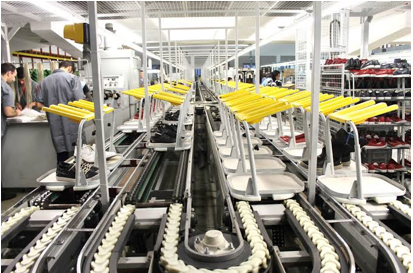
Credit: INP-WealthPk
Related Articles


