



INP-WealthPk
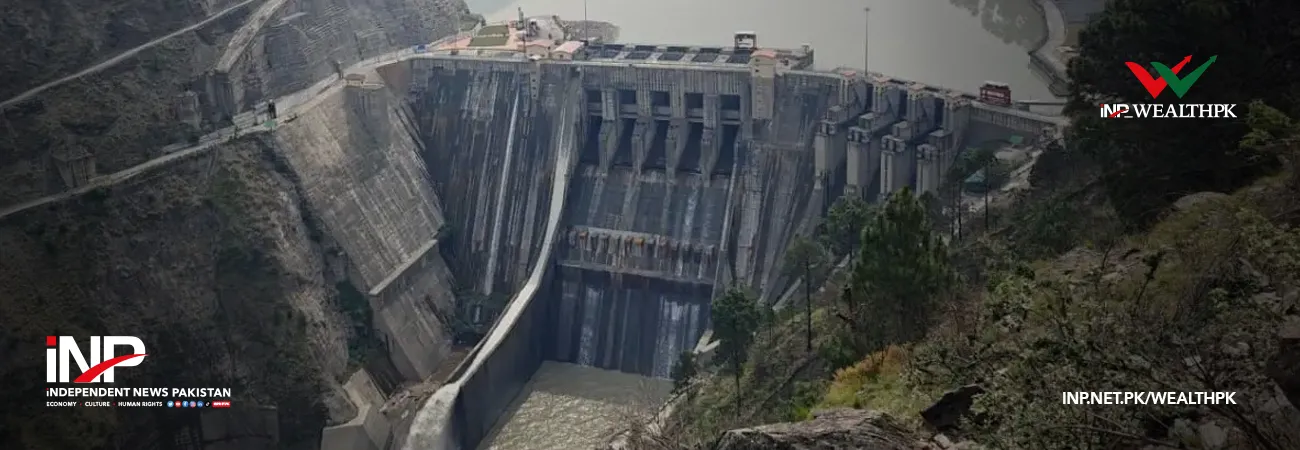
Indian manipulation of Chenab waters hits wheat crop irrigation in Punjab
December 23, 2025
Muhammad Luqman
India’s recent disruptions in the flow of the River Chenab have severely affected the irrigation of wheat crop in central Punjab due to reduced supplies in the Upper Chenab Canal (UCC), which originates from the Marala Headworks in Sialkot district.
“The situation has remained very serious and unusual for thousands of growers in several districts. They could not irrigate their wheat crops due to the lack of water flow they normally receive through the canal,” said Muhammad Jaffar, Executive Engineer at Marala Headworks, Sialkot.
According to daily reports of the Pakistan Water and Power Development Authority, the inflow-outflow situation at Marala Headworks was alarming between December 9 and 18.
India abruptly released 58,000 cusecs of water during the midnight hours of December 7 and 8. However, on December 13, it sharply reduced releases to an alarmingly low level of 870 cusecs, which remained between 870 and 1,000 cusecs until December 17. Historical data shows that average Chenab River flows over the past 10 years during this period ranged from a maximum of 10,000 cusecs to a minimum of 4,000 cusecs.
Talking to Wealth Pakistan, Jaffar said the UCC primarily serves agricultural land in the districts of Sialkot, Gujranwala, Sheikhupura, Lahore, and Kasur. It also links to the Ravi River to supply areas such as Okara and Hafizabad, forming part of the historic Triple Canal Project that provides vital water for agriculture.
He added that the water supply situation had stabilized over the past two days. The wheat crop in Punjab has been sown over 16.7 million acres against a target of 16.5 million acres, surpassing the target by 200,000 acres. Meanwhile, water experts have urged the federal government to take the issue of water manipulation to the International Court of Justice (ICJ) instead of merely writing letters to the Indian Indus Water Commissioner.
“Pakistan must raise the recent manipulation of waters in the Chenab and Jhelum rivers by India at the ICJ, as these acts are a clear violation of the Indus Waters Treaty (IWT),” said former Indus Water Commissioner Syed Jamaat Ali Shah. Talking to Wealth Pakistan, he said it was time to take India’s “mischievous attitude” seriously to prevent such acts in the future. “By just issuing statements, you cannot stop India from violating the lower-riparian rights of Pakistan,” he added.
According to the office of the Indus Water Commissioner, unusual and abrupt variations were witnessed in the flow of the River Chenab between December 7 and 15. At one point, flows dropped to just 750 cusecs at Marala, far below average winter flows. Mr Shah further said that a recent report by five UN experts also criticized New Delhi’s actions related to the IWT, stating that these actions “may be taken to disrupt the flow of water to Pakistan under the treaty.”
He stressed that Pakistan should use the UN report to draw international attention to what he described as India’s weaponization of water. Another former Indus water commissioner, Sheraz Jamil Memon, said that both countries should resolve IWT-related issues through political and diplomatic means.
“Continuation of the current situation can only be detrimental to peace and security in the entire South Asia,” he said while talking to Wealth Pakistan. Memon added that both nations could also consider amendments to the treaty through mutual consensus to ensure continued cooperation.

Credit: INP-WealthPk