INP-WealthPk
Islamabad EU business forum to open new avenues for investment, export diversification
June 16, 2026
By Azam Tariq
The first-ever High-Level European Union (EU)-Pakistan Business Forum, held in Islamabad in April this year, has created fresh opportunities to convert Pakistan’s long-standing trade access to Europe into investment inflows, export diversification and stronger business-to-business partnerships, experts said.
The forum brought together around 1,000 senior policymakers, European and Pakistani business leaders, investors and financial institutions. According to the European External Action Service, more than 600 business-to-business meetings were arranged across key sectors, including agribusiness, digital innovation and fintech, green logistics, sustainable textiles and responsible mining.
The event also marked the launch of the EU-Pakistan Business Network, a platform bringing together more than 300 European companies operating in Pakistan.
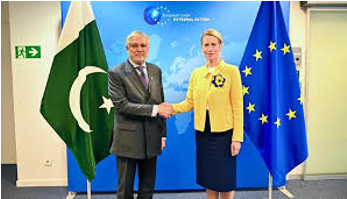
The forum was followed by the 8th EU-Pakistan Strategic Dialogue in Islamabad on June 1, 2026, co-chaired by Deputy Prime Minister and Foreign Minister Senator Mohammad Ishaq Dar and EU High Representative Kaja Kallas.
According to the European Commission’s latest trade data, bilateral goods trade reached €12.2 billion in 2025. EU imports from Pakistan stood at €8.684 billion, up 4.2 percent year-on-year, with textiles and textile articles accounting for 77.7 percent of the total.
Speaking to Wealth Pakistan, Hina Ayra, a trade facilitation expert in the federal government, said the EU-Pakistan Strategic Dialogue was significant because it elevated economic engagement from a primarily trade-focused relationship to a broader strategic partnership.
“For Pakistan, the value lies not only in securing market access but also in attracting European investment into export-oriented industries, renewable energy, logistics, digital infrastructure and value-added manufacturing,” she said.
She noted that European investors generally seek policy consistency, regulatory transparency and predictable business conditions, all of which can be reinforced through sustained high-level engagement.
Ayra also highlighted the growing importance of regulatory cooperation, saying closer engagement with the EU could support Pakistan’s efforts to modernise trade procedures, strengthen quality infrastructure and improve competitiveness in global value chains.
“Ultimately, the dialogue can help shift Pakistan-EU relations from a donor-beneficiary framework towards a more mature economic partnership,” she added.
Maryam Ayub, research economist at the Policy Research Institute of Market Economy, told Wealth Pakistan that the most immediate economic significance of the dialogue was ensuring continuity under the Generalised Scheme of Preferences Plus (GSP+) ahead of the revised EU GSP framework, which is scheduled to take effect in January 2027.
She said GSP+ has been instrumental in supporting Pakistan’s exports, helping businesses increase exports to the EU by 108 percent since the scheme was introduced in 2014. However, she cautioned that preferential market access alone was insufficient, as Pakistan has yet to fully translate tariff advantages into broad-based export diversification.
Ayub argued that the real value of the dialogue lies in operationalising technical cooperation, including standards harmonisation, sanitary and phytosanitary measures, and customs facilitation, to remove barriers faced by Pakistani exporters in European markets.
On the investment front, she stressed that while high-level engagement sends a positive signal, European investors ultimately respond to regulatory predictability, energy costs and the overall business environment, which require continued domestic reforms.
She also pointed to Pakistan’s underutilisation of existing trade preferences.
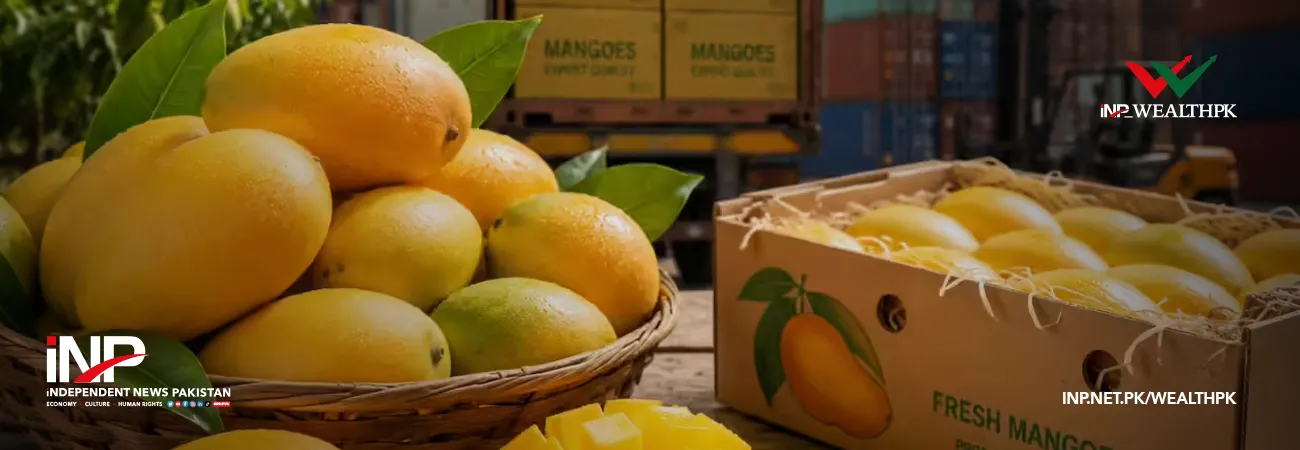
“Our export basket remains overwhelmingly concentrated in low-value-added textiles, while eligible tariff lines in processed agriculture and leather goods, along with opportunities in information technology services, remain largely unexploited,” she said.
According to Ayub, deeper engagement should focus on mutual recognition of certifications, digital trade frameworks and improved procurement access to enable meaningful export diversification rather than simply preserving the current trade structure.
Experts believe the opportunity extends well beyond a single forum or round of dialogue. If Pakistan aligns GSP+ compliance with regulatory reforms, competitive energy pricing, improved logistics and targeted investment facilitation, the EU platform could become an effective pathway for export diversification, technology transfer and job-creating industrial growth.
Credit: INP-WealthPk
Related Articles