



INP-WealthPk

Major canals closed in Punjab for annual maintenance, desilting
December 29, 2025
Muhammad Luqman
With declining inflows in the western rivers—Indus and Jhelum—due to limited snowmelt and scant rainfall in catchment areas, the Punjab Irrigation Department has initiated its annual canal closure programme for desilting and maintenance work.
According to the department’s schedule, 21 major canals across the province will be closed in two phases. “The closure of 12 canals of the Mangla Command has started from December 26. Water releases in three canals have already been stopped, while the remaining nine will be closed within the next two weeks,” Engr Rashid Minhas, Chief Engineer of the Punjab Irrigation Department, told Wealth Pakistan.
He said that during the first phase, water supply to these canals would remain suspended for two weeks on a rotational basis. Desilting activities will begin once the canals are fully emptied.
Under the second phase, nine canals of the Tarbela Command will be closed for a two-week period to facilitate desilting. The entire canal closure programme is expected to conclude by January 31.
According to irrigation experts, Punjab has an extensive canal network stretching over 36,000 kilometres, including main canals, branch canals, distributaries and minors, forming the backbone of the province’s irrigation system. Of this network, nearly 18,000 kilometres of main canals are closed annually for desilting.
Experts noted that the closure period also provides an opportunity to assess the condition of irrigation infrastructure. “It becomes easier to identify damage to embankments and other structures and carry out necessary repairs during this period,” said Dr Ghulam Zakir Hassan Sial, Director of the Punjab Irrigation Research Institute (IRI). He added that desilting, along with repair and rehabilitation work, helps improve the long-term efficiency of the canal system.
Officials from the Punjab Agriculture Department said the temporary suspension of canal water would not adversely affect Rabi crops, particularly wheat, as irrigation requirements remain relatively low during January. “During canal closures, farmers largely rely on tubewell water for irrigation,” said Dr Anjum Ali, Consultant at the Punjab Agriculture Department. He added that canal supplies would resume in February, ensuring adequate water availability for crops.
However, the annual canal closures significantly impact hydropower generation. Reduced water flows lead to a sharp decline in electricity generation from hydel plants, falling from around 3,500 megawatts to below 1,000 megawatts. This shortfall increases reliance on costly RLNG-based thermal power generation, contributing to higher electricity costs and pressure on the national power system.
According to WAPDA officials, water releases at Tarbela have dropped to 6,000 cusecs, while releases at Mangla have fallen to 5,000 cusecs—well below normal seasonal levels. As a result, hydropower generation is expected to remain around 1,000 MW, compared to a summer peak of approximately 8,500 MW.
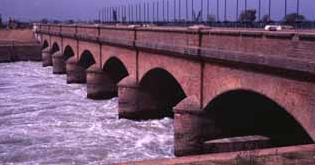
Credit: INP-WealthPk