INP-WealthPk

Pakistan literacy rate rises to 63% in 2024-25
June 15, 2026
By Azam Tariq
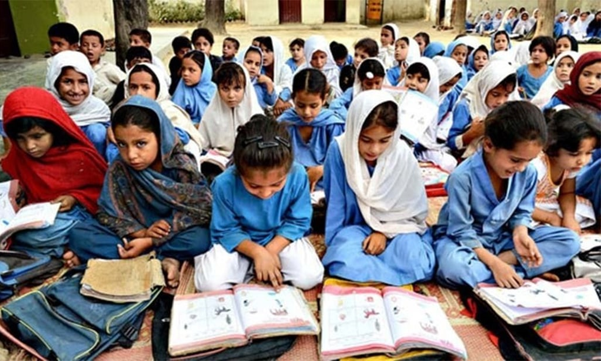
Pakistan's literacy rate improved to 63% in 2024-25 from 61% in 2022-23, reflecting gradual progress in educational attainment and human capital development despite continuing challenges related to quality, infrastructure and regional disparities, according to the Pakistan Economic Survey 2025-26 released by the Ministry of Finance.
The survey highlights education as a critical driver of economic and social development, noting that improvements in literacy contribute directly to workforce productivity, employment opportunities, income generation and long-term economic growth.
According to the survey, male literacy reached 73% while female literacy stood at 54%, indicating continued gender disparities despite progress in expanding educational access for women and girls.
The Ministry of Finance notes that literacy remains a key indicator for assessing the effectiveness of educational policies and the country's ability to develop a skilled and productive workforce.
The survey also reports improvement in school attendance, which increased from 61% to 67% nationwide, reflecting broader gains in educational participation and access.
Pakistan recorded a significant decline in the number of out-of-school children. According to the survey, the proportion of out-of-school children fell from 38% in 2023 to 28% in 2025. Among boys, the rate declined from 35% to 25%, while among girls it fell from 42% to 31%.
The report highlights substantial provincial progress. Balochistan recorded the largest improvement, with the proportion of out-of-school children falling from 69% to 45%. Punjab reduced the rate from 32% to 21%, Sindh from 47% to 39%, and Khyber Pakhtunkhwa from 30% to 28%.
According to the survey, the education system continued expanding across multiple levels. Primary enrolment reached 25.38 million students in FY2024, while middle-level enrolment increased by 14.9% to 10.8 million students.
Technical and vocational education remained an important focus area for workforce development. The survey notes that 4,746 technical and vocational institutes were operating across the country, with enrolment reaching 0.46 million students.
Government spending on education remained substantial. Education expenditure stood at Rs962 billion in FY2025, equivalent to 0.8% of GDP.
Federal, provincial, and local governments continued to fund development initiatives aimed at improving educational infrastructure and quality. Punjab allocated Rs100 billion for school education, Sindh Rs102.8 billion, Khyber Pakhtunkhwa Rs13.5 billion and Balochistan Rs24.84 billion.
Development programmes focused on curriculum modernization, establishment of smart classrooms, teacher development and expansion of technical education opportunities.
At the higher education level, the Higher Education Commission received a revised allocation of Rs34.9 billion for implementing 147 development projects in public sector universities and higher education institutions.
Major initiatives supported by the HEC included scholarship programmes, digital learning projects, research and innovation activities and expansion of higher education infrastructure.
The National Vocational and Technical Training Commission continued to strengthen skills development efforts. According to the survey, NAVTTC trained more than 100,000 youth during FY2025 and conducted 366,157 skill assessments to support overseas employment opportunities.
The Prime Minister's Laptop Scheme also continued to support students across the country. During the fiscal year, 74,427 laptops were distributed, with female students accounting for 54% of beneficiaries.
According to the Ministry of Finance, federal and provincial governments are implementing reforms aimed at expanding access, promoting equity, improving infrastructure, strengthening teacher training, integrating digital learning and enhancing institutional governance.
While challenges related to educational quality, infrastructure gaps and regional disparities remain, the increase in literacy, higher school attendance and the decline in out-of-school children indicate continued progress toward strengthening Pakistan's human capital and advancing Sustainable Development Goal 4 on quality education.
Credit: INP-WealthPk
Related Articles