


INP-WealthPk

Pakistan’s agriculture grows 2.89pc in FY2025-26 despite devastating floods
June 15, 2026
By Azeem Ahmed Khan
Pakistan's agriculture sector grew by 2.89% in FY2025-26 despite widespread damage caused by the 2025 floods, demonstrating the sector's resilience and its continued importance as a pillar of the national economy, according to the Pakistan Economic Survey 2025-26 released by the Ministry of Finance.
The survey shows that agricultural growth improved from 1.53% recorded in the previous fiscal year, supported by better performance in important crops, livestock, fisheries and forestry, as well as government interventions aimed at supporting farmers affected by adverse weather conditions.
Agriculture remains a pillar of Pakistan's economy, contributing 23.44% to gross domestic product and providing employment to a large share of the country's workforce. The sector also plays a vital role in ensuring food security, supplying raw materials to industries and supporting export earnings.
According to the survey, the agriculture sector faced significant challenges during FY2025-26. Heavy monsoon rains and floods during July and August 2025 caused extensive damage to crops, livestock, infrastructure and rural communities across various parts of the country.
Despite these setbacks, the sector managed to maintain growth through recovery in crop production, improved input availability and continued government support measures.
The crop sector recorded growth of 1.44% compared with a contraction of 1.01% in the previous fiscal year. Important crops, which account for a substantial share of agricultural value added, registered growth of 0.65%.
Wheat production increased to 29.61 million tonnes during FY2025-26 from 28.40 million tonnes a year earlier, reflecting favourable cultivation conditions in key producing areas and improved productivity.
Rice production rose to 9.99 million tonnes from 9.72 million tonnes, while sugarcane output increased significantly to 89.45 million tonnes compared with 84.24 million tonnes in the previous fiscal year.
The survey notes that these gains helped offset losses in certain other crops and contributed positively to overall agricultural performance.
One of the strongest performances during the fiscal year came from pulses, where production increased by 31.4%. Vegetable production also recorded double-digit growth of 12.6%, boosting domestic food supplies and showing a shift toward more diverse crops.
The livestock sector remained the largest contributor to agriculture and expanded by 3.75% during FY2025-26. Livestock accounts for more than 60% of agricultural value added and plays a central role in supporting rural livelihoods, food security and export potential.
According to the survey, growth in livestock was driven by higher production of milk, meat and poultry products, supported by improved animal husbandry practices, veterinary services and private-sector investment.
The fisheries sector grew by 1.66%, while forestry expanded by 2.02%, further contributing to overall agricultural growth.
The survey also highlights the government's efforts to support the sector through increased agricultural financing. Agricultural credit disbursement reached Rs2,161.6 billion during July-March FY2026 and is expected to reach Rs3,062 billion by the end of the fiscal year.
The expansion in agricultural lending supported farmers' access to seeds, fertilizers, machinery and other essential inputs needed to sustain production and improve productivity.
According to the survey, fertilizer offtake increased by 11.4% during July-March FY2026, reflecting stronger farm activity and increased input utilization. Availability of key agricultural inputs remained broadly adequate despite flood-related disruptions.
The Ministry of Finance notes that agriculture continues to play a central role in Pakistan's economic recovery and long-term growth prospects. The sector's performance during FY2025-26 is particularly significant given the severe weather-related challenges faced during the year.
The survey also highlights ongoing efforts to improve climate resilience, enhance water management, promote mechanization, strengthen agricultural research and encourage adoption of modern farming practices.
With agriculture remaining the backbone of rural livelihoods and a key contributor to economic activity, the sector's recovery from flood-related disruptions underscores its importance in supporting food security, employment and broader economic stability across the country.
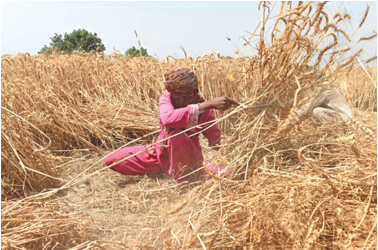
Credit: INP-WealthPk
Related Articles