


INP-WealthPk
Pakistan's economy grows 3.7pc in FY2025-26 despite floods and regional turmoil
June 15, 2026
By Farooq Awan
Pakistan's economy grew by 3.7% in FY2025-26 despite the devastating floods of 2025, regional geopolitical tensions and global economic uncertainty, according to the Pakistan Economic Survey 2025-26 released by the Ministry of Finance.
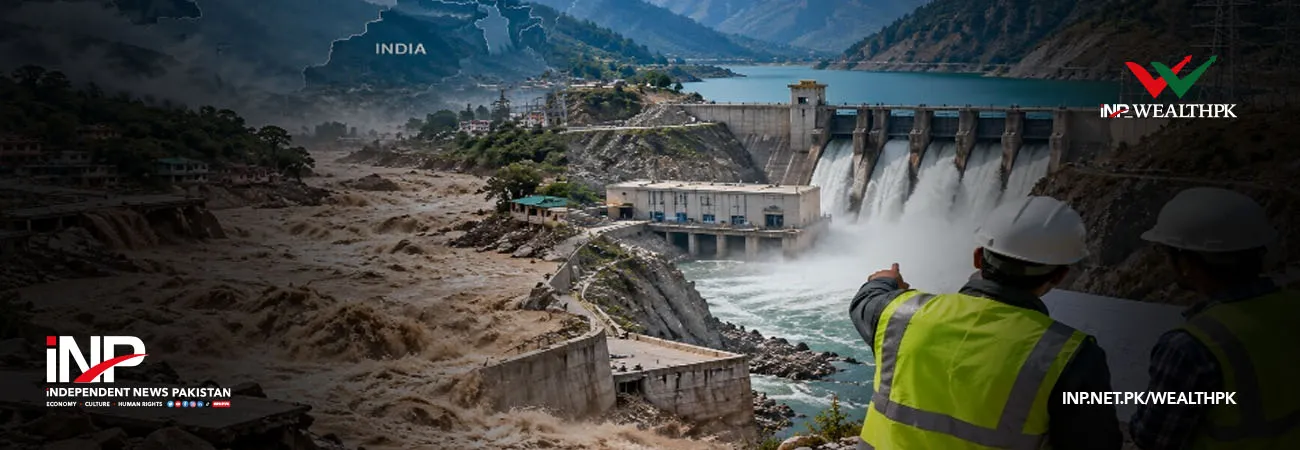
The survey shows that the economy improved from a growth rate of 3.18% recorded in the previous fiscal year, supported by broad-based expansion across agriculture, industry and services. The performance comes at a time when the country faced significant domestic and external challenges, including widespread flood damage, volatility in global energy markets, supply chain disruptions and the economic fallout of the Middle East conflict.
According to the survey, Pakistan entered FY2025-26 with restored macroeconomic stability and continued efforts to strengthen confidence, support private-sector-led growth and advance structural reforms. Despite the challenging environment, prudent fiscal and monetary management, strong remittance inflows, improved investor confidence and a stable exchange rate helped sustain economic activity and strengthen growth momentum.
The services sector remained the largest contributor to economic output, expanding by 4.09% during FY2025-26. The sector accounted for 58.42% of the country's gross domestic product and was supported by strong growth in information and communication services, which grew 7.52%. Wholesale and retail trade also recovered during the year as economic activity improved and consumer demand strengthened.
The industrial sector posted growth of 3.51%, driven primarily by a sharp recovery in large-scale manufacturing. According to the survey, large-scale manufacturing expanded by 6.11% after contracting in the previous fiscal year. The recovery was supported by improved domestic demand, easing input constraints, exchange rate stability, contained inflationary pressures and relatively accommodative financial conditions.
Out of 22 manufacturing sectors, 16 recorded positive growth during the fiscal year. These included food products, textiles, wearing apparel, automobiles, beverages, electrical equipment, coke and petroleum products, and non-metallic mineral products. The construction sector also contributed positively to overall industrial performance by recording growth of 5.73%.
The survey further notes that mining and quarrying returned to positive growth after four consecutive years of contraction, reflecting improved extraction activity across several minerals, including rock salt, gypsum, limestone and iron ore.
Agriculture, which remains a key pillar of Pakistan's economy, grew by 2.89% compared with 1.53% in the previous year despite the impact of the 2025 floods. Government support measures and timely interventions helped the sector recover from weather-related disruptions.
The crop sector recorded growth of 1.44% after contracting in FY2024-25. Important crops posted overall growth of 0.65%, supported by higher production of wheat, rice and sugarcane. Wheat production increased to 29.61 million tonnes from 28.40 million tonnes, while sugarcane output rose to 89.45 million tonnes from 84.24 million tonnes. Rice production also increased during the period.
The livestock sector, which accounts for the largest share within agriculture, expanded by 3.75%, providing support to rural incomes, food security and agricultural growth. Forestry and fishing also registered positive growth during the fiscal year.
According to the Economic Survey, Pakistan's GDP at current market prices reached Rs126.9 trillion ($452.1 billion), compared with Rs114 trillion ($408.2 billion) in the previous fiscal year. The increase reflects stronger economic activity across major sectors of the economy.
Per capita income also improved, rising to $1,901 from $1,751 a year earlier. Meanwhile, the exchange rate remained broadly stable at Rs280.65 per dollar compared with Rs279.35 per dollar in FY2024-25, helping businesses plan investment and production decisions with greater certainty.
The survey highlights improving investment indicators during the fiscal year. The investment-to-GDP ratio remained stable at 14.38%, while private investment increased by 12.8%, reflecting improved business confidence and greater participation by the private sector. National savings stood at 14.13% of GDP, helping reduce dependence on external financing.
Macroeconomic stability also strengthened during the year. Fiscal consolidation efforts remained on track, with the fiscal deficit narrowing significantly and the primary surplus improving. The external sector remained resilient, supported by strong workers' remittances and growing services exports, while foreign exchange reserves increased to multi-year highs.
According to the Ministry of Finance, the economy's performance reflects the impact of continued reforms in taxation, digitization, energy sector restructuring, debt management, public-sector efficiency and investment facilitation. The survey notes that these reforms helped strengthen economic fundamentals and improve investor confidence despite a difficult global environment.
The report states that Pakistan's ability to achieve growth across agriculture, industry and services while managing the impacts of floods, external shocks and regional instability demonstrates the economy's resilience. It adds that continued fiscal discipline, structural reforms, investment promotion and private-sector participation will remain essential for sustaining growth and building a stronger, more competitive and inclusive economy in the years ahead.

Credit: INP-WealthPk
Related Articles