INP-WealthPk
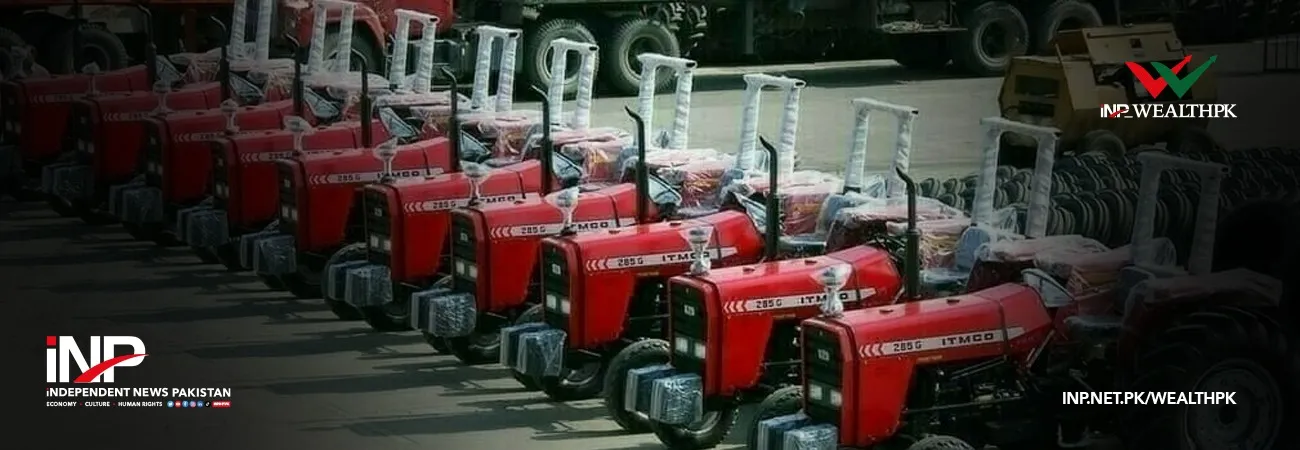
Pakistan’s tractor industry faces challenges
December 18, 2025
Azeem Ahmed Khan
Pakistan’s tractor manufacturing sector has experienced notable ups and downs over the past decade, reflecting broader economic trends, agricultural demand shifts, and policy impacts. According to the official data, the sector’s performance has remained inconsistent, with production swinging between highs and lows. After peaking at over 53,499 units in 2016-17 and 52,551 in 2017-18, output slumped to 37,457 units in 2018-19 and further down to 32,451 units in 2019-20.
A modest recovery was seen in 2020-21 with 36,900 tractors, followed by the 2021-22 surge of 58,880 tractors. Tractor production dropped to 23,814 units in fiscal year 2024-25, the lowest in 10 years. This marks a significant fall compared to 36,385 units produced in 2023-24 and 58,880 units in 2021-22, the highest output in 10 years. The main constraint in increasing agricultural productivity in Pakistan includes the limited availability of tractors and other farm machinery.
Pakistan’s domestic tractor industry has played a key role in meeting farmers’ mechanization needs, with over 714,000 tractors currently in operation across the country, according to the official figures. However, the sector has witnessed a significant slowdown. During July-March 2024-25, tractor production fell to 23,814 units, compared to 36,385 units produced in the same period of the previous fiscal year, reflecting a 34.6% decline.
During 2023-24, total tractor production reached 36,385 compared to 31,651 produced the previous year, showing an increase of 14.95% due to rapid growth in agriculture land reclamation after the 2022 floods. The Pakistani tractor industry has shown resilience despite periods of slowdown, particularly during the Covid-19 pandemic, when production slumped to 32,451 units in 2019-20 and saw only a modest recovery in 2020-21 with 36,900 units.
However, the sharp drops in 2022-23 and 2024-25, followed by a limited recovery in 2023-24, indicate that the sector still faces challenges. The government has taken several steps to promote farm mechanization and attract investment in the tractor industry. To modernize agriculture, the government in 2022-23 allowed the import of tractors up to five years old with reduced duties.
The incentive package also cut the Completely Knocked Down duty for new tractor manufacturers from 35% to 15%, while the GST on tractors was withdrawn. Additionally, agricultural machinery and equipment were exempted from customs duties to encourage mechanized farming across the country.
Meanwhile, the Punjab government introduced a major initiative to support small farmers by providing around 30,000 modern tractors at subsidized rates through a balloting scheme. As agriculture remains the backbone of Pakistan’s economy, the tractor manufacturing industry continues to serve as a key indicator of rural development and investment activity.
As Pakistan works to modernize its agriculture and boost productivity, maintaining a strong and reliable tractor manufacturing base will be crucial. Experts emphasize that consistent policy support, easier financing for farmers, and incentives for local production are vital to sustaining growth in the sector.
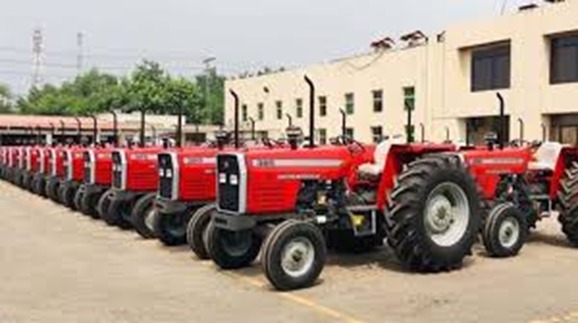
Credit: INP-WealthPk