


INP-WealthPk
Policy aims to train 3,500 workers across gemstone mining and processing chain
January 19, 2026
Farooq Awan
The federal government has set a target to train more than 3,500 workers in the gemstone sector under the National Policy to Realize Pakistan’s Gemstone Potential 2026–30, with the objective of addressing skills gaps across mining, processing, valuation and trade activities.
According to the policy document prepared by the Ministry of Industries and Production, shortages of trained human resources have remained a persistent constraint throughout Pakistan’s gemstone value chain. The document notes that the sector lacks adequately trained miners, lapidary technicians, appraisers, inspectors, valuers and supervisors, limiting productivity, quality and compliance with international standards.
The policy highlights that human capital gaps are evident not only among miners and processors but also within institutions supporting the sector, including banks and regulatory bodies. According to the document, limited understanding of gemstone-related transactions among banking professionals has contributed to delays in account opening, trade financing and foreign-exchange processing for exporters.
Under the new policy framework, structured training and capacity-building programs will be implemented to improve technical skills and operational efficiency across the sector. The policy states that training initiatives will cover better mining practices, beneficiation procedures, cutting and polishing techniques, valuation and certification processes, and trading standards.
The document notes that training programs will be aligned with the broader objectives of formalization, reduced wastage and improved value retention. By improving skills at the mining stage, the policy aims to reduce extraction losses and improve recovery rates. Similarly, enhanced skills in processing and finishing are expected to improve consistency, quality and market acceptance of Pakistani gemstones.
According to the policy, skills development will also support the implementation of certification and traceability systems. Trained appraisers and inspectors will be required to operate inspection, valuation and certification mechanisms, including those under the proposed National Warranty Office. The availability of skilled personnel is considered critical to ensuring credibility and consistency in export processes.
The policy further states that training initiatives will be supported through institutional arrangements under the proposed statutory gemstone authority. This authority will coordinate capacity-building efforts in collaboration with provincial governments, industry stakeholders and relevant training institutions.
In addition to domestic training programs, the policy aims to secure affiliation with at least three internationally recognized certification laboratories during the policy period. These affiliations are intended to enhance standardization, improve technical capacity and build international trust in Pakistan’s gemstone certification systems.
The document also highlights the role previously played by the Pakistan Gems and Jewellery Development Company in skills development through its common facility centers. Under the new policy framework, training efforts will be expanded and aligned with sector-wide reforms to ensure continuity and scale.
According to the policy, the targeted training of over 3,500 individuals is expected to contribute to employment generation, improved productivity and higher export realization. Skills development is described as a foundational element for transitioning the gemstone sector from informal and low-value activities to a structured, value-added industry.
The policy states that progress on skills development targets will be monitored as part of the overall implementation framework, with adjustments made based on sector needs and stakeholder feedback. These initiatives are intended to support long-term growth, improve competitiveness and strengthen Pakistan’s position in global gemstone markets.
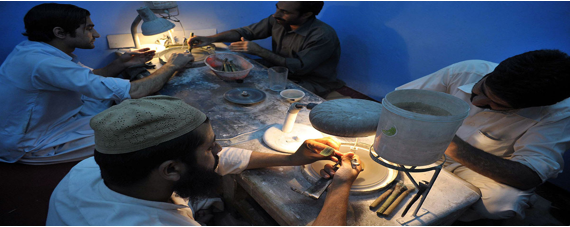
Credit: INP-WealthPk