


INP-WealthPk

Prolonged export weakness strains Pakistan’s industrial base
January 14, 2026
Moaaz Manzoor
Pakistan’s prolonged export downturn is increasingly straining the country’s industrial base, as five consecutive months of declining export earnings reflect mounting pressure on export-oriented manufacturing sectors and overall industrial activity.
Data released by the Pakistan Textile Exporters Association (PTEA), based on official trade statistics, show that Pakistan’s exports declined by 20.41 percent year-on-year to $2.31 billion in December 2025, compared to $2.91 billion in the same month last year. The sharp contraction highlights the depth of the ongoing slowdown and underscores the growing challenges faced by industries reliant on external markets.
The December decline marked the fifth straight monthly drop in export proceeds during the current fiscal year, FY2025-26, following decreases of 14.54 percent in November, 4.46 percent in October, 3.88 percent in September, and 12.49 percent in August. The persistence of these declines points to a sustained weakening trend rather than a short-term fluctuation, raising concerns over industrial capacity utilisation, employment, and investment activity.
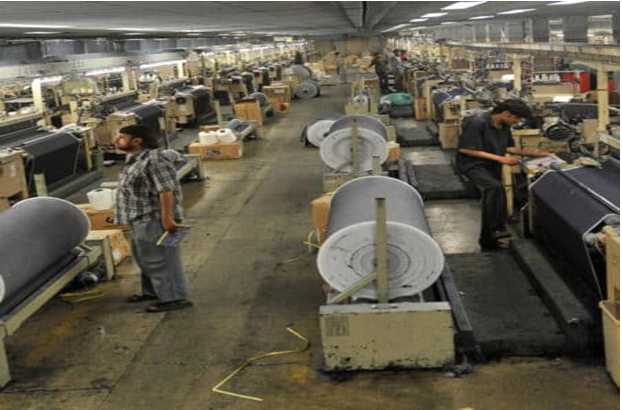
Export-oriented manufacturing sectors, particularly textiles, play a central role in Pakistan’s industrial landscape. The continued fall in export orders has resulted in underutilised production capacity, with many manufacturing units operating below optimal levels. Prolonged underutilisation affects operational efficiency and places additional pressure on firms already facing elevated costs and challenging market conditions.
Lower export earnings have also constrained industrial cash flows, limiting firms’ ability to invest in machinery upgrades, technology adoption, and quality enhancement. These areas are critical for maintaining competitiveness in international markets, especially as regional competitors continue to strengthen production capabilities and improve product standards. Over time, sustained export weakness can weaken industrial resilience and reduce the sector’s capacity to respond effectively when external demand improves.
The impact of declining exports extends beyond factory operations. Slower production affects supply chains, logistics providers, and related industries, amplifying broader economic effects. Firms facing sustained revenue pressures may also adjust workforce levels, with implications for employment and household incomes linked to export-driven manufacturing.
Data for the first half of the fiscal year further reinforces the structural nature of the challenge. During July–December FY2025-26, export proceeds declined by 8.70 percent to $15.18 billion, compared with $16.63 billion in the corresponding period of the previous year, indicating that export weakness has remained entrenched across multiple months.
At the same time, imports continued to rise, increasing by 2 percent year-on-year in December and by 11.28 percent during the July–December period. The divergence between falling exports and rising imports has widened the trade deficit, adding pressure to the broader economic environment in which industrial firms operate.
Taken together, the data suggest that Pakistan’s industrial base is facing sustained stress linked to prolonged export weakness. The persistence of the slowdown highlights the close relationship between export performance and industrial health, underscoring the importance of addressing structural constraints affecting competitiveness in global markets.
Credit: INP-WealthPk