



INP-WealthPk
Punjab paddy cultivation tops target, surpassing 6 million acres
September 24, 2026
By Muhammad Luqman
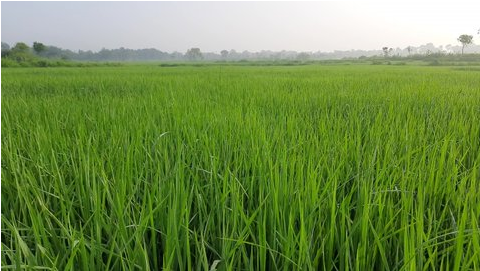
Paddy cultivation in Punjab has surpassed 6 million acres against a target of 5.5 million acres despite below-normal monsoon rains, with the higher-return Kissan Basmati accounting for a major share.
“Most of the paddy area in Punjab is under Kissan Basmati this year. It is not due to farmers’ preference for aromatic rice but mainly because of its higher returns,” Usman Saleem, a senior scientist at the Rice Research Institute (RRI) near Lahore, told Wealth Pakistan.
Kissan Basmati is a high-yielding, short-duration aromatic paddy variety popular among farmers for its early maturity and water-saving traits.
Saleem said the area under hybrid rice had declined significantly this year after farmers received poor returns from the variety last year.
“Farmers had to spend more on purchasing hybrid rice seed and apply more fertilizers and pesticides, only to get lower returns against the high production costs,” he explained.
Fine rice varieties, including Basmati, account for about 65% of Punjab’s total paddy cultivation area, while the remaining acreage is under coarse varieties, including IRRI, hybrid and other rice types.
Besides Kissan Basmati, other Basmati varieties cultivated in Punjab this year include Super Basmati and Basmati 515.
While the expansion in cultivated area has improved prospects for the crop, experts said weather conditions during September would remain important for its development.
Saleem said the ongoing break in rainfall over Punjab’s paddy belt could adversely affect crop growth, particularly by creating favourable conditions for leaf roller infestation.
“Only good rains during September can flush out leaf roller worms from the crop; otherwise, the crop may become susceptible to these harmful pests,” he warned.
Meanwhile, work is continuing at RRI on developing new high-yielding and climate-resilient paddy varieties. Saleem said scientists had developed four new high-yielding lines, at least two of which could potentially be developed into promising varieties within the next two years.
The pest situation has so far remained largely under control.
Dr Arshad Makhdoom Sabir, Director of the Entomology Research Institute, Faisalabad, said there had been no major pest attack this year apart from stem borers appearing in certain parts of the paddy belt and affecting the crop in isolated areas.
“Generally, the paddy crop is free from pests and diseases this year, promising another strong harvest,” he told Wealth Pakistan.
However, Sabir also warned that the ongoing dry spell could affect the crop and said hoppers were among the major insects that could pose a threat during the current month.
“The farming community can ward off the damage by taking necessary measures, including chemical control,” he said.
Sabir said pest threats could be managed through a combination of cultural, biological and chemical measures rather than relying solely on pesticides.
“Sometimes, you can avert losses simply by avoiding excessive nitrogen fertilization and draining fields when pest populations surge,” he said.
Natural predators such as spiders, predatory bugs and parasitic wasps that feed on pest eggs and larvae could also provide an environmentally friendly means of controlling infestations, he added.
Sabir said targeted insecticides should be applied only when pest populations crossed the economic threshold level, helping prevent pesticide resistance and secondary outbreaks of pests and diseases.
Credit: INP-WealthPk