




i INP-WEALTHPK

Approved development projects to create nearly 22,000 jobsBreaking
August 25, 2026
By Ayesha Saba
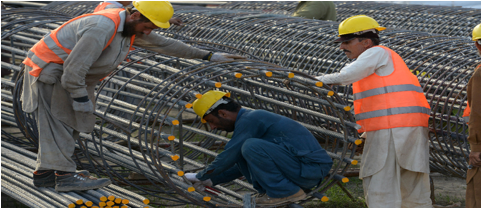
Development projects approved by the Central Development Working Party (CDWP) in July 2026 are expected to generate nearly 22,000 jobs across key sectors, highlighting the employment potential of public investment under the federal development programme.
According to the Ministry of Planning, Development and Special Initiatives' Monthly Development Update – August 2026, available with Wealth Pakistan, the approved PC-I projects are estimated to create approximately 7,851 direct jobs and 14,053 indirect jobs, taking their combined employment potential to 21,904 jobs.
The employment opportunities are expected to be generated across a broad range of sectors, including environment, health, information technology, physical planning and housing, power, science and technology, transport and communications, and water resources.
The document describes public investment as an important contributor to economic growth, infrastructure development and employment generation, with the approved portfolio reflecting the government's emphasis on inclusive, sustainable and employment-oriented development.
During July, the CDWP considered 27 agenda items, comprising 22 development projects, four position papers and one concept clearance proposal. Of these, nine projects, three position papers and one concept clearance proposal were approved, while nine projects were recommended to the Executive Committee of the National Economic Council (ECNEC). Three projects were deferred, while one project and one position paper were returned to their sponsors.
The development proposals covered infrastructure as well as social and productive sectors. In the health sector, a foreign-funded project costing Rs25.879 billion was recommended to ECNEC to improve healthcare accessibility and strengthen secondary and tertiary healthcare services in underserved areas of Islamabad.
In the information technology sector, two projects worth a combined Rs12.061 billion were approved for the development and implementation of a national cybersecurity policy and modernisation of post office infrastructure across the country.
In the power sector, one project costing Rs7.212 billion was approved, while two projects worth Rs36.298 billion were recommended to ECNEC. The projects are aimed at improving hydropower generation and electricity infrastructure in underserved areas.
The CDWP also approved a Rs1.169 billion science and technology project aimed at promoting industrial modernisation, digital transformation, sustainability and skill development. Three position papers in the sector were also approved.
Transport and communications accounted for another major component of the portfolio. One project costing Rs1.571 billion was approved, while five projects worth Rs88.319 billion were recommended to ECNEC to improve road infrastructure in Balochistan, including the Gwadar Eastbay Expressway Phase-II.
In the water resources sector, two projects costing a combined Rs14.295 billion were approved and another project worth Rs19.855 billion was recommended to ECNEC. The projects are intended to improve water storage, irrigation and drinking-water supply in Balochistan.
The employment estimates coincide with the launch of the government’s Rs1 trillion Federal Public Sector Development Programme (PSDP) for FY2026-27. The National Economic Council approved the programme in June, including Rs255 billion as foreign loan rupee cover, while directing ministries and divisions to prioritise fast-moving, high-impact ongoing projects of national significance amid fiscal constraints.
Under the URAAN Pakistan framework, development resources are to be concentrated on high-impact priority projects capable of generating significant economic and social gains, improving the efficiency of public investment and supporting sustainable, inclusive and resilient development.
Employment projections from the July-approved projects highlight how development spending goes beyond improving infrastructure and public services to actively stimulate job creation as the FY2026-27 development programme moves into full swing.
Credit: INP-WealthPk
Related News