


i INP-WEALTHPK
China’s circular economy model offers Pakistan roadmap for cleaner growthBreaking
May 18, 2026
By Azam Tariq
China’s emergence as a global leader in circular economy policy offers Pakistan a practical roadmap for cleaner industrial production and higher value-added growth as both countries seek to align economic development with environmental sustainability.
According to a report published by China’s state-run news agency Xinhua, China is rapidly expanding green industrial systems covering solar, wind, hydrogen, shore power, energy storage, carbon capture and biodegradable materials.
China’s 2026 government work report also set a target to reduce carbon dioxide emissions per unit of GDP by 3.8 percent.
The country’s circular economy strategy is deeply rooted in long-term policy planning. According to the State Council, China’s circular economy plan under the 14th Five-Year Plan framework made resource recycling a national priority.
The plan aims to increase major resource productivity by around 20 percent while reducing energy and water consumption per unit of GDP by 13.5 percent and 16 percent, respectively. It also targets the development of a resource recycling industry worth 5 trillion yuan by 2025.
Speaking to Wealth Pakistan, Engr. Asad Mahmood, energy efficiency expert and CEO of ESG Nexus and Global Tech Innovations, said Pakistan needed to stop treating the circular economy solely as an environmental or waste-recycling issue.
He said circular economy principles should instead become an integral part of industrial policy through incentives, formal value chains and sector-specific strategies for cleaner production.
According to Mahmood, green technologies can help reduce industrial energy costs and improve competitiveness, but Pakistan must also prioritise resource-efficient production, lower emission intensity and secure internationally recognised certifications.
“If we want value addition, we will require skill sets and international certification at localised cost,” he said.
Mahmood noted that the transition would also create new technical employment opportunities.
As electric vehicles and advanced technologies become more widespread, traditional roadside mechanics alone would no longer be sufficient, requiring Pakistan to develop a new generation of trained mechanics, electricians and specialised technicians.
He stressed that the entire industrial chain — from product design to repair, reuse, recycling and financing — must be examined sector by sector.
He also said banks would need to develop expertise in assessing circular economy financing models and evaluating the asset value of green technologies.
Pakistan, he argued, should move beyond assembly-based production and focus on building genuine manufacturing capacity.
“China’s success came from making circular economy part and parcel of industrial policy,” he said.
China’s industrial examples continue to demonstrate the scale of this transformation. At Qingdao Port, solar tracking systems are improving power generation efficiency by around 40 percent, while Moon Environment Technology Co. has deployed industrial carbon capture technologies with annual carbon capture exceeding 12 million tonnes.
Umair Rahman, Associate at the Office of the Coordinator to the Prime Minister on Climate Change and Environmental Coordination, told Wealth Pakistan that China’s most important experience for Pakistan was institutional integration.
He said China embedded circular economy principles into national planning, coordinated implementation across ministries and used the state as a strategic investor and market creator.
According to Rahman, Pakistan already possesses a policy foundation through its Nationally Determined Contributions (NDCs) and Pakistan Green Taxonomy, but implementation and cross-sector coordination remain critical challenges.
The Ministry of Climate Change and Environmental Coordination lists Pakistan NDC 3.0 and Pakistan Green Taxonomy among its 2025 policy publications, while the State Bank of Pakistan has advised banks and development finance institutions to use the taxonomy as a reference framework for green banking policies.
Rahman said renewable energy, green hydrogen, carbon capture, biodegradable materials and electric transport could help Pakistan move toward higher value-added industrial growth.
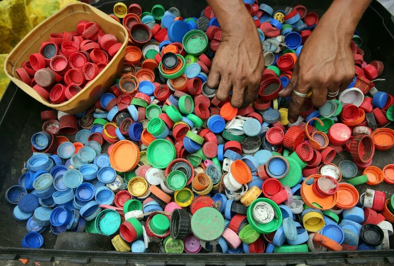
According to the SDPI report State of Circular Economy in Pakistan, the country generates nearly 49.6 million tonnes of solid waste annually, while less than 20 percent is formally collected and only a small share is recycled.
The Heinrich-Böll-Stiftung also noted that Pakistan already has widespread informal reuse and recycling systems, though these remain largely unregulated and require stronger regulation, safety safeguards and proper data collection.
Rahman said Pakistan should channel its expanding solar capacity toward industrial use, support SMEs through green credit windows, operationalise the Green Taxonomy, create demand for biodegradable packaging and utilise the CPEC green corridor for technology transfer rather than relying solely on hardware imports.
Experts believe a circular economy could help Pakistan convert waste, energy inefficiency and low-value production into new industrial opportunities.
China’s experience suggests that cleaner production works most effectively when supported by long-term planning, financing, technical skills, certification systems and domestic manufacturing capacity.
For Pakistan, analysts say, the challenge is no longer the absence of policy frameworks but ensuring timely and effective implementation.
Credit: INP-WealthPk
Related News