


i INP-WEALTHPK
China’s renewable boom signals opportunity for Pakistan’s clean-tech industryBreaking
March 30, 2026
By Hasan
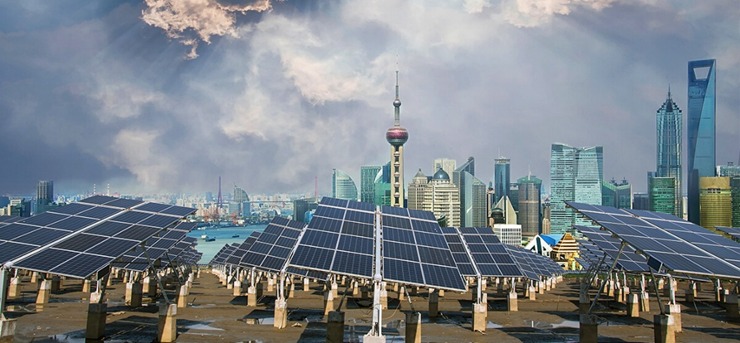
China’s rapid renewable energy expansion is not only reshaping its power mix but also fuelling the rise of a globally competitive clean-tech industry. This trajectory offers Pakistan a clear pathway to turn its own clean energy growth into industrial development and long-term economic gains. According to China’s Report on the Work of the Government, the country had already built what it described as the world’s largest and fastest-growing renewable energy system by the end of 2025.
The report noted that the first batch of new energy bases in desert and other arid areas had largely been completed and put into operation, installed capacity of new-type energy storage had exceeded 130 gigawatts, and the share of non-fossil energy in total consumption had reached 21.7%. The scale of expansion is equally significant.
According to the National Development and Reform Commission’s report on implementation of the 2025 plan and the 2026 draft plan, China’s installed renewable energy capacity reached 2.34 billion kilowatts in 2025, accounting for 60.1% of total installed power capacity. Newly installed wind and solar capacity reached 430 million kilowatts, or 80.4% of all new capacity added during the year.
The report also highlighted plans to expand smart grids, energy storage, green transmission channels and zero-carbon industrial parks during the new plan period. Speaking with Wealth Pakistan, Aziz Raza, Senior Energy Specialist at the Pakistan Engineering Council, said China’s renewable energy strategy shows how sustained policy direction and industrial planning can turn clean power expansion into long-term industrial growth.
He said China’s progress was driven by clear national targets, stable regulations and strong institutional coordination, which enabled investors and manufacturers to plan with confidence. In contrast, he noted that frequent changes in tariff structures, procurement models and regulatory rules in Pakistan discourage the long-term investment needed to build local clean-tech capacity. Raza said China strengthened its power-generation push by building a full industrial ecosystem around solar panels, wind turbines, batteries and related equipment, enabling domestic firms to scale rapidly and reduce costs.
Pakistan, by contrast, continues to rely heavily on imports for most clean-energy technologies. He said a gradual strategy based on joint ventures and technology transfer could help Pakistan develop a domestic clean-tech value chain while generating skilled employment. On the power system, Raza said Pakistan must also learn from China’s investment in transmission, smart grids, storage and grid-balancing technologies.
As solar and wind penetration increases, he said stronger transmission networks, improved grid flexibility and storage solutions will become critical. Mashhood Urfi, Associate, Energy Transition and Policy Advocacy at Alternate Development Services, Islamabad, said inconsistent solar net-metering policies and sudden regulatory shifts are undermining investor confidence. He called for a stable 10-year regulatory framework to support long-term planning.
Urfi said that with 12.7 gigawatts of solar capacity imported in just nine months from July 2024 to March 2025, consumers are already adopting solar faster than the grid can keep up. He said the government now needs to formalise this decentralised transition. He also stressed the need for a clear industrial strategy, including requirements for partial local manufacturing in large-scale renewable projects to encourage technology transfer.
He suggested that some of Pakistan’s 44 approved special economic zones be designated as clean-tech clusters, supported by tax incentives for battery and inverter manufacturing. He added that Pakistan could benefit from Chinese expertise in High-Voltage Direct Current transmission to efficiently transmit wind power from Jhimpir to Punjab’s industrial centres. Mohsin Ali, Renewable Energy Specialist at HANDS Welfare Foundation Islamabad, said Pakistan should not measure renewable progress solely by capacity additions.
He noted that China’s latest plan places greater emphasis on carbon reduction, efficiency, storage and smart grid management. He warned that Pakistan risks becoming a large market for imported solar hardware without developing a strong grid and storage base. He called for storage requirements in large-scale solar projects, clear technical standards for battery systems and a renewed phase of Green CPEC focused on technology transfer and localisation.
Ali also emphasised the need to address structural issues such as dependence on imported coal and legacy power purchase arrangements. He said tariff reforms and early implementation of the National Carbon Market Policy could help attract green finance and support industrial decarbonisation. Experts said China’s experience shows that the real opportunity for Pakistan lies not only in expanding clean power generation but in building a domestic clean-tech industry around it.
They said Pakistan can begin by ensuring policy stability, then promote local manufacturing through joint ventures, localisation measures and dedicated industrial clusters. This shift should be supported by stronger grids, storage systems, improved financing tools and market reforms to reduce long-term import dependence and create sustainable economic growth.
Credit: INP-WealthPk
Related News