


i INP-WEALTHPK

Pakistan expands early-warning systems but faces last-mile preparedness gapsBreaking
September 02, 2026
By Azam Tariq
Pakistan is expanding disaster-monitoring and early-warning capacity in its vulnerable northern regions, but gaps in last-mile communication, evacuation arrangements and local response infrastructure can limit the ability of exposed communities to act on warnings when floods and glacial hazards strike, experts and affected residents say.
The challenge is particularly significant in Gilgit-Baltistan, where difficult terrain, scattered settlements and recurring climate-related hazards make timely communication and community preparedness critical to disaster-risk reduction.
Pakistan has been strengthening its capacity in this area. Under the Enhancing Climate Adaptive Resilience and Economic Recovery (ECARE) Programme launched earlier this year, the Gilgit-Baltistan Rural Support Programme (GBRSP) and the United Nations Development Programme are working to strengthen early-warning systems across the region with $3.98 million in funding.
The programme is expected to directly support 3,000 people, while enhanced warning systems are intended to benefit nearly two million.
The National Disaster Management Authority (NDMA) has also been issuing frequent hazard alerts, including a glacial lake outburst flood (GLOF) alert on June 27 and a special monsoon advisory for northern areas on June 29, followed by further flash-flood advisories in July.
Experts say these initiatives represent important progress, but strengthening the connection between institutional forecasting and community-level preparedness will be critical to ensuring that warnings translate into preventive action.
Fazal ur Rehman, Sub-Divisional Officer at GBRSP, told Wealth Pakistan that early-warning infrastructure had been developed through different interventions and partnerships, but its coverage was still not wide enough across Gilgit-Baltistan.
He said an effective early-warning system could save lives, but communities also needed infrastructure that allowed them to respond when warnings were issued.
Temporary rehabilitation or evacuation centres for people displaced for short periods were currently lacking, he said.
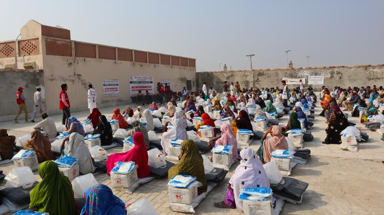
Much of the intervention, Rehman said, remained concentrated on post-disaster rehabilitation, including provision of basic necessities, sanitation, clean drinking water and temporary shelter to affected communities.
Experiences from flood-hit communities also highlight the importance of strengthening last-mile communication and local response capacity.
Shah Khalid, a resident of Thor, Chilas, who lost his house and valuables in the June flooding, told Wealth Pakistan that he had received no early warning of the approaching flood.
He said local residents initially depended heavily on one another to clear blocked paths and search through debris for belongings before wider assistance reached the affected area.
Abdul Ghani, a resident of Shitan Nala, Thor, similarly said the valley faced recurring flood risks but lacked an effective local warning mechanism.
He said floodwaters damaged irrigation channels and water pipelines, leaving agricultural fields without water. Residents restored parts of the system through self-help efforts, although significant infrastructure remained damaged.
The scale of the underlying climate risk reinforces the need for stronger preparedness. According to the Ministry of Climate Change and Environmental Coordination, 3,044 glacial lakes have developed across Gilgit-Baltistan and Khyber Pakhtunkhwa, of which 33 are considered prone to hazardous GLOFs. More than 7.1 million people live in vulnerable areas.
Asif Ahuja, former Director General of the Pakistan Environmental Protection Agency, told Wealth Pakistan that the country needed to build on its hazard-identification capabilities by strengthening preventive measures that protected communities before disasters occurred.
He said long-term historical data should be used to identify recurring patterns and determine which communities faced predictable periods of heightened risk.
In remote mountain valleys, Ahuja said, warnings should reach residents through reliable communication channels, including radios and satellite phones where conventional networks were unreliable.
For communities facing predictable seasonal threats, he suggested temporary relocation arrangements during the highest-risk months. Authorities could establish temporary shelters where particularly exposed families could relocate before conditions became dangerous, he said.
Such preparedness, supported by first aid and basic facilities through government agencies, welfare organisations and non-governmental organisations, could reduce casualties and lessen the financial burden associated with repeated emergency responses, Ahuja added.
Muhammad Ijaz Malik, Senior Scientific Officer and Head of Agriculture, Forestry and Land Use at the Global Climate Change Impact Studies Centre, told Wealth Pakistan that effective early warning required strong coordination among forecasting institutions, disaster-management authorities and local governments.
Warnings, he said, must reach exposed populations quickly, while communities also need clear guidance on how to respond once an alert is received.
Malik called for regular preparedness training, evacuation drills, awareness programmes, school-based disaster education and local volunteer rescue networks, noting that community members were frequently the first responders during emergencies.
International experience also offers lessons for strengthening the link between hazard monitoring and preventive action. China's Ministry of Natural Resources recently announced a 2026-2030 geological-disaster programme that combines monitoring and early warning with relocation and physical risk-reduction measures.
The programme calls for relocating 50,000 households from high-risk areas, engineering interventions at more than 4,200 disaster-prone sites and removal of hazards at more than 6,100 locations. China also plans an integrated national geological-disaster information platform using big data and large artificial intelligence models for monitoring and early warning.
Malik said strengthening local preparedness alongside forecasting and warning capacity would help ensure that communities were able to respond quickly when hazards emerged, reducing risks to lives, livelihoods and essential infrastructure.
Credit: INP-WealthPk
Related News