


i INP-WEALTHPK
Pakistan-US trade talks raise hopes for stable, long-term economic partnershipBreaking
July 20, 2026
By Azam Tariq
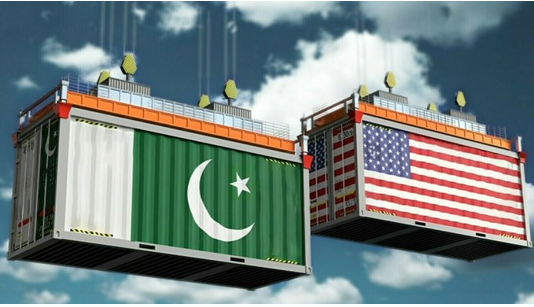
Pakistan-United States trade negotiations have raised hopes for a stable, long-term economic partnership that could safeguard Pakistan's access to its largest single-country export market while expanding cooperation in energy, minerals, agriculture and investment, business leaders say.
The latest two-day round of negotiations was held in Washington on July 9 and 10 under the leadership of Commerce Secretary Jawad Paul. Officials from the Ministry of Overseas Pakistanis and Human Resource Development were also part of the Pakistani delegation.
The discussions covered reciprocal tariffs as well as broader cooperation in energy, minerals, information technology and investment.
Foreign Office spokesperson Tahir Andrabi said the negotiations were conducted in a cordial atmosphere, with both sides resolving differences and building convergence as they worked towards the early conclusion of the Pakistan-United States Agreement on Reciprocal Trade.
The negotiations followed several rounds of virtual discussions before Pakistan dispatched its first delegation to Washington in July 2025.
The tariff framework has evolved considerably since Washington initially proposed a 29% reciprocal tariff on Pakistani exports in April 2025. Negotiations reduced the proposed rate to 19% under an agreement reached in July 2025. Subsequent legal and policy developments reshaped the broader US tariff framework, while both sides continued working towards a comprehensive bilateral arrangement.
The importance of securing predictable market access has grown as Pakistan's merchandise exports declined by 8% during July-March FY2025-26 amid global trade disruptions, according to the Ministry of Finance's latest economic overview.
Business leaders believe the negotiations provide an opportunity to move beyond temporary tariff discussions towards a broader and more durable commercial partnership encompassing trade, energy, minerals, agriculture and investment. They argue that a predictable long-term agreement would enable exporters and investors to plan with greater confidence.
Speaking to Wealth Pakistan, Tariq Khan Jadoon, Vice President of the Federation of Pakistan Chambers of Commerce and Industry (FPCCI), described the negotiations led by Commerce Secretary Jawad Paul as a positive development for Pakistan's economy.
"The United States is Pakistan's largest single-country export market, and we cannot afford to jeopardise that relationship," he said.
Jadoon warned that higher tariffs could undermine the competitiveness of Pakistan's leading export sectors in the US market, particularly textiles and surgical instruments.
He said the government was seeking to maintain a balanced trade relationship, with Pakistan aiming to expand exports while the United States was looking for greater opportunities in mineral development and oil exploration.
According to Pakistan Textile Council data, textile and apparel exports to the United States increased to $2.925 billion during July-January FY2025-26 from $2.820 billion in the corresponding period of FY2024-25. The textile sector accounts for around 60% of Pakistan's total exports.
A separate FPCCI policy analysis estimated that Pakistan could capture between $2 billion and $3 billion from an $11.67 billion market opportunity in the United States if structural constraints, including high energy and borrowing costs, were addressed.
Jadoon said the latest negotiations represented a continuation of discussions initiated after reciprocal tariffs were proposed on Pakistani exports. Islamabad had also taken steps to increase imports from the United States in an effort to narrow the bilateral trade imbalance.
Pakistan imported six million barrels of American crude oil worth around $430 million between October and May, representing its first purchases of US crude, Petroleum Minister Ali Pervaiz Malik said in May.
"Overall, nothing is public as of now, but we hope it will turn out well," Jadoon said.
Chaudhary Ahmad Jawad, Chief Organiser of the Pakistan Business Forum (PBF), also welcomed the negotiations, saying bilateral trade remained well below its potential.
He said Pakistan-US economic relations had historically been transactional and called for a more structured commercial framework.
"At the very least, both countries should sign a Preferential Trade Agreement, if not a Free Trade Agreement," he said.
Ahmad said American soybeans could help meet the growing feed requirements of Pakistan's poultry industry.
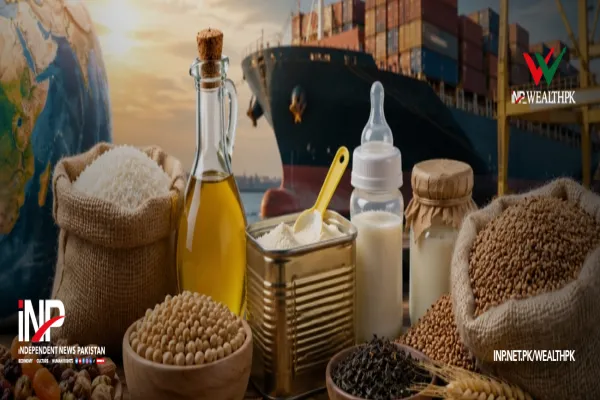
Pakistan resumed large-scale soybean imports from the United States after easing restrictions on genetically modified imports. The US Department of Agriculture projects Pakistan's annual soybean imports to approach two million metric tonnes.
Ahmad said Paul and his negotiating team were making a constructive effort to secure tariff relief and maintain the competitiveness of Pakistani products in the American market.
He said Pakistan should seek tariff arrangements that do not place its exporters at a disadvantage compared with regional competitors, particularly India.
Ahmad also called for any resulting trade agreement to remain in force for at least five years to reduce uncertainty and enable exporters and investors to plan production, pricing and market expansion with greater confidence.
He linked the improved atmosphere surrounding the negotiations partly to Pakistan's diplomatic engagement during tensions between the United States and Iran, a role that US officials had acknowledged.
Deputy US Trade Representative Rick Switzer recognised Pakistan's constructive role in promoting regional stability during a meeting with Commerce Minister Jam Kamal Khan in May, according to an official account of the discussions.
Ahmad said business relations between the two countries should become more diversified and integrated. While the United States remains the leading single-country market for Pakistani textiles, pharmaceuticals, surgical instruments and sports goods, Pakistan could expand imports of American defence equipment, agricultural machinery and soybeans, alongside broader cooperation in mineral exploration.
Mineral cooperation already has a substantial commercial foundation, with Washington supporting around $1.3 billion in financing linked to the Reko Diq copper and gold project.
"Both countries should keep each other's long-term interests in mind," Ahmad said.
Credit: INP-WealthPk
Related News