


i INP-WEALTHPK

Pakistan’s ginger drive takes root as scientists eye import cutBreaking
December 31, 2025
Azeem Ahmed Khan
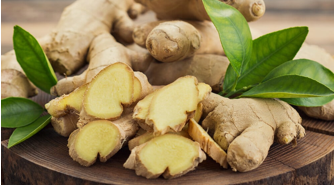
Pakistan’s long dependence on imported ginger may gradually ease, as local cultivation gathers pace, driven by research-led innovation, farmer participation, and targeted government support. Ginger farming in Pakistan was introduced through the sustained research efforts led by the Vegetable Research Institute of the Ayub Agricultural Research Institute (AARI), Faisalabad, in collaboration with progressive growers, AARI’s Principal Scientist Amir Latif told Wealth Pakistan.
Researchers localized the crop by evaluating imported germplasm under Pakistani conditions, developing tunnel and shade-based production technologies, and releasing a locally adapted variety, AARI Ginger-23, Latif said. Awareness-building initiatives such as ginger festivals played a key role in familiarizing farmers with the crop, strengthening the confidence, and creating market linkages. Government support has emerged as a key driver of farmer interest.
Under the Punjab Chief Minister Maryam Nawaz’s “Transfer of Agriculture in Potohar” initiative, farmers receive 70 percent subsidy (up to Rs3.29 million per acre) on infrastructure and seed. The support covers major inputs, such as tunnels, nets, and drip irrigation systems, as well as planting material, significantly lowering entry barriers for new growers, Latif added.
Pakistan consumes about 80,000 to 100,000 tonnes of ginger annually, roughly equal to its import volume, with shipments mainly sourced from China, Thailand, Myanmar, and Indonesia. The annual import bill stands at around $50 million, underscoring the economic incentive for domestic production. Local output, however, remains low, with total production estimated at 40 to 50 tonnes, concentrated in Faisalabad, the Potohar region, Islamabad, and parts of Khyber Pakhtunkhwa.
He appreciated the efforts of Dawri Agro Farms, Rawat; Nishtar Farms, Chak Shehzad; GN Farms, Chichawatni; and Rai Aslam Farms, Jaranwala, for employing their own resources for the cultivation of ginger. Despite the limited scale, Latif said research and demonstration sites have several acres in ginger cultivation and serve as learning hubs for farmers, while the crop’s adaptability offers significant room for expansion.
Production of local seed, once entirely imported, is now increasing at the research and progressive farms, though the supply remains limited. Looking ahead, Latif said ginger cultivation in Pakistan had a strong growth outlook, with self-sufficiency possible within seven to 10 years and potential for exports. He advised farmers to start on a small scale, follow the recommended technologies, use quality seed, and benefit from the available government support to improve farm incomes.
Ginger can be cultivated in Punjab under shade nets and tunnels in Potohar, the mid-hills of Khyber Pakhtunkhwa, and the Northern Areas. Research trials have already been conducted in Faisalabad, Rawalpindi, Chak Shahzad, Islamabad, and Bara, Khyber Pakhtunkhwa to assess performance under varying agro-climatic conditions, the principal scientist said. Beyond fresh consumption, small-scale value addition has begun, with farmers producing ginger powder, paste, tea, and pickles to enhance returns.
The Pakistani ginger is good, fresh, and aromatic, and can meet the international standards when managed properly, Latif said. The local ginger is mostly grown with very low chemical inputs and requires minimal pesticide use, making it almost organic. Ginger is considered a high-value crop due to strong domestic demand, its potential to substitute imports, and profitability compared to many traditional field crops, Latif said.
It thrives in temperatures ranging from 15 to 32 degrees centigrade and requires well-drained loamy soil rich in organic matter and partial shade. Farmers typically require 800 to 1,000 kilograms of rhizomes per acre. The initial setup costs are estimated at 4.0 to 4.5 million rupees per acre, while the annual running costs fall to around 700,000-100,000 rupees after establishment. Tunnel frames can last 15 to 20 years, while shade nets generally last three to five years, Latif informed Wealth Pakistan.
Credit: INP-WealthPk
Related News