


i INP-WEALTHPK
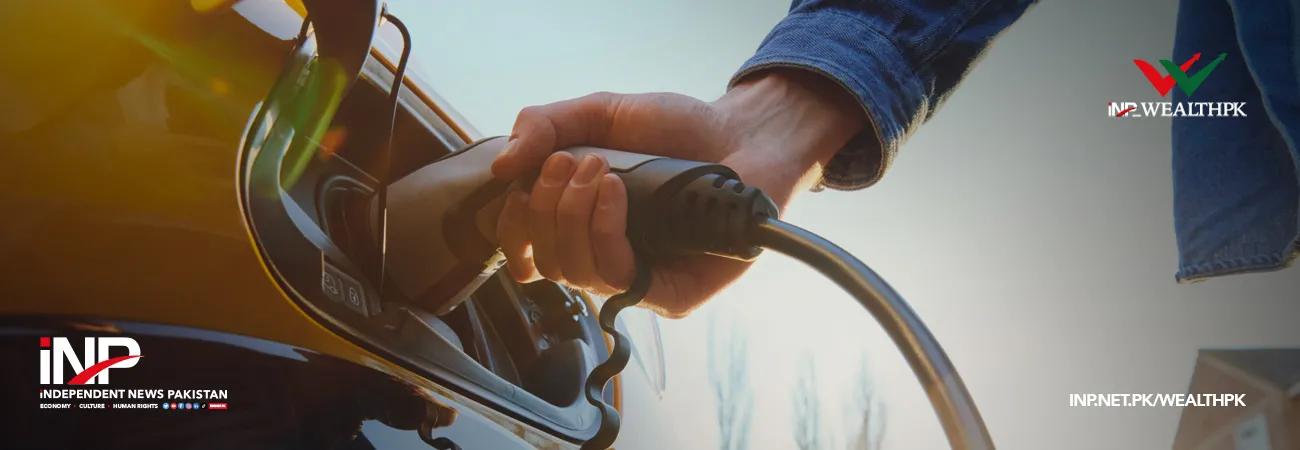
Pakistan's shift to EVs can cut fuel imports, boost energy securityBreaking
July 20, 2026
By Muhammad Zulqarnain
Pakistan should accelerate its transition to electric vehicles (EVs) to reduce dependence on imported petroleum, strengthen energy security, and lower carbon emissions.
According to experts, China's success offers a practical roadmap for Pakistan to build a sustainable electric mobility ecosystem.
Pakistan's EV sector is already gathering momentum. The National Electric Vehicle (NEV) Policy 2025-30 aims for EVs to account for 30% of all new vehicle sales by 2030, while the Engineering Development Board (EDB) has granted manufacturing licences to 101 companies producing electric two- and three-wheelers. According to EDB data, domestic e-bike production surged from just 7,302 units in FY2021-22 to 194,498 units during FY2024-25 (up to May).
China's experience demonstrates how long-term policy support, local manufacturing, charging infrastructure, and technology development can transform electric mobility into a driver of industrial growth and energy security. Experts believe Pakistan can adapt many of these lessons to its own market conditions while building a cleaner and more resilient transport system.
Speaking to Wealth Pakistan, Hasan Dajana, Industry Liaison at Renewables First, said Pakistan spends more than US$15 billion annually on petroleum and energy-related imports, citing data from the Trade Development Authority of Pakistan (TDAP).
"EV adoption therefore has two benefits: an environmental one and an economic one," he said. "As Pakistan's transport sector continues to be one of the largest consumers of imported fuels, electrification presents a significant opportunity to strengthen both our environment and our economy."
According to the NEV Policy, if Pakistan achieves its target of 30% EV sales by 2030, the country could save 2.07 billion litres of fuel annually, reduce carbon emissions by 4.5 million tonnes, and generate nearly US$1 billion in foreign exchange savings each year.
He pointed out that Pakistan is uniquely positioned to support EV adoption through renewable energy. According to Renewables First, the country has imported more than 50GW of solar panels in recent years, creating opportunities to pair EV charging with rooftop solar systems and further reduce reliance on imported fuels.
Dajana emphasized that two- and three-wheelers should remain the primary focus of policymakers, as they account for around 84% of Pakistan's transport fleet.
"The priority now is implementation, execution, and financing," he said, stressing the need to establish the 3,000 charging stations envisioned under the NEV Policy, streamline approvals for private investors, maintain regulatory stability, and expand affordable EV financing through banks and development finance institutions.
He added that the private sector can play a critical role by investing in charging corridors, battery-swapping networks, and local battery manufacturing.
Commenting on China's leadership in electric mobility, he said the country's success was built on long-term policy certainty, integrated supply chains, manufacturing scale, and technology transfer.
"Pakistan should leverage industrial cooperation under CPEC to move beyond vehicle assembly towards technology transfer, component localisation, and domestic manufacturing," he said.
Sharing a similar view, Mahwish Khan, Director at the National Energy Efficiency and Conservation Authority (NEECA), said Pakistan's EV transition requires a comprehensive ecosystem rather than simply increasing the number of electric vehicles on the road.
"Affordability is important, but EV adoption will not accelerate through vehicle availability alone," she said. "Consumers need confidence that charging is accessible, safe, reliable, and reasonably priced."
She noted that investors also require a clear and predictable regulatory framework, adding that NEECA is actively working to strengthen regulations and facilitate EV charging infrastructure across the country.
According to her, China's experience demonstrates that electric mobility is not built through vehicles alone.
"It requires long-term policy consistency, manufacturing scale, battery supply chains, charging infrastructure, technology improvement, and strong domestic demand," she said.
She emphasized that Pakistan should draw lessons from China while developing an EV model tailored to its own market conditions, electricity grid, affordability challenges, and climate realities.
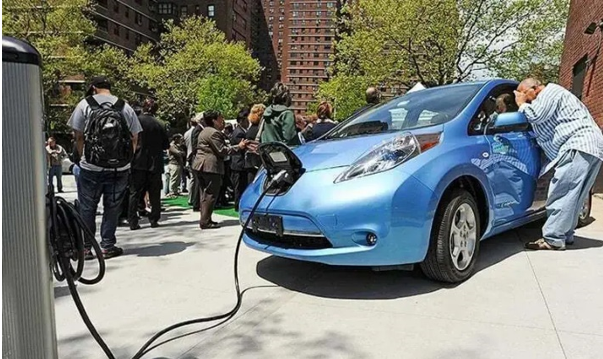
Credit: INP-WealthPk
Related News