i INP-WEALTHPK
Policy benchmarks Pakistan’s gemstone sector against India, Thailand and Sri LankaBreaking
January 19, 2026
Qudsia Bano
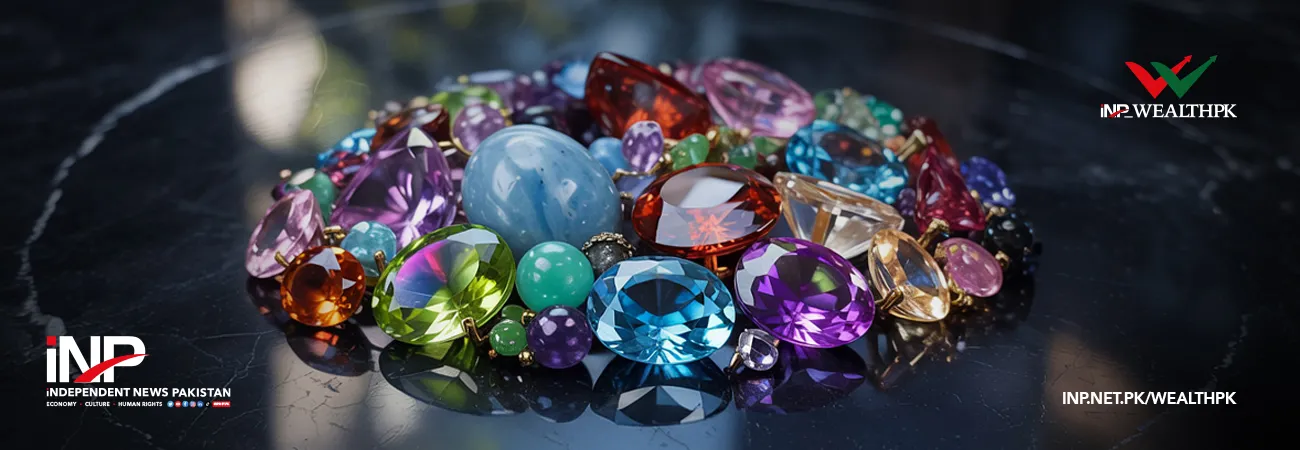
The National Policy to Realize Pakistan’s Gemstone Potential 2026–30 benchmarks Pakistan’s gemstone sector against regional peers including India, Thailand and Sri Lanka, identifying differences in governance structures, export performance and regulatory frameworks that have enabled those countries to achieve significantly higher export earnings despite varying levels of natural resource endowment.
According to the policy document prepared by the Ministry of Industries and Production, Pakistan’s documented gemstone exports stood at $5.78 million in 2025, compared with $16.25 billion exported by India and $3.49 billion by Thailand in 2024. This contrast exists despite the fact that Pakistan possesses extensive gemstone reserves, while Thailand’s natural reserves are largely depleted and India’s reserves are comparatively modest.
The policy notes that benchmarking was undertaken to understand why Pakistan’s gemstone sector has failed to translate natural endowments into export performance. The comparison focused on regulatory policies, incentive regimes, export procedures, branding strategies and institutional support mechanisms adopted by peer countries.
According to the document, India and Thailand have developed strong export-oriented gemstone industries by emphasizing value addition, streamlined customs procedures and robust institutional coordination. In India, the Gem and Jewellery Export Promotion Council plays a central role in registration, export facilitation, data dissemination and international marketing. Thailand has similarly established specialized institutions and industrial clusters, including the Gemopolis industrial estate, which hosts hundreds of enterprises and contributes significantly to national exports.
Sri Lanka’s experience is highlighted for its integrated governance model, where the National Gems and Jewellery Authority regulates licensing, certification, valuation and exports under a single statutory framework. The policy notes that Sri Lanka’s gemstone exports benefit from simplified customs procedures, origin-based branding and mandatory certification, which together support buyer confidence and traceability.
The policy further observes that peer countries have adopted clear and predictable export procedures, including risk-based inspections, temporary export regimes and transparent valuation systems. These mechanisms reduce delays, limit discretion and encourage exporters to operate through formal channels.
Branding and marketing practices are also identified as key differentiators. The document cites Sri Lanka’s “Ceylon Sapphires” and Jaipur’s global reputation as examples of how origin-based branding has helped secure premium pricing and long-term buyer relationships. Pakistan, by contrast, lacks a coordinated branding strategy and an internationally recognized certification framework.
The policy also highlights that peer countries actively enforce environmental, social and compliance standards, aligning their gemstone industries with international expectations related to traceability, anti-money laundering and ethical sourcing. These practices have strengthened access to high-value markets and institutional buyers.
According to the document, the benchmarking exercise informed the design of Pakistan’s gemstone policy by identifying institutional gaps, procedural bottlenecks and regulatory weaknesses. The policy states that reforms proposed for Pakistan are aligned with international practice but adapted to local conditions, with a focus on improving governance, transparency and export competitiveness.

Credit: INP-WealthPk
Related News