



i INP-WEALTHPK

SBP’s 2026-2029 research agenda focuses on inflation, financial sector gaps and economic vulnerabilitiesBreaking
June 15, 2026
By Moaaz Manzoor
The State Bank of Pakistan (SBP) has launched its first Research Agenda for 2026-2029, identifying key research gaps in inflation management, monetary policy transmission, financial-sector development and structural reforms as the country continues to grapple with supply shocks, shallow financial markets and recurring boom-bust cycles.
According to the SBP Research Agenda 2026-2029, the central bank will focus its research efforts on three broad themes: inflation dynamics and monetary policy; financial sector deepening, soundness and efficiency; and structural transformation and economic development.
The document highlights the SBP’s intention to strengthen evidence-based policymaking as Pakistan’s economy faces growing challenges from climate shocks, commodity price volatility, trade disruptions, geopolitical tensions, technological change and external-sector pressures.
In the foreword, SBP Governor Jameel Ahmad said research and analysis are central to informed policymaking. He noted that the agenda aligns with the SBP’s statutory objectives and Vision 2028 and seeks to address critical knowledge gaps to support effective decision-making.
The first theme focuses on inflation dynamics and monetary policy. The document notes that recent global and domestic supply shocks have made inflation more volatile and less predictable, prompting central banks to reassess their policy frameworks.
It points to climate-related disruptions, including erratic rainfall and floods, as factors affecting agricultural output, food prices and trade flows. These developments, the agenda says, have increased the frequency and persistence of supply-side inflationary pressures.
The SBP also identifies structural and market frictions — including informality, limited financial access and market segmentation — that may weaken or delay the transmission of monetary policy. As a result, changes in policy rates may not pass through the economy as effectively or as quickly as intended.
The agenda calls for further research on inflation expectations, shock pass-through, communication strategies and central bank credibility. It also proposes strengthening the SBP’s modelling and forecasting framework through the use of new data sources, longer forecasting horizons and more advanced empirical and structural models.
One of the key policy questions raised in the document is whether flexible inflation targeting would be suitable for Pakistan and how such a framework should be designed, including the inflation target, tolerance band and policy horizon.
The second theme focuses on financial sector deepening, soundness and efficiency. The SBP notes that Pakistan’s financial intermediation remains shallow, with persistent gaps in credit penetration, financial inclusion and operational efficiency.
The document further observes that the banking system continues to dominate the financial sector, while capital markets and non-bank financial institutions remain underdeveloped. This limits the financial system’s capacity to support private investment and long-term economic growth.
Under this theme, the SBP plans to examine the causes of low financial intermediation, the effectiveness of concessionary financing schemes, banks’ funding structures, private-sector credit allocation, deposit mobilisation and the interaction between monetary policy and financial stability.
The research agenda also covers Islamic banking, digital financial services, financial inclusion, macroprudential regulation and liquidity management. It notes that Pakistan’s transition towards a more Shariah-compliant banking system carries important implications for liquidity management, financial intermediation and monetary policy transmission.
The third theme centres on structural transformation and economic development. The document argues that Pakistan must move away from recurring boom-bust cycles by shifting resources from low-productivity sectors to higher value-added manufacturing and modern services.
To support this transition, the agenda identifies institutional reforms, governance, informality, tax simplification, digitalisation, productivity enhancement, human capital development, innovation, export competitiveness, external-sector sustainability and climate resilience as priority research areas.
It also notes that the large undocumented economy weakens the reliability of macroeconomic indicators and reduces the effectiveness of policy transmission. The document calls for research into how technological change, migration, demographic shifts and artificial intelligence could shape labour markets, productivity and long-term economic growth.
External-sector sustainability has also been identified as a priority area. The SBP plans to study how foreign direct investment, portfolio flows, external borrowing and workers’ remittances influence macroeconomic resilience, as well as the factors limiting private foreign investment inflows into Pakistan.
The document states that the central bank intends to collaborate with government institutions, academia, policy researchers and industry stakeholders to generate policy-relevant insights. It also indicates that the SBP may provide funding for selected priority research projects.
While the agenda outlines a comprehensive framework for future research, its ultimate impact will depend on whether the identified knowledge gaps translate into practical reforms that strengthen inflation management, deepen financial markets, enhance external-sector resilience and support sustainable long-term economic growth.
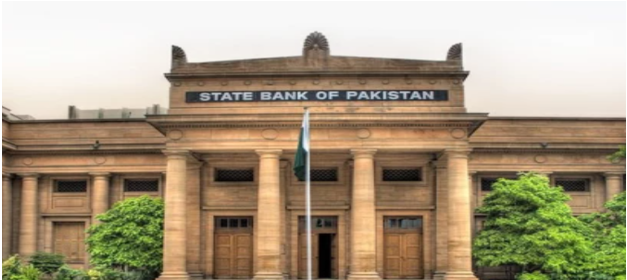
Credit: INP-WealthPk
Related News