


i NEWS INTERNATIONAL
Iran Guards 'waiting' for US forces at Strait of Hormuz as war enters 2nd week Breaking
March 07, 2026
Iran's Revolutionary Guards said Saturday they were waiting for US forces to escort ships through the Strait of Hormuz, a strategic waterway where traffic remains strangled as the escalating war in the Middle East entered its second week and oil prices surged on fears about global supply disruption. The US-Israeli bombing campaign unleashed on February 28 has provoked Iranian retaliation against US allies across the region, with President Donald Trump saying Friday that only "unconditional" Iranian surrender would end the war.
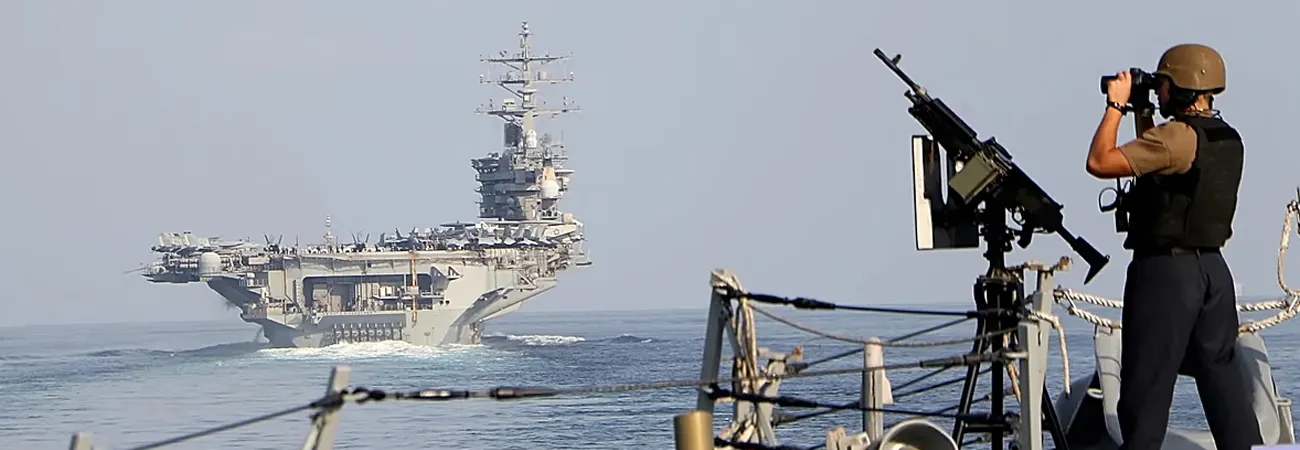
But early on Saturday, air raid alerts and explosions were ringing out above Jerusalem as well as Gulf cities Dubai, Manama and near Riyadh where Saudi Arabia intercepted a ballistic missile fired at an airbase housing US military personnel."We are waiting for their presence," said Guards spokesman Ali Mohammad Naini, after the US energy secretary announced the Navy was preparing to escort ships through the strait "as soon as it's reasonable to do it".
"We recommend that before making any decision, the Americans remember the fire of the American supertanker Bridgeton in 1987 and the oil tankers that were recently targeted," Naini said, according to Fars news agency.Only nine oil tankers, cargo and container ships, some of which at times concealed their position, have been recorded crossing the Strait of Hormuz since Monday.
After three ships were attacked on Sunday, at least three tankers and a vessel carrying gas have crossed this chokepoint, a key shipping lane virtually shut by the war in the Middle East. Nearly 20 percent of the world's crude oil and about 20 percent of liquefied natural gas (LNG) usually transit through the Strait of Hormuz. Only vessels that emitted at least one signal on either side of the Strait of Hormuz were counted by AFP, excluding any others that may have travelled with their signals entirely concealed for a long period of time.
Attacks since Sunday have multiplied against ships navigating Hormuz, raising concerns about a lasting impact on the global economy as the US-Israeli war on Iran and Tehran's retaliatory attacks across the Gulf region have upended the world's energy sector. Iran armed forces spokesman Abolfazl Shekarchi told Iranian state broadcaster Irib, "We emphasize the security of the Strait of Hormuz and control it, but we will not close it."
Credit: Independent News Pakistan (INP)
Related News