



i NEWS INTERNATIONAL
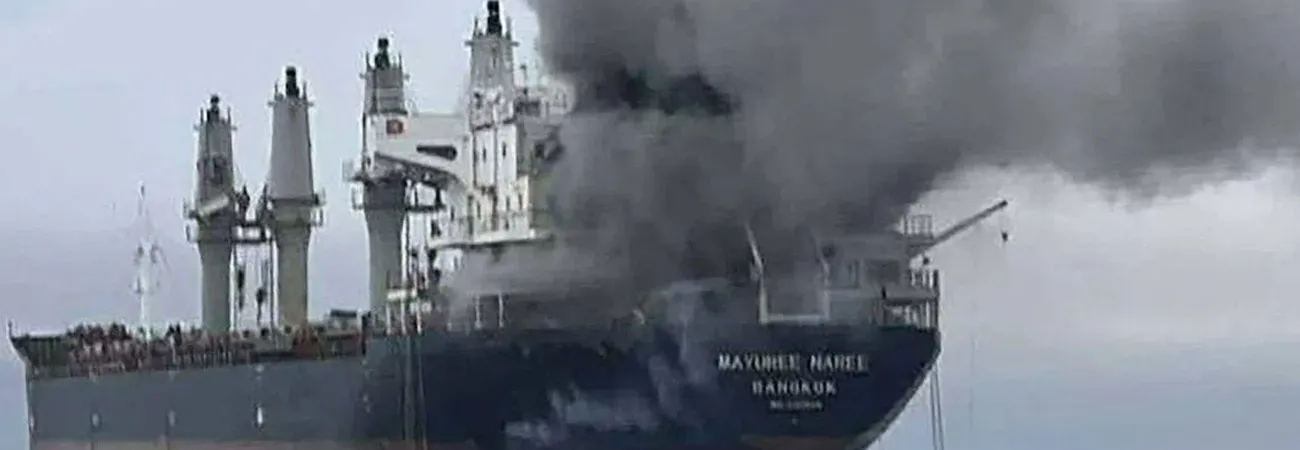
Oil prices surge as Iran strikes three oil, container ships in GulfBreaking
March 12, 2026
Oil prices soared Thursday and stocks sank as Iran struck three tankers in Iraq and threatened to bring down the global economy, overshadowing a record release of strategic crude by the International Energy Agency. As the US-Israel strikes on the Islamic republic approached their third week, the conflict showed no signs of letting up with Tehran responding with more retaliatory attacks across the Gulf.
The IEA said Wednesday that its members had agreed to unlock 400 million barrels of oil from their reserves their largest release ever with 172 million coming from the United States. However, the move was unable to overcome fears about the choking of energy supplies from the Middle East, with the Strait of Hormuz -- through which a fifth of global crude passes -- effectively shut down.
In a sign that shipping across the region was in danger, two tankers in Iraqi waters were struck, killing one crewmember. Baghdad had already said it was cutting output because of the crisis, with Kuwait and kingpin Saudi Arabia following suit. Farhan Al-Fartousi, from Iraq's General Company for Ports, told state television that one crew member had been killed and 38 rescued while the "search continues for the missing."
He did not specify the crew members' nationalities or provide details on who was behind the attack, which occurred roughly 50 kilometres from the coast. The Iraqi government's media cell told national news agency INA that "two tankers were subject to sabotage". Iraq's oil ministry said in a statement on Thursday it had "deep concern" about incidents involving oil tankers in the Gulf, without providing details. Another container ship was hit by a "flying object" near the United Arab Emirates (UAE).
Meanwhile, Iran said it was ready for a long war of attrition that would "destroy" the world economy, after firing on two commercial ships and threatening any vessels from the United States or its allies. The Revolutionary Guards warned Wednesday they would strike "economic centres and banks" linked to US and Israeli interests.
The United States and Israel "must consider the possibility that they will be engaged in a long-term war of attrition that will destroy the entire American economy and the world economy", Ali Fadavi, an adviser to the Guards' commander-in-chief, told state television. Analysts warn that a prolonged disruption to shipping through the strait -- which also carries roughly a third of the fertiliser used in global food production -- would deliver a severe economic shock, particularly in Asia and Europe.
Among those badly hit are airlines, with many having to rethink flights through the Middle East, while the rising cost of fuel hits their bottom line. Air New Zealand said Thursday it would cut 1,100 flights over the next two months. The surge in oil prices has fanned fresh fears about another spike in inflation and warnings that central banks might have to hike interest rates again, having been contemplating cuts just last month.
Credit: Independent News Pakistan (INP)
Related News