


i NEWS PAK-CHINA
A Pakistani Entrepreneur's 16-Year Journey of Trade and Trust in ChinaBreaking
June 02, 2026
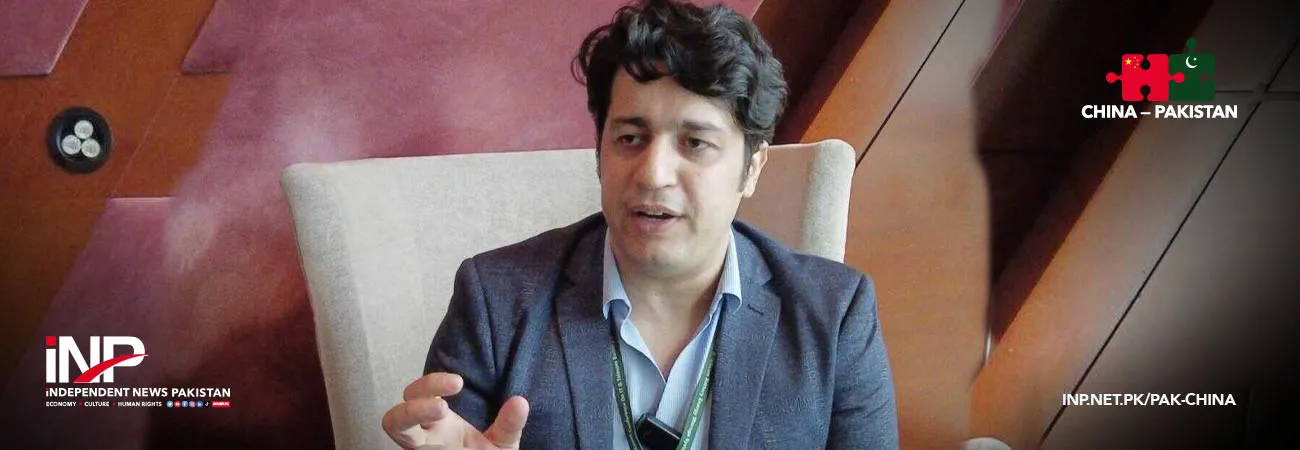
For more than 16 years, Shah Nawaz Kakar, CEO of the Hewad Group of Companies, has built his life and career in China. Originally from Quetta, Balochistan, Kakar progressed from a graduate of Zhejiang University to a facilitator of trade between China and Pakistan—a journey that reflects bilateral opportunities and shared prosperity, with Chinese automobiles entering the Pakistani market and chromite from Balochistan reaching Chinese buyers.
After earning a bachelor's degree in trade from Zhejiang University in 2012, Kakar remained in China, drawn by its business-friendly environment and entrepreneurial spirit. "Zhejiang is a developed province, strategically located in the Yangtze River Delta with close proximity to Shanghai and Jiangsu," he said, according to a China Economic Net's report on Tuesday.
"It is full of business-minded people, and we learn from each other." That learning-by-doing approach has shaped his entire career.
Kakar's business roots run deep. His father began working in the textile industry two decades ago, and Kakar has carried that legacy forward.
While textiles remain a core part of the Hewad Group's operations, the company has expanded beyond yarns and fabrics.
The company exports both new and used cars from multiple Chinese cities, including Beijing, Guangzhou and Wuhan, to markets across the South Asia and Middle East.
Destinations include Pakistan, Dubai, Saudi Arabia, Iraq and Iran. "Chinese cars offer high technology at affordable prices," he explained. "There is huge demand in Pakistan for Chinese cars, especially electric vehicles. BYD and other Chinese brands are perfect for Pakistani consumers."
Kakar's observations are in line with broader market trends. According to the Pakistan Association of Automotive Parts & Accessories Manufacturers (PAAPAM), Chinese automakers currently account for approximately 20% of Pakistan's passenger vehicle market.
Beyond automobiles, Hewad Group is leveraging Balochistan's natural resource advantages. The company imports chromite stone from Balochistan to China, turning a local resource into a bilateral trade asset. Kakar said "that means we can also support import business into China."
This two-way flow—exporting Chinese cars and importing Pakistani minerals—embodies the kind of balanced, sustainable trade that benefits both nations.
Kakar's contributions have been publicly acknowledged. In 2022, he was honored as an overseas promoter of a cross-border sourcing event in Taizhou, Zhejiang. Such recognition highlights the growing role of foreign entrepreneurs in showcasing Chinese quality and innovation to the global market.
Living in Zhejiang has also allowed Kakar to appreciate the broader international environment in the region. Shaoxing, the city where Kakar spends most of his time in China, is known for its textile heritage and international trade fairs.
The city regularly hosts buyers and entrepreneurs from Pakistan and other countries, further strengthening people-to-people ties. He noted that "whether you are a local or from another country, the Chinese government and businesses support you. You don't feel like a foreigner. You feel at home." That sense of home extends to his family, who live with him in China.
Kakar is keenly aware that many people in his home province of Balochistan have limited exposure to China. "Some in our province are not well-educated about China," he admitted.
"But we can give a good image. China is a very business-friendly place, and you can develop here." He hopes his own story will help shape a more positive perception of China in Balochistan and beyond, showing how trade, education and mutual respect can transform livelihoods on both sides of the Karakoram Highway.
Credit: Independent News Pakistan (INP) — Pak-China
Related News