i NEWS PAKISTAN
Lt Colonel Shahzada Gul Faraz among two martyred in Bannu suicide attackBreaking
February 21, 2026
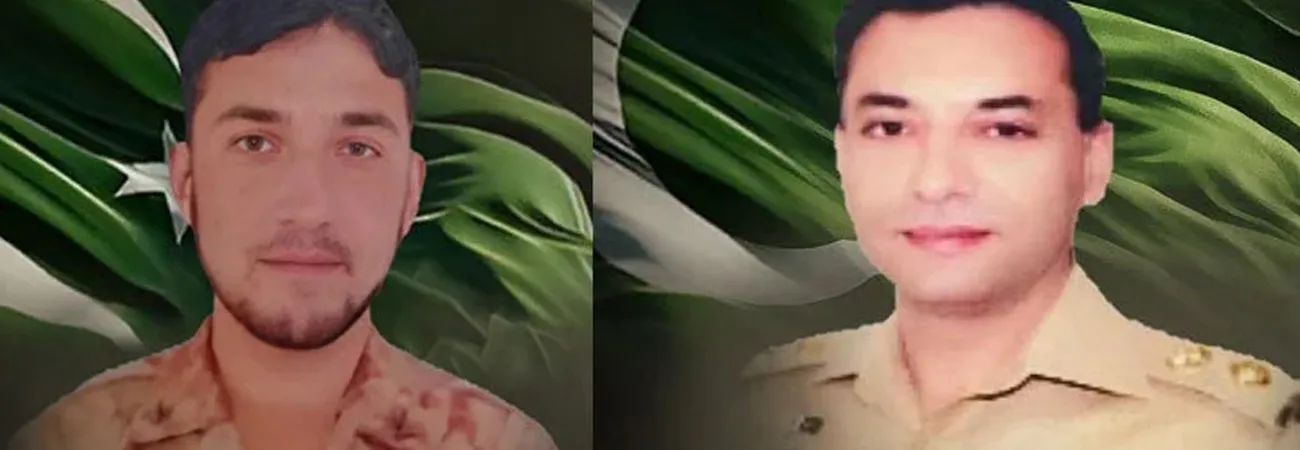
At least five terrorists belonging to Indian proxy Fitna Al-Khwarij were killed, while Pakistan Army’s Lt Colonel Shahzada Gul Faraz and Sepoy Karamat Shah embraced martyrdom in a suicide attack in Bannu District of Khyber Pakhtunkhwa, the Inter-Services Public Relations (ISPR) said.
According to the ISPR, on 21 February, a security forces convoy was targeted in a cowardly attack by Fitna Al-Khwarij during an intelligence-based operation on the reported presence of Khwarij and a suicide bomber.
A vehicle-borne suicide bomber was intercepted by the leading group, foiling his nefarious design to target innocent civilians and law enforcement personnel in Bannu City, averting a major catastrophe, the military’s media wing said.
During the operation, khwarij were located and after an intense fire exchange, five khwarij were killed by the security forces. However, in desperation, Khwarij rammed the explosive-laden vehicle into one of the vehicles of the leading security group.
Resultantly, Lt Colonel Shahzada Gul Faraz, 43, a brave commanding officer from District Mansehra, renowned for his daring actions, who was leading his troops from the front embraced shahadat alongwith Sepoy Karamat Shah, 28, from Peshawar District.
The ISPR noted that Khwarij are continuing with their terrorist activities inside Pakistan using Afghan soil, violating the sanctity of the holy month of Ramadan. “This clearly indicates that they have no link with Islam,” the statement said.
The military’s media wing emphasised that the Afghan Taliban Regime has yet again failed to stop the Khwarij from using Afghan soil for terrorist activities inside Pakistan, that too in the holy month of Ramadan.
ISPR vowed that Pakistan will not exercise any restraint and operations would continue against the perpetrators of this heinous and cowardly act for justified retribution against Khwarij, irrespective of their location.
The counter-terrorism campaign under the vision “Azm-e-Istehkam”, approved by the Federal Apex Committee on the National Action Plan, will continue at full pace. The sacrifices of brave soldiers like Lt Colonel Shahzada Gul Faraz reinforce Pakistan’s unwavering commitment to safeguarding the nation at all costs, the statement added.
Credit: Independent News Pakistan (INP)
Related News