i NEWS PAKISTAN
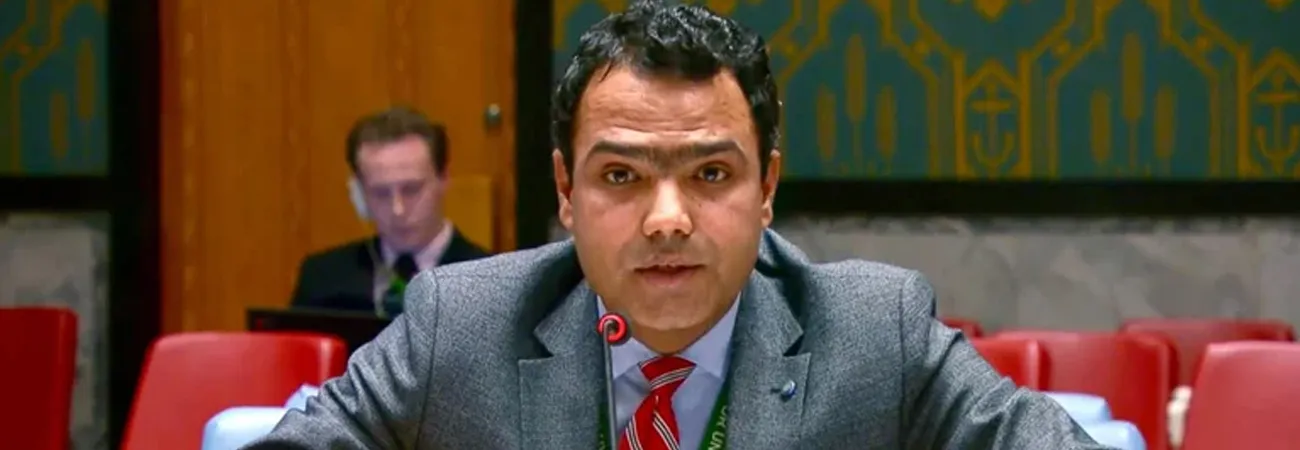
Pakistan presents evidence of India’s support for terrorism in UNSCBreaking
December 17, 2025
Replying to Indian representative Harish Parvathaneni’s speech in which he delved into internal matters of Pakistan, including the recently passed 27th amendment, Gul Qaiser Sarwani, a counsellor and political coordinator at the Pakistani Mission to the UN, has said that there exists solid evidence of Indian patronage of terrorism in Pakistan.Unmasking the ugly face of India at the United Nations Security Council (UNSC) meeting, Sarwani said that India was supporting the Tehrik-e- Taliban Pakistan (TTP), Fitna al-Khawarij and Balochistan Liberation Army (BLA).
“India is also patronizing terrorists carrying out acts of terror from across the border in Afghanistan.”Pakistan’s representative further said that not only India was backing terrorism in Pakistan, but there also existed concrete proof of its involvement in eliminating the people it deemed its enemies in North America and other countries. He also said that minorities were being persecuted in India right under the nose of Indian Prime Minister Narendra Modi. Sarwani said that Pakistan had always showed patience and exercised restraint.
India, he went on to say, could not hide its record of sponsoring terrorism. He also hit out at India for unleashing a reign of terror in occupied Kashmir. "Let me make it clear, Kashmir is not, it never was and it will never be so called part of India." Sarwani said that the Modi government’s demeanor was that of a rascal, who is himself a judge, jury and an executioner. Sarwani called Indian assertions "full of denial and inaccuracies."
"We reject the baseless and misplaced characterization of Pakistan's constitutional and legislative processes, which are adopted by the two-third majority of the parliament of Pakistan," he said. "Like all parliamentary democracies, constitutional amendments are the exclusive domain of the elected representatives of the people of Pakistan,” the Pakistani delegate asserted.
"India has neither the standing nor the moral authority to question Pakistan's constitutional processes," he said, adding, "No one needs any lessons on democracy, or the rule of law from a state whose conduct stands in open contradiction to these principles." Regarding Kashmir, Sarwani said that India had itself brought the matter to the Security Council and accepted the obligation to allow the people of Jammu and Kashmir to determine their future through a UN-supervised plebiscite.
Credit: Independent News Pakistan (INP)
Related News