

آئی این پی ویلتھ پی کے

Challenge Fashion expansion sparks optimism for Pakistan’s textile exports
May 31, 2026
By Hasan Salahuddin
China’s Challenge Fashion Group’s decision to expand its operations in Pakistan with a large-scale apparel manufacturing facility is being viewed by industry experts as a major opportunity to strengthen the country’s textile exports, create jobs and attract further foreign investment into the industrial sector.
The planned expansion, expected to generate $400 million to $500 million in annual exports and create around 20,000 jobs, comes at a time when Pakistan is striving to improve export competitiveness and revive investor confidence in its manufacturing industry.
The latest expansion plan was recently discussed during a meeting between Federal Commerce Minister Jam Kamal Khan and a Chinese delegation led by Challenge Fashion Chairman Huwang Weiguo and Challenge Apparel CEO Karen Chen.
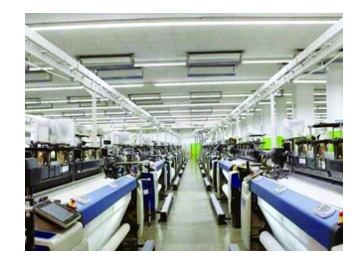
Challenge Fashion had previously launched the Challenge Special Economic Zone project in Pakistan, involving a planned investment of $100 million over five years. The company is now moving ahead with a modern manufacturing facility being developed according to international production standards, with the first phase expected to be completed later this year.
Textiles remain one of the most critical sectors of Pakistan’s economy, contributing around 8.5 percent to GDP and employing nearly 40 percent of the country’s industrial workforce, according to the Board of Investment.
The Ministry of Commerce’s Yearbook shows that textile and apparel exports reached $17.95 billion in FY2024-25, accounting for approximately 56 percent of Pakistan’s total exports of $32 billion.
Despite its strong export base, Pakistan’s textile industry continues to face challenges in competing with regional exporters such as Bangladesh, largely due to high energy costs, outdated industrial infrastructure, weak policy continuity and rising production expenses.
Speaking with Wealth Pakistan, Dr Urwa Mahmood, Assistant Professor at the School of Engineering and Technology, National Textile University, Faisalabad, said the Chinese investment could help transform Pakistan’s textile manufacturing landscape.
She said such projects can generate employment opportunities, improve industrial productivity and strengthen Pakistan’s standing in global apparel markets through technology transfer, skill development and greater value addition.
Dr Mahmood stressed that long-term policy stability would be essential to sustaining foreign investor confidence in the textile sector.
“Long-term clarity on energy pricing and uninterrupted energy supply are critical for export-oriented industries,” she said.
She also emphasised the need to facilitate smoother cross-border movement of raw materials and industrial inputs while ensuring affordable access for manufacturers.
According to her, measures such as tax rationalisation, timely refunds and export incentives are necessary to maintain competitiveness in international markets.
She further noted that policies encouraging local sourcing, workforce training and infrastructure development could strengthen domestic industries and attract more export-oriented foreign investment.
Sarah Adnan, Independent Director at Karachi Garment City Company, described Challenge Fashion’s expansion as a potentially transformative development for Pakistan’s textile sector.
“Challenge Fashion's planned expansion is huge for the Pakistani textile market, and it can prove to be transformative for our textile industry in Pakistan,” she said.
She pointed out that the project could generate annual exports of up to $500 million while employing nearly 20,000 workers, making it one of the more significant foreign-backed textile investments in recent years.
Beyond the direct economic impact, Adnan said the company’s existing international buyer network could also create broader opportunities for local manufacturers and suppliers.
She observed that the establishment of a fully compliant international-standard production facility may encourage local manufacturers to upgrade their production systems, compliance standards and workforce capabilities.
“Investments such as this one can create a ripple effect and put Pakistan at the forefront of being an investment-friendly destination for other industrial groups,” she added.
At the same time, Adnan cautioned that structural weaknesses and inconsistent industrial policies continue to hinder the sector’s growth potential.
She called for single-window clearance mechanisms, time-bound approvals and effective dispute resolution systems to improve investor confidence and institutional credibility.
She also stressed the importance of strengthening Special Economic Zone infrastructure, including land availability, logistics connectivity and uninterrupted utility services.
According to her, the government must also ensure that local supply chains and workforce development are integrated into foreign-funded industrial projects so that Pakistan benefits beyond low-cost manufacturing.
Experts believe Challenge Fashion’s expansion could become an important test case for Pakistan’s ability to attract sustained export-oriented industrial investment, provided the country succeeds in addressing longstanding structural and policy challenges.
Credit: INP-WealthPk
متعلقہ مضامین