

آئی این پی ویلتھ پی کے

China invests $25.93bn under CPEC as bilateral trade surpasses $25bn
April 23, 2026
By Farooq Awan
China has invested $25.93 billion in Pakistan under the China-Pakistan Economic Corridor (CPEC), creating over 261,000 jobs, building more than 510 kilometres of road infrastructure, adding 886 kilometres of core power transmission grids, and contributing over 8,000 megawatts of power generation, according to a fact sheet shared by Chinese Embassy in Islamabad with Wealth Pakistan.
The fact sheet shows that China has remained Pakistan’s top trading partner for 12 consecutive years, with bilateral trade volume exceeding $25 billion in 2025. It also shows that China provided 53.2% of Pakistan’s foreign direct investment during the period from July 2025 to February 2026.
The document presents CPEC as the flagship project of the Belt and Road Initiative and says that, ushering in “CPEC 2.0,” it aims to build a growth corridor, social livelihood corridor, innovation corridor, green corridor, and open corridor.
The provincial spread of the cooperation is extensive, with major energy, transport, industrial, social and public service projects highlighted across Punjab, Sindh, Khyber Pakhtunkhwa and Balochistan.
In Punjab, the Sahiwal Coal Power Plant with a capacity of 1,320MW is listed among the major projects. According to the data, the plant serves 4 million families, involves an investment of $1.8 billion, and uses super-critical technology. The Karot Hydropower Project, with a capacity of 720MW, is shown as serving 5 million people and reducing carbon dioxide emissions by 3.5 million tons per year.
The document also highlights the Lahore Orange Line Metro Train, a 27-kilometre urban rail project described as Pakistan’s first metro line, “safe and sound.” It says the system has recorded ridership of 280 million passengers over the past five years and has 26 stations.
Punjab’s energy cooperation is further reflected in the Chashma Nuclear Power Plant units C1 to C4, with a combined capacity of 1,200MW. The data says these units reduce coal use by 3.14 million tons per year, reduce carbon emissions by 8.16 million tons per year, and are equivalent to 70 million trees. The Chashma C-5 project is separately listed as reducing coal use by 3.14 million tons per year and carbon dioxide emissions by 8.16 million tons per year, with an equivalent of 70 million trees, while creating 40,000 jobs during construction.
Also in Punjab, the Matiari-Lahore HVDC Transmission Line, 886 kilometres long, is identified as a major power evacuation project. According to the official figures, it has a capacity of 4,000MW, can transfer 35 billion kilowatt hours of electricity annually, and serves 10 million households.
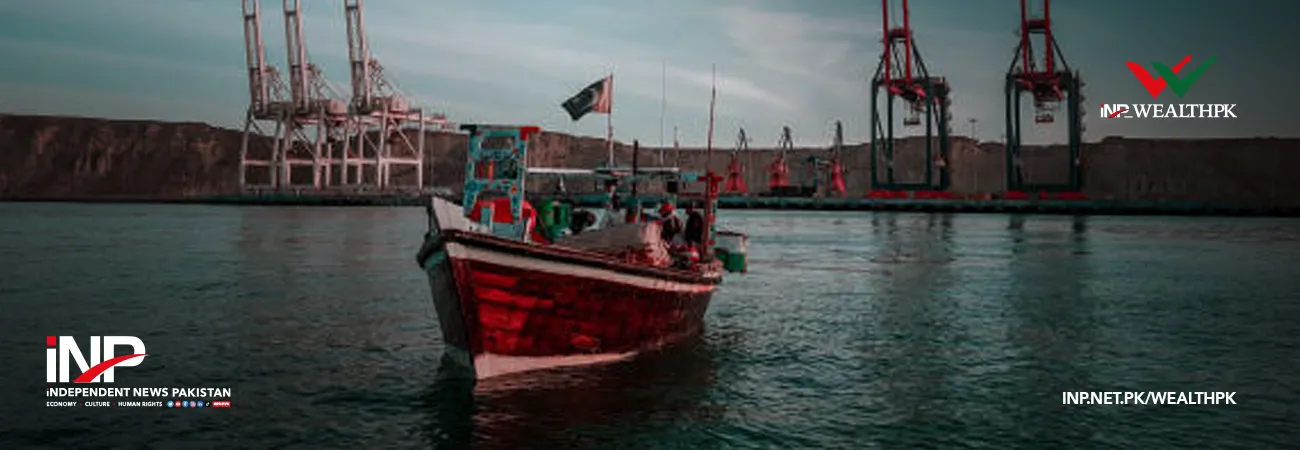
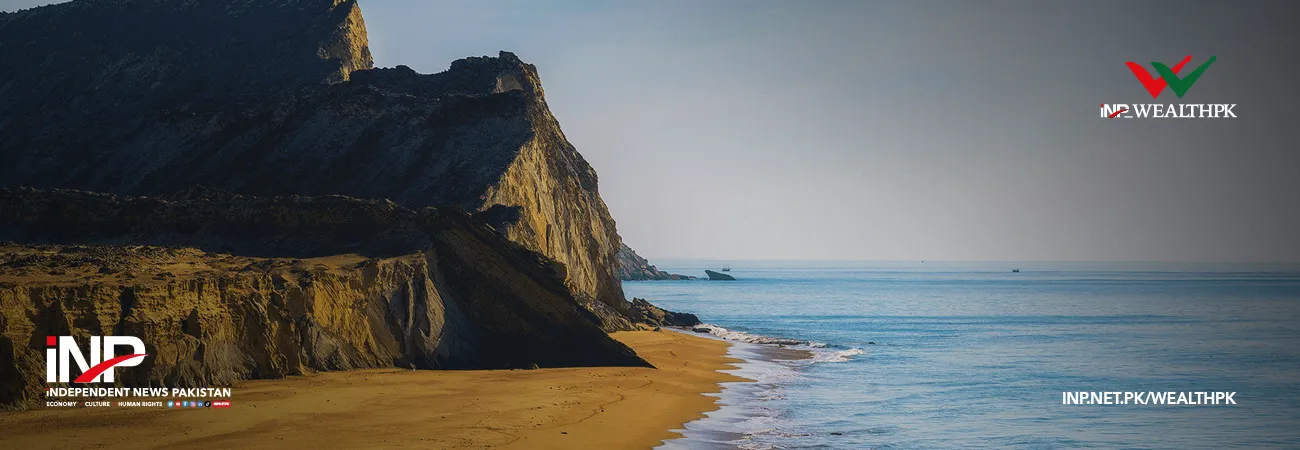
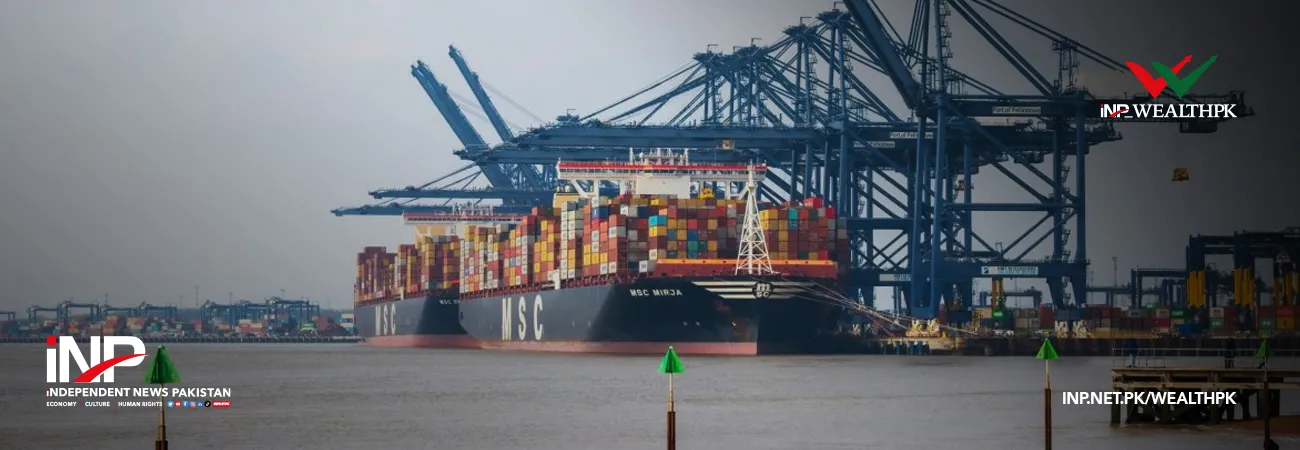
In Balochistan, the data places Gwadar at the centre of the cooperation framework. Gwadar Port is described as the flagship project of CPEC that has transformed the area from a remote fishing village into a regional connectivity hub. The port is shown as being equipped with deep-water berths for large cargo ships and oil tankers.
The official data also highlights Gwadar International Airport, describing it as a state-of-the-art 4F-grade airport capable of hosting the world’s largest civil aircraft. In the education sector, Faqeer School Gwadar is listed with an enrollment of over 500 students and is described as having been upgraded from a primary school to a high school.
In health and public services, the China-Pakistan Friendship Hospital Gwadar is shown as having treated over 350,000 patients. The Gwadar Seawater Desalination Plant is listed as producing more than 3,000 tons of fresh water per day and as having largely addressed the local drinking water problem.
The document also includes the China-aided Technical and Vocational Institute in Balochistan, which it says provides 3,000 training opportunities annually. In addition, it says China has, in recent years, provided over 10,000 household solar panels to needy families, easing power shortages.
In Khyber Pakhtunkhwa, the Suki Kinari Hydropower Project, with a capacity of 884MW, is listed as serving 5 million people. The official data says the project saves 1.28 million tons of coal per year, reduces carbon dioxide emissions by 3.2 million tons per year, and involves an investment of $1.8 billion.
The Karakoram Highway Phase-II, covering the Havelian-Thakot section of 118 kilometres, is another major project highlighted for Khyber Pakhtunkhwa. According to the document, the project reduced travel time from five hours to two hours. The Rashakai Special Economic Zone is also listed in the province, with an area of 1,000 acres and 27 enterprises settled in it.
In Sindh, the K-2 and K-3 Nuclear Power Plants are listed with a combined capacity of 2,200MW. The data says they reduce coal use by 6.24 million tons per year, reduce carbon emissions by 16.32 million tons per year, are equivalent to 140 million trees, and serve 2 million families.
The Thar Coal Block-I Power Project is listed with two units of 660MW each and a total capacity of 1,320MW. It is shown as serving 4 million families and creating 18,000 direct jobs. Another major Sindh transport project, the 392-kilometre Sukkur-Multan Motorway (M5), is described as having a designed speed of 120 kilometres per hour, cutting travel time from 11 hours to four hours, and creating 29,000 jobs during construction.
The document also highlights renewable energy projects in Sindh. The Dawood Wind Power Project has a capacity of 49.5MW and serves 100,000 families, while the Sachal Wind Power Project also has a capacity of 49.5MW and reduces carbon emissions by 84,804 tons per year. In addition, the Thar Coal Block-II Power Project is shown as having four units of 330MW each, a total capacity of 1,320MW, and the use of state-of-the-art technology to minimize emissions.
Beyond infrastructure and energy, the official data presents a broad picture of industrial cooperation. It lists the Haier-Ruba Special Economic Zone with an output value of $400 million, tax paid of $120 million, and 6,000 jobs created. It also says Haier Group plans to invest $400 million to build a new home appliance industrial park with an annual production capacity of about 10 million units and the creation of more than 10,000 jobs.
The document also names Shanghai Challenge Textile, saying it plans to invest $150 million in a new textile industrial park with an annual export value of $400 million and the creation of around 20,000 jobs.
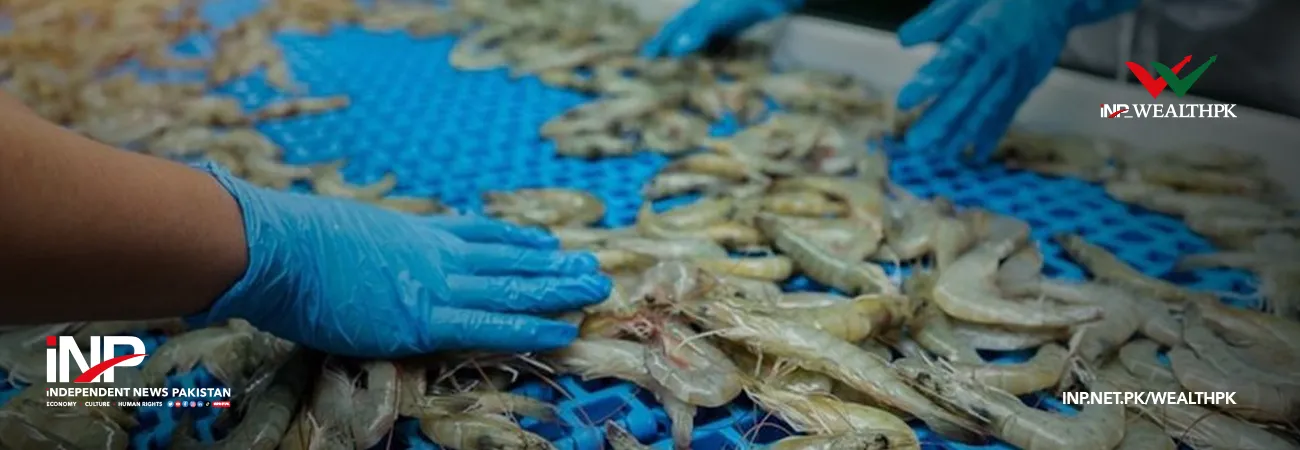
In agriculture, the data says bilateral agricultural trade has remained around $1 billion annually for the past three years. For exports to China in 2025, it lists rice exports of 157.74 million kilograms worth $62.26 million, and seafood exports of 154 million kilograms worth $280 million. It further says seafood exports were up 28.9% in volume and 22.1% in value year-on-year.
The document also highlights agricultural training cooperation, saying that in 2025, 1,000 young Pakistani agricultural professionals completed their training in China.
In science and technology, the official data lists a number of Pakistani satellites launched in China. These include ICUBE-Qamar, described as a lunar satellite; PAKSAT-MM1, a communication satellite; PRSS-1, a remote sensing satellite; EO-1 Pakistan Satellite; EO-2 Pakistan Satellite; and HS-1 Hyperspectral Satellite. It also says Pakistan will become the first country to send an astronaut to China’s Tiangong Space Station.
The document separately highlights support extended in difficult times. During the 2025 flood, it says China immediately provided $2 million in cash assistance and later extended additional material aid worth 100 million RMB. Referring to the 2022 flood, it says China first provided emergency humanitarian aid worth 100 million RMB, including 25,000 tents and other urgently needed supplies, and later provided an additional 300 million RMB in disaster relief materials.
The data also notes health cooperation. It says that in 2025, Chinese doctors came to Pakistan and treated eight children suffering from congenital heart defects. It adds that from 2024 to 2025, China donated 70,000 “health kits” to Balochistan, covering 23 districts and benefiting 766 schools.
On people-to-people exchanges, the document says Pakistan ranks among the top countries in both the total number of students studying in China and the number of students receiving Chinese scholarships. It adds that multiple universities in China offer Urdu language majors and that the two sides have established the CPEC Consortium of Universities with 130 member institutions.
The official data also refers to cultural and media exchanges. It says “Ba’Tie Girl,” the first co-production film between China and Pakistan, was released in 2024, while the Chinese film “Ne Zha 2” had its public screening in Pakistan in 2025. It further says that over the past three years, media organizations of the two countries have signed 12 cooperation memorandums.
Credit: INP-WealthPk
متعلقہ مضامین