

آئی این پی ویلتھ پی کے
China’s childcare and health reforms highlight policy lessons for Pakistan
March 17, 2026
By Azam Tariq
China’s development planning for the 2026–2030 period is placing renewed emphasis on family support, childcare and public health — a policy direction that highlights the role of maternal and child wellbeing in long-term national development.
China’s latest planning and budget reports show a clear family-support push, including one year of free preschool for the final kindergarten year, nationwide childcare subsidies of 3,600 yuan for children under three, stronger community-level health services, and additional support for women’s and children’s health during the upcoming five-year cycle.
The available documents indicate the scale of these initiatives. Free preschool has already benefited around 14 million children, while childcare subsidies have reached more than 30 million children under the age of three. The next phase will further support women’s and children’s health services, maternity insurance, parental leave and community childcare capacity.
China’s health targets also reflect the broader emphasis on improving wellbeing. The country has set a goal of increasing average life expectancy to around 80 years during the 2026–2030 period. According to the National Health Commission, China’s life expectancy reached 79.25 years in 2025, an increase of 1.32 years compared with 2020.
Officials say strengthening grassroots healthcare services has been central to improving health outcomes. By 2025, primary-level healthcare institutions handled 52.6 percent of all medical consultations nationwide, highlighting the growing role of community-based healthcare delivery.
Healthcare accessibility has also expanded significantly. More than 90 percent of China’s population can now reach their nearest healthcare facility within a 15-minute walk, reflecting improvements in local health infrastructure across both urban and rural areas.
For Pakistan, these policy directions highlight the importance of strengthening maternal and child support systems alongside primary healthcare services.
Speaking with Wealth Pakistan, Shahid Mahmood Qureshi, Child Protection Consultant at the Department of Social Welfare, Azad Jammu and Kashmir, said improving maternal and child wellbeing in Pakistan requires stronger antenatal and postnatal care, better maternal nutrition and wider availability of skilled birth attendance.
He said outreach efforts in remote areas should connect healthcare services with birth registration, parenting support and community-based child protection mechanisms so that children receive safer and healthier starts in life.
Qureshi also pointed out that underserved communities need accessible childcare and early childhood development centres that allow parents to work while ensuring safe care for their children.
China’s policy documents highlight the importance of public-interest childcare services and stronger community-level care capacity, indicating that care infrastructure can play a key role alongside financial support for families.
He added that local child protection mechanisms can help identify vulnerable families earlier and link them with appropriate social and healthcare services.
Qureshi said child wellbeing can also be strengthened through positive parenting programmes that help families better understand child development, encourage non-violent discipline and promote nurturing home environments.
He also stressed the need to address rising online risks for children by improving awareness among parents, teachers and communities about child online protection.
Dr Pavan Kumar, a public health researcher, told Wealth Pakistan that Pakistan can improve outcomes for mothers and young children by strengthening primary healthcare and maternal health services, particularly in underserved districts.
He noted that community-based platforms such as the Lady Health Worker Programme have already demonstrated how outreach, immunisation campaigns, antenatal guidance and health education can improve maternal and child wellbeing.
Kumar said support for working families should extend beyond health facilities to include social protection measures and practical childcare arrangements.
He pointed to the Benazir Income Support Programme as an important financial cushion for low-income households and said that community childcare centres, workplace day-care facilities and targeted provincial initiatives could help reduce pressures on working mothers while improving early childhood development.
According to Kumar, Pakistan should treat childcare as an integrated development issue rather than a stand-alone welfare initiative.
He said health, nutrition, early learning and parental support should work together, noting that investments in early childhood development can improve education outcomes, productivity and long-term population health, particularly in marginalized communities.
China’s current approach suggests that family policy works most effectively when childcare services, preschool access, public health systems and community-level delivery mechanisms operate together.
For Pakistan, adapting these lessons through stronger primary healthcare, expanded community childcare services, targeted social protection and coordinated policies across health, education and social welfare could help strengthen maternal and child wellbeing.
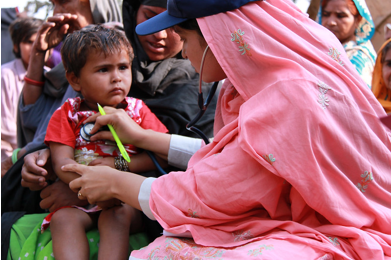
Credit: INP-WealthPk
متعلقہ مضامین