

آئی این پی ویلتھ پی کے
Chinese automakers expand footprint in Latin America
October 28, 2026
By Ayesha Saba
Chinese automobile manufacturers are strengthening their presence in Latin America, with major brands gaining ground in Argentina as expanding vehicle exports, advances in electric mobility and more favourable import policies create new opportunities for China's automotive industry in international markets.
According to figures from the Argentine automotive dealers' association (ACARA), five major Chinese automobile brands — BYD, BAIC, Chery, Haval and MG — collectively registered 3,330 passenger cars and light commercial vehicles in Argentina during August 2026, accounting for approximately 8% of the country's 41,752 vehicle registrations.
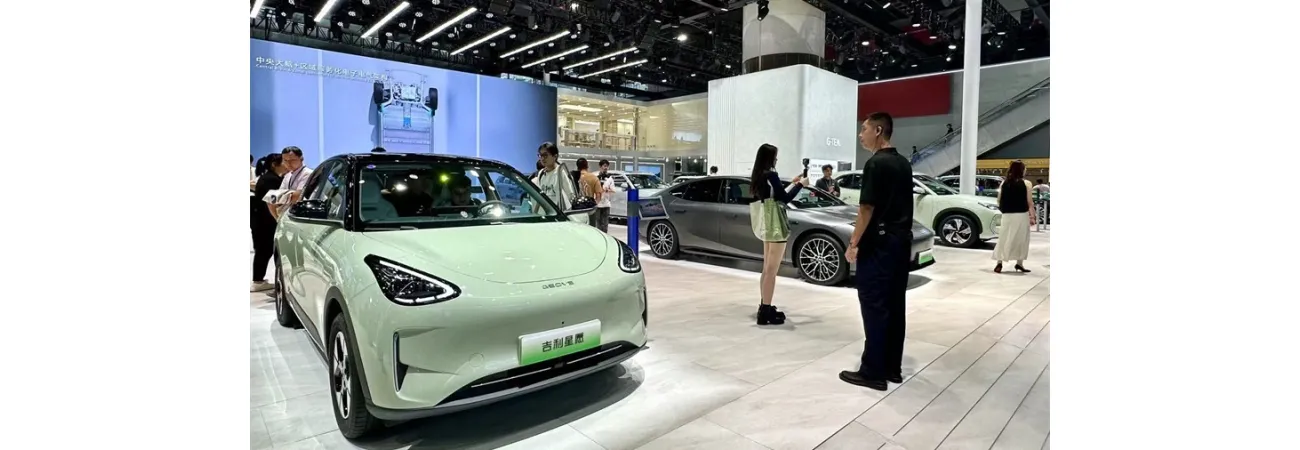
The growing commercial presence of Chinese automakers was also evident at Expo Auto Chino, held in Buenos Aires from October 2 to 4, 2026. According to exhibition venue BA Ferial, 26 Chinese automotive brands, including Geely, Chery, Great Wall Motor (GWM) and Dongfeng, showcased more than 100 vehicle models. The event featured 15 vehicle launches and unveilings and attracted over 30,000 visitors.
The expansion comes amid strong growth in China's international automotive exports. According to figures from the China Passenger Car Association published on the Chinese State Council's official website, China's exports of new-energy passenger vehicles reached 424,000 units in May 2026, representing an increase of 112.6% compared with the corresponding month of the previous year.
M. Hamza Khalid, Executive Manager at Al-Fateh Motors, told Wealth Pakistan that China's automotive industry was gaining global competitiveness through advances in electric mobility, battery technology, vehicle electronics and manufacturing efficiency.
“China’s automotive industry is gaining global competitiveness through advances in electric mobility, battery technology, vehicle electronics and manufacturing efficiency. The rapid expansion of Chinese automakers into Latin America reflects their ability to combine technological innovation, competitive pricing and large-scale production with expanding international distribution and investment networks,” he said.
The growing presence of Chinese automotive brands in Argentina reflects the increasing international reach of manufacturers seeking to expand their sales networks and introduce a wider range of conventional, hybrid and electric vehicles in overseas markets.
Argentina's automotive market has also become more accessible to international manufacturers following changes to its vehicle import arrangements.
The country's Ministry of Economy authorised a quota of 50,000 qualifying electric and hybrid vehicles for importation at a zero import tariff in 2026, creating additional opportunities for foreign automakers, including Chinese manufacturers, to compete in the domestic market.
The policy provides a potential opening for companies offering electric and hybrid vehicles, particularly as Chinese manufacturers continue to expand their product portfolios and develop more competitive models for international consumers.
The participation of 26 Chinese brands at the Buenos Aires exhibition also illustrates the range of manufacturers seeking opportunities in Argentina, with companies introducing new models and expanding their commercial visibility.
The exhibition brought together established automotive manufacturers and emerging brands, providing a platform to showcase developments in vehicle design, electric mobility and automotive technology.
The broader expansion of Chinese automobile manufacturers into overseas markets is being supported by their growing production capabilities, technological improvements and increasingly diverse vehicle offerings.
Chinese companies have invested heavily in electric vehicle technology, battery systems and manufacturing processes, strengthening their ability to compete in international markets where pricing, technology and vehicle efficiency are important considerations.
The sharp year-on-year increase in China's new-energy passenger vehicle exports during May 2026 highlights the growing international demand for Chinese new-energy passenger vehicles, although the export figure represents worldwide shipments rather than sales specifically to Latin America.
For developing economies, the international expansion of Chinese automakers also presents opportunities for industrial cooperation, investment partnerships and technology transfer.
In Pakistan, Chinese automobile manufacturers have already established a presence through vehicle introductions, investments and partnerships with local businesses.
Khalid said Pakistan's existing cooperation with Chinese automobile companies provided a foundation for further industrial development, particularly in electric and hybrid vehicle technologies.
“Chinese automobile companies have already demonstrated strong interest in Pakistan’s automotive sector through investments, joint ventures and the introduction of modern electric and hybrid vehicles. These partnerships are helping diversify Pakistan’s automobile market while creating opportunities for technological advancement and industrial development,” he said.
He added that China's growing international automotive presence could create further opportunities for Pakistan to strengthen cooperation in vehicle manufacturing, component production and emerging technologies.
According to Khalid, Pakistan should seek to build on existing partnerships by attracting additional investment in electric vehicle manufacturing and encouraging greater participation by domestic industries in automotive supply chains.
He said stronger collaboration in battery technology, workforce development and industrial innovation could help modernise Pakistan's automobile industry while improving its technological capabilities.
As Chinese manufacturers expand into new international markets, Pakistan could also explore opportunities to develop local component manufacturing and gradually increase domestic value addition.
Such cooperation could help strengthen the country's automotive industrial base and reduce its reliance on imported finished vehicles, provided investment partnerships were supported by commercially viable production arrangements.
Khalid emphasised that Pakistan needed a consistent and predictable policy framework to encourage Chinese automotive manufacturers to establish sustainable local operations.
“Pakistan should develop a consistent policy framework that encourages Chinese manufacturers to establish commercially viable local production and strengthen domestic supplier networks. Government incentives should be linked to measurable outcomes, including investment, local component production, workforce training and export development,” he said.
He maintained that investment incentives should encourage long-term industrial development rather than focusing primarily on the introduction and sale of imported vehicles.
Greater emphasis on domestic supplier networks, technical training and technology transfer could enable Pakistani businesses to participate more effectively in automotive manufacturing and related industries.
The development of local capabilities in electric vehicle components, battery systems and vehicle electronics could also support Pakistan's efforts to modernise its industrial sector and explore opportunities in emerging automotive technologies.
“Such an approach would help Pakistan benefit from access to Chinese automotive technology while building its own industrial capabilities and reducing dependence on imported finished vehicles,” Khalid said.
China's expanding automotive presence in Latin America highlights the growing international competitiveness of its vehicle manufacturers, particularly as new-energy technologies become an increasingly important part of the global automobile industry.
For Pakistan, Khalid believes the expansion offers an opportunity to deepen existing automotive cooperation with China by focusing on local manufacturing, technology transfer, skilled workforce development and stronger domestic supply chains.
The longer-term benefits will depend on Pakistan's ability to attract commercially sustainable investment, maintain consistent industrial policies and create conditions that encourage Chinese automotive manufacturers to move beyond vehicle sales towards deeper production partnerships.
Credit: INP-WealthPk
متعلقہ مضامین