


آئی این پی ویلتھ پی کے
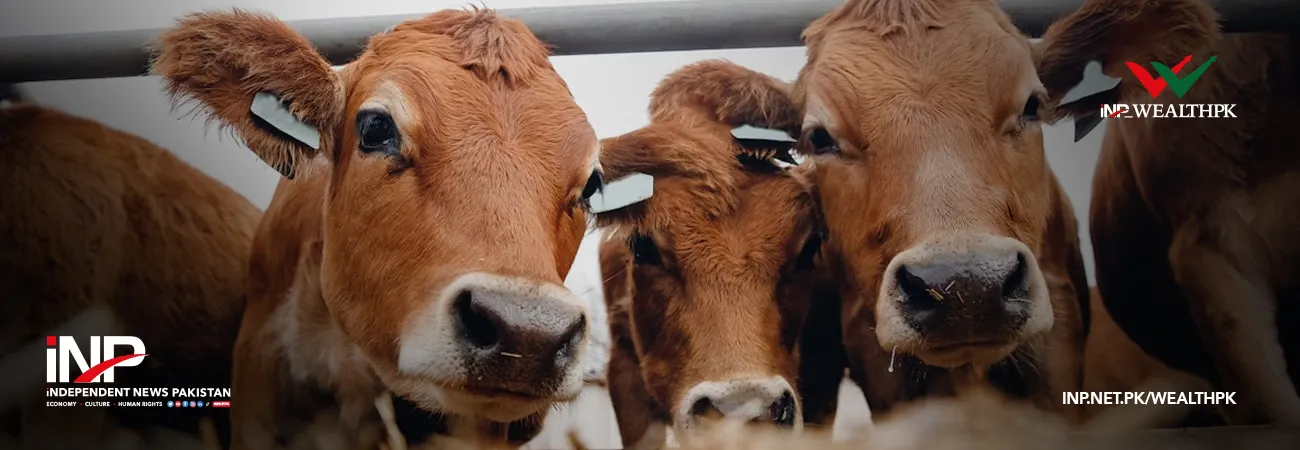
Crossbreeding of Pakistani, Brazilian cows to boost milk, meat production
December 17, 2025
Muhammad Luqman
Livestock Production Research Institute in Bahadur Nagar, Okara, is working on a project of introducing crossbreeding between low-potential Pakistani cow breeds and the high-yield Brazilian breed Girolando to boost milk and meat production in the country.
The Girolando breed originated in Brazil from a cross between the Indian Gir (a Bos indicus breed known for its resilience) and the Holstein (a Bos taurus breed renowned for high milk output).
According to livestock experts, Girolando cattle possess physiological and morphological traits — such as pigmented skin, strong hooves, and excellent heat-regulation — that make them well-suited to tropical climates similar to those in Punjab.
The project, with an estimated cost of Rs17.61 million, will be implemented over three years at the Livestock Production Research Institute in Okara.
“We have developed this project with the objective of bringing the lactation capabilities of Pakistani cows up to the international level,” said Dr Maqsood Akhtar, the institute’s director, while talking to Wealth Pakistan.
Pakistan’s cow population includes breeds such as Sahiwal, Cholistani, Dajal, Dhanni, Lohani, Bhagnari, Thari, Hissar, and Rojhan, along with a vast number of non-descript animals.
Dr Akhtar explained that indigenous and non-descript cattle exhibit very low productivity — averaging 2-4 liters of milk per day and 800-1,200 liters per lactation —compared to global crossbred averages of 2,500-3,000 liters per lactation. Meat production is similarly inefficient, with carcass weights of 80-100kg, whereas improved crossbreds can reach 180-200kg.
“This underperformance has direct nutritional consequences. Pakistan’s per capita animal protein availability is just 18-20 grams per day, far below the international average,” he said.
The proposed project aims to address these deficiencies by introducing the Girolando breed (a Holstein × Gir cross), a dual-purpose cattle type from Brazil that produces 8-12 liters of milk per day, shows strong heat and disease tolerance, and yields A2 beta-casein milk, which is considered healthier for human consumption.
By crossbreeding Girolando with non-descript cattle, the project aims to achieve a 2-3-fold increase in milk production and a 40-50% improvement in meat output.
Beyond productivity gains, livestock experts believe the intervention will significantly raise farm incomes. “Each upgraded cow is expected to generate an additional Rs225,000 annually through increased milk production and Rs60,000-70,000 through meat. This means a household with 2-3 animals could earn an extra Rs500,000-700,000 per year,” said Dr Abdul Mannan, a livestock researcher.
At the economic level, he added, the crossbreeding program offers strong returns on investment for smallholder farmers. “The expected additional income from just 2-3 crossbred cows can transform subsistence livestock production into a profitable enterprise.”
The project will also support climate resilience. By improving feed-conversion efficiency and reducing greenhouse-gas emissions per liter of milk by nearly 30%, the initiative ensures that productivity gains are achieved sustainably. Meanwhile, the import of high-quality cattle from Brazil has already begun.
“The import is part of the Green Pakistan Livestock Initiative (GPLI), which aims to enhance local livestock quality and productivity,” said Dr Muhammad Junaid, a consultant at the Federal Ministry of National Food Security and Research.
Talking to Wealth Pakistan, he said this step is intended to integrate Pakistani and Brazilian breeds in order to strengthen the genetic pool of local livestock. He hoped that the cross-breeding would help improve the lactation potential of the non-descript cows that form about 45% of total cattle population in Pakistan.
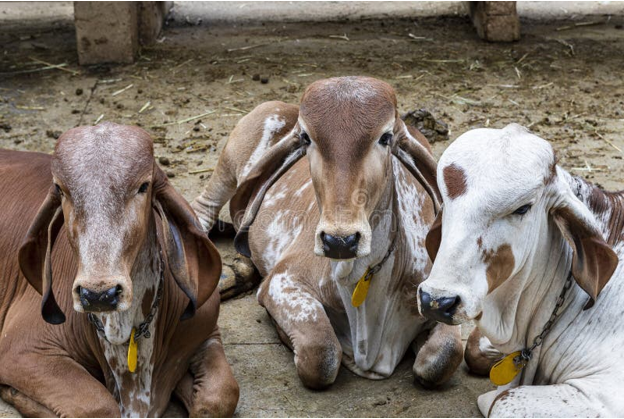
Credit: INP-WealthPk
متعلقہ مضامین