

آئی این پی ویلتھ پی کے
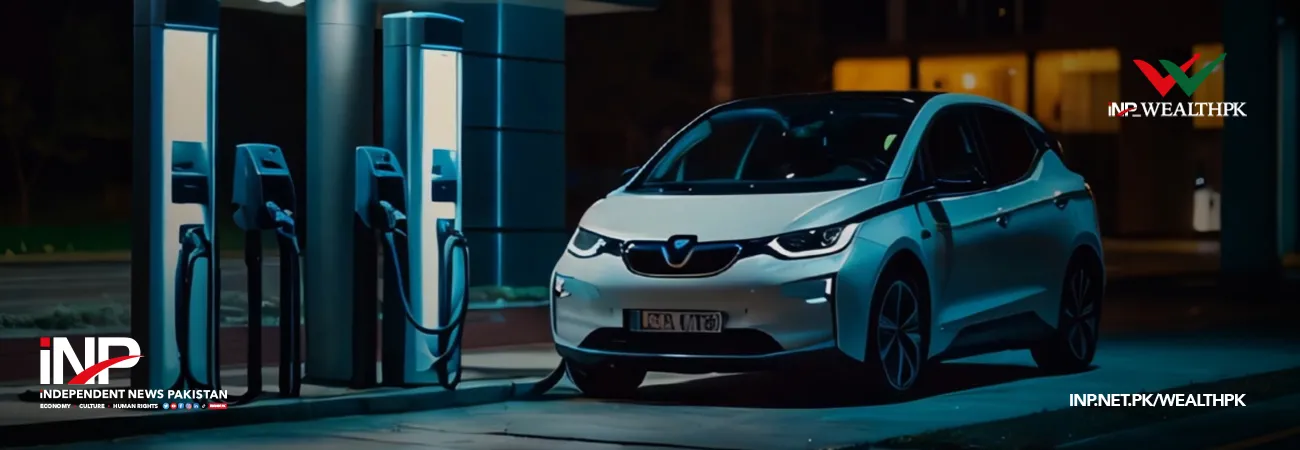
Morocco's EV success offers industrial roadmap for Pakistan
June 24, 2026
By Qudsia Bano
Morocco's evolution into a major automotive and electric vehicle (EV) manufacturing hub, driven by Chinese investment and export-oriented industrial policies, offers valuable lessons for Pakistan as it seeks to diversify exports and attract investment into higher-value manufacturing sectors.
Over the past decade, Morocco has emerged as Africa's leading automotive producer by combining special economic zones, industrial clustering, trade agreements and targeted foreign investment. According to Morocco's Ministry of Industry and Trade, the automotive sector has become the country's largest export industry, generating around €15 billion in export earnings in 2024, up sharply from €3.6 billion a decade earlier.
Official production data compiled by CEIC Data show Morocco manufactured 559,645 vehicles in 2024, the highest level on record, reflecting the success of its long-term industrial development strategy.
The latest phase of Morocco's industrial expansion has been driven by Chinese investment in electric vehicle batteries and related supply chains. In June 2024, Chinese battery manufacturer Gotion High-Tech signed an agreement with the Moroccan government to establish the country's first EV battery gigafactory in Kenitra.
The project involves an initial investment of $1.3 billion for a 20-gigawatt-hour facility, with plans to expand capacity to 100GWh through investments that could eventually reach $6.5 billion.
Other Chinese companies have also expanded their presence in Morocco's battery ecosystem. BTR New Material Group is investing three billion Moroccan dirhams in a cathode manufacturing plant near Tangier with an annual production capacity of 50,000 tonnes.
Industry experts say Morocco's success has been driven not only by attracting foreign investment but also by developing complete industrial ecosystems around major investors. Battery manufacturers, component suppliers and material producers have increasingly clustered around automotive assembly facilities, creating integrated value chains that serve European and North American markets.
Speaking with Wealth Pakistan, Ahmed Javed, Manager of Industrial Cooperation at the Pakistan Business Council, said Morocco's experience demonstrates how targeted industrial policy can transform geographic advantages into export growth.
"Morocco did not rely solely on low labour costs. It developed industrial zones linked to ports, offered predictable policies and actively connected foreign investors with local suppliers. This helped create an ecosystem where manufacturers could source inputs efficiently and export finished products competitively," he said.
Javed noted that Pakistan possesses several comparable advantages, including a large workforce, a strategic location and expanding infrastructure under the China-Pakistan Economic Corridor (CPEC).
However, he argued that Pakistan must move beyond attracting individual projects and instead focus on developing integrated industrial clusters around sectors such as electric vehicles, engineering goods, electronics and renewable energy equipment.
Muhammad Suleman, Supply Chain Manager at Master Auto Engineering Pvt Ltd, said Morocco's integration into global EV supply chains highlights the importance of long-term policy consistency.
"Chinese companies selected Morocco because investors could clearly see a long-term roadmap for industrial development. Infrastructure, logistics, workforce training and export incentives were aligned with national industrial goals. That reduced investment risks and encouraged large-scale commitments," he said.
According to Suleman, Pakistan's emerging EV policy and special economic zones could attract similar investment if implementation remains consistent and predictable.
"Pakistan should focus on localisation targets, supplier development programmes and export-oriented manufacturing. The objective should not simply be assembling products for the domestic market but creating industries capable of competing internationally," he said.
Morocco's strategy is already producing measurable economic results. Official figures released in 2025 show the country's automotive exports reached a record 157 billion dirhams in 2024, while vehicle production capacity is projected to exceed one million units annually as new investments come online.
For Pakistan, where exports remain heavily concentrated in textiles, Morocco's experience demonstrates how coordinated industrial policy, infrastructure development and strategic partnerships with Chinese manufacturers can help build globally competitive export industries.
Analysts believe that adopting a similar ecosystem-based approach to industrial development could strengthen Pakistan's export resilience, attract long-term foreign investment and support sustainable economic growth in the years ahead.
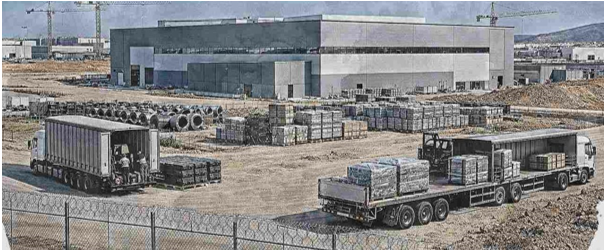
Credit: INP-WealthPk
متعلقہ مضامین